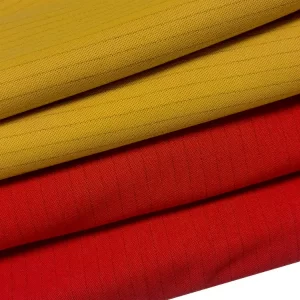
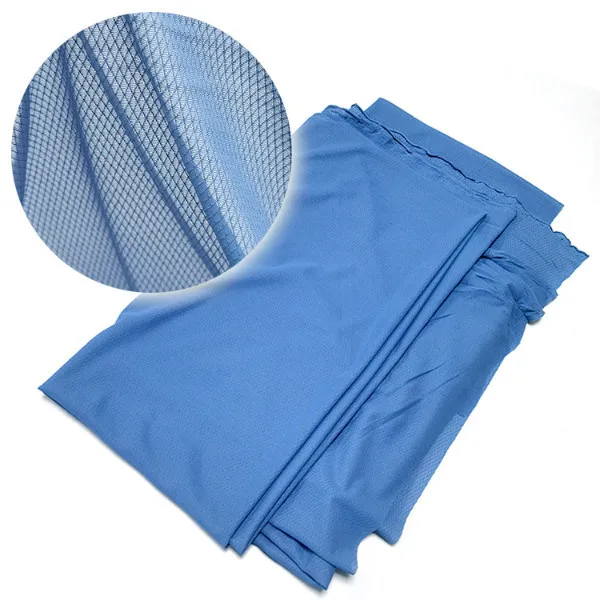
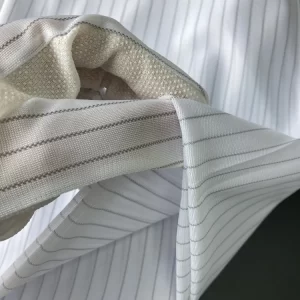
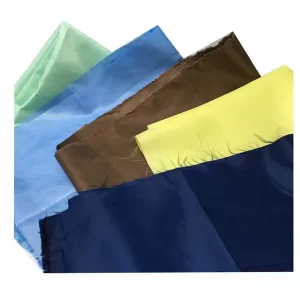
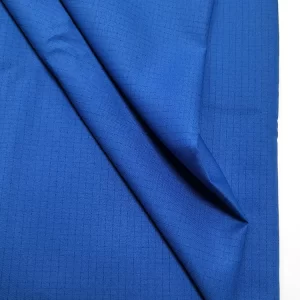
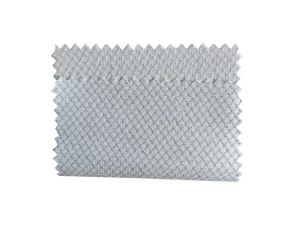
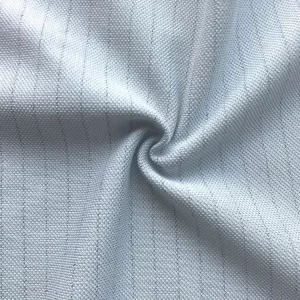
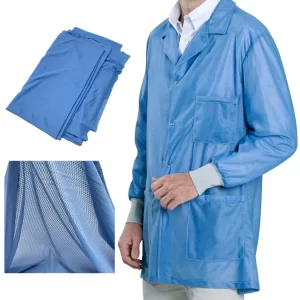
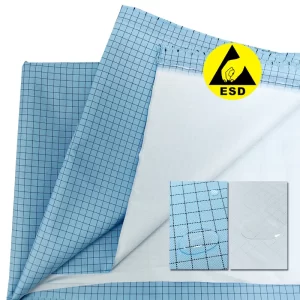
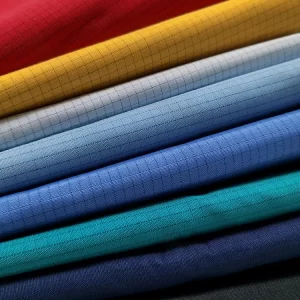
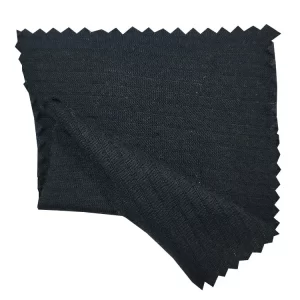
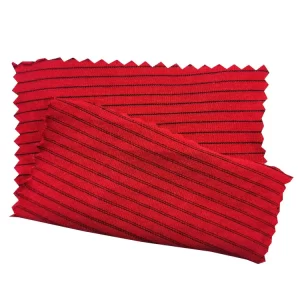
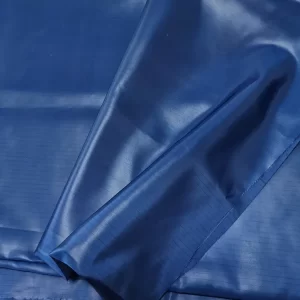
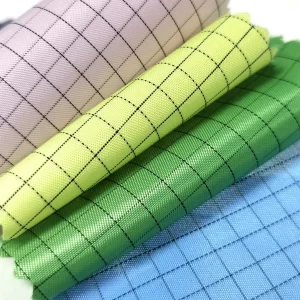
ESD fabric is conductive textile — polyester or cotton-blend woven with carbon, copper or stainless-steel fibres in a 4–10 mm grid — used to make ESD garments, curtains, partitions and bagging that drain static charge to ground in EPAs and cleanrooms. Phil Industries stocks 108+ ESD fabric SKUs in Singapore: rolls 150 cm wide, in white, blue, pink, yellow and black.
Specification and standards
All fabrics comply with IEC 61340-5-1 and test per ANSI/ESD STM2.1, with surface resistance between 10⁶ and 10¹¹ Ω. Standard weights run 130–220 GSM; weaves include taffeta, twill and herringbone.
The ESD fabric range
- ESD polyester (carbon grid) — 4 mm, 5 mm or 10 mm grid pitch, so you can match grid to garment spec.
- ESD cotton-polyester blend — 65/35 with carbon fibre; because it breathes, it suits long shifts.
- ESD conductive fabric (copper / nickel) — RFI/EMI shielding as well as ESD.
- ESD curtain and partition fabric — transparent PVC with conductive mesh, for example around a line cell.
- ESD bagging fabric — static-shielding laminate for tote and IC packaging.
Compare fabric types
| Fabric type | Standard | Surface resistance | Lead time |
|---|---|---|---|
| Polyester carbon grid | ANSI/ESD STM2.1 | 10⁶–10¹¹ Ω | Ex-stock |
| Cotton-poly blend | IEC 61340-5-1 | 10⁶–10¹¹ Ω | Ex-stock |
| Conductive (copper/nickel) | IEEE 299 | < 1 Ω/sq | 2–3 weeks |
| Cut-to-size & custom colour | — | Maintained | 5–7 days |
Frequently asked questions
What is ESD fabric?
It is a textile with conductive fibres — typically carbon, stainless steel, copper or nickel — woven into the warp and weft in a regular grid. Because that grid is continuous, static charge migrates across the surface and bleeds to ground instead of accumulating on the wearer or the covered equipment.
Which weight should I choose?
For lightweight ESD smocks, choose 130–160 GSM polyester. In contrast, coveralls and jackets last longer in 180–220 GSM cotton-poly, which also breathes better. Therefore our technical team recommends a weight based on your washing frequency and EPA temperature.
Can ESD fabric be cut and sewn locally?
Yes. Conductive cloth cuts and sews on standard industrial machines, so long as you use conductive thread (carbon-core polyester) to keep ground continuity across the seams. In addition, we supply matching conductive thread and offer cut-to-size services in Singapore.
Does washing damage ESD fabric?
Not if it is washed properly — it holds its properties for 100+ industrial laundry cycles. However, avoid fabric softeners, bleach and temperatures above 60 °C, because all three coat or oxidise the carbon grid and push surface resistance out of the dissipative range.
How do I order ESD fabric in Singapore?
Email kenneth@phil-industries.com.sg, WhatsApp +65 9853 9030 or call +65 6555 1745 for fabric swatches and pricing.
Related categories
Fabric becomes garments, so pair it with ESD safe clothing, ESD safe materials and ESD packaging materials. For the complete catalogue, return to the ALL ESD Products hub.
Reviewed by the Phil Industries Technical Team — Singapore industrial & ESD specialists since 2009. See also ESD Products Singapore and ESD Safe Clothing.