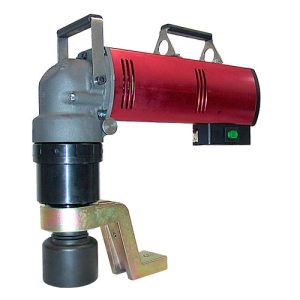
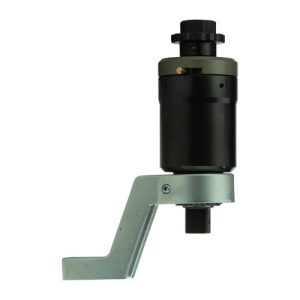
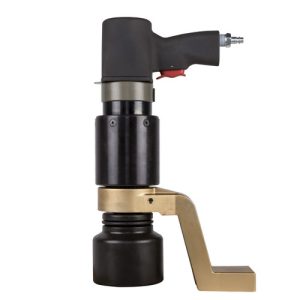
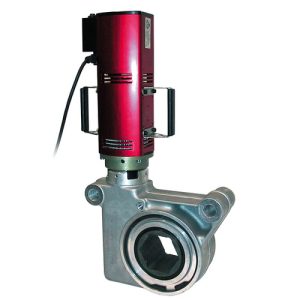
Mountz torque multipliers use planetary gearing to turn a modest input into controlled heavy bolting torque, from 231 N·m on a hand multiplier to 48,600 N·m on the largest pneumatic unit. Phil Industries, an authorised Mountz distributor in Singapore, supplies hand, pneumatic, electric and radial-gearing multipliers with reaction arms, sockets and after-sales support for plant, marine, rail and structural work.
Which torque multiplier do you need?
| Type | Models | Range | Best for |
|---|---|---|---|
| Hand multipliers | MTM, HG | 231 – 2,700 N·m (MTM) | Maintenance where no air or power is available |
| Pneumatic multipliers | CLS, CLD | 60 – 48,600 N·m | Repetitive flange and structural bolting with shop air |
| Electric multipliers | EF, EFC, EFW | 70 – 9,800 N·m | Controlled bolting from mains power, no compressor |
| Radial gearing multipliers | EF-R, EFC-R, RCL | 560 – 4,840 N·m | Tight-clearance hex nuts on wind, rail and heavy equipment |
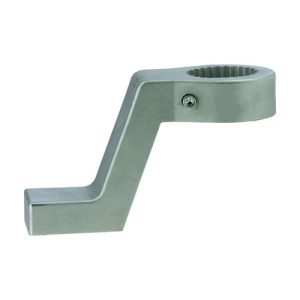
Every multiplier needs a reaction point. Therefore we supply reaction bars, feet and rings and the retention rings that keep the socket on the drive. For torque values below 1,200 N·m, a Mountz torque wrench may be the simpler tool.
How a torque multiplier works
A planetary gear train multiplies the input torque by a fixed ratio, for example 6.5:1 on the MTM-15, while the reaction arm braces against a neighbouring nut or surface. Because the ratio is mechanical, the output is predictable, and on electric and pneumatic units a pressure or torque setting controls the stop. Our guide to 3,000 N·m torque multipliers in Singapore walks through the selection in detail.
How to choose
- First, confirm the target torque and add a margin, because a multiplier should run in the middle of its range rather than at the top.
- Next, check the power available at the job: none, shop air, or mains. That decision usually picks the family.
- Then measure the clearance around the nut, since a radial gearing multiplier reaches where a square-drive unit cannot.
- Finally, plan the reaction point, so the operator is never in the path of the reaction arm.
Frequently asked questions about torque multipliers
What is the difference between a torque multiplier and a torque wrench?
A torque wrench measures or limits the torque you apply by hand. A torque multiplier gears up your input so a small input produces a large output, which lets one person tighten bolts that would otherwise need a long bar or a hydraulic tool.
Do I need a torque wrench on the input of a hand multiplier?
Yes. On a hand multiplier the output torque equals the input torque times the ratio, so an input torque wrench sets the output value. Pneumatic and electric units control the stop themselves.
Can you supply reaction arms for existing Mountz multipliers?
Yes. Reaction bars, feet and rings are stocked as separate items, and we can advise on a custom reaction fixture for awkward joints.
Do you demonstrate torque multipliers in Singapore?
Yes. Phil Industries can bring a multiplier to your site or arrange a factory demonstration, and we quote the multiplier, reaction accessories and sockets as one system.
Call +65 6555 1745, WhatsApp +65 9853 9030 or email sales@phil-industries.com.sg for a quotation, a demonstration or help choosing the right model.