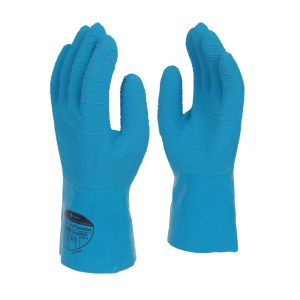
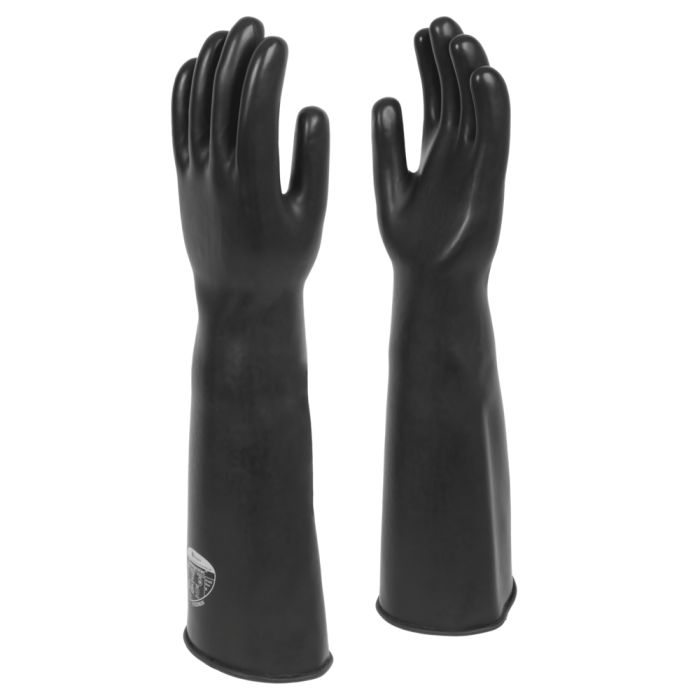
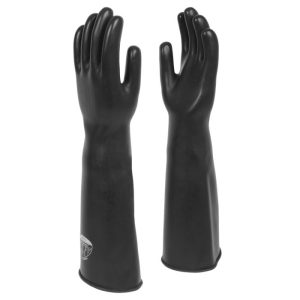
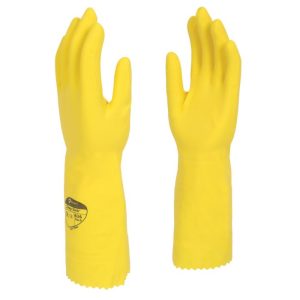
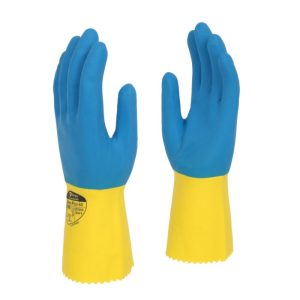
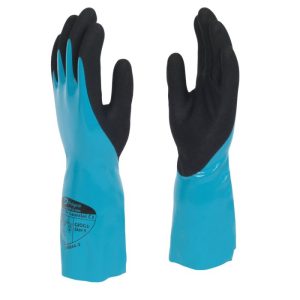
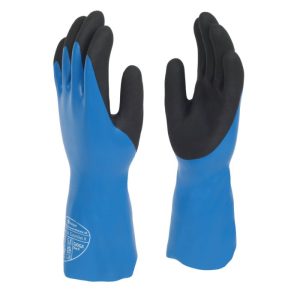
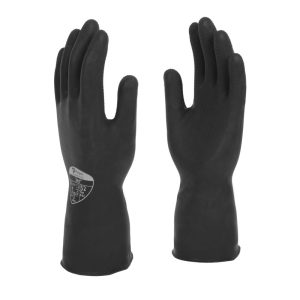
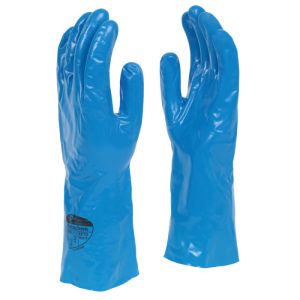
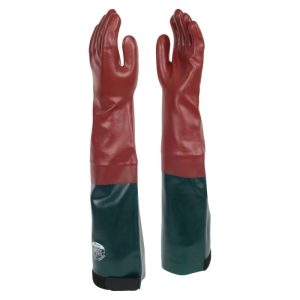
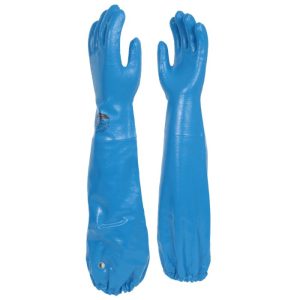
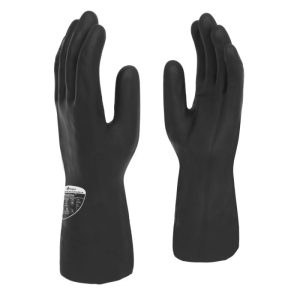
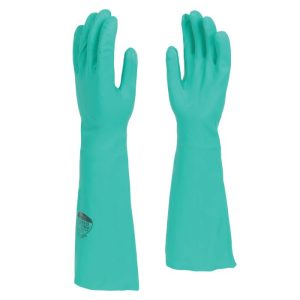
Chemical resistant gloves protect against solvents, acids, alkalis, hydrocarbons and process chemicals across pharmaceutical compounding, electronics wet bench, semiconductor wafer cleaning, marine and offshore tank work, oil and gas terminals, paint and coating lines, and water treatment. Phil Industries supplies Polyco Healthline gloves certified to EN 374 and EN ISO 374-1 Type A and Type B.
Why a handling glove is not enough
A standard handling glove will not stop dimethyl sulfoxide, sulphuric acid, IPA or process solvent — the chemical permeates the polymer and reaches the skin, often without the wearer noticing. As a result, the wrong glove leads to dermatitis, chemical burns and reportable WSH incidents at MOM audit. Therefore selection starts with the SDS, not the catalogue.
Match the material to the chemical
| Material | Resists | Typical use |
|---|---|---|
| Nitrile | Solvents, oils, greases | Cleaning, degreasing, printing |
| Neoprene | Acids, alkalis, oxidisers | Plating and electroplating |
| PVC | Water-based chemicals, salts | Water treatment, fertiliser, bulk handling |
| Butyl rubber | Ketones, esters | Aggressive lab chemicals |
| Latex (household) | Mild detergents | General and food-grade cleaning |
The chemical resistant gloves range
- Nitrile chemical gauntlets — for example solvent cleaning, degreasing and printing.
- Neoprene gauntlets — acids, alkalis and oxidisers in plating.
- PVC chemical gloves — water treatment, fertiliser and bulk handling.
- Butyl rubber gloves — ketones, esters and aggressive lab chemicals.
- Latex household-grade — general cleaning and food-grade chemicals.
- Chemical-resistant cut gloves — because offshore and shipyard work often combines both hazards.
- Long-cuff and shoulder-length — for tank entry and immersion tasks.
Choosing against your SDS
Selection always starts with the chemical, the concentration, the temperature and the contact time. Furthermore, consider mechanical hazards alongside the chemical, since many Singapore tasks combine cut, abrasion and splash exposure in one job.
Frequently asked questions
How are chemical-resistant gloves certified?
To EN ISO 374. The standard tests permeation, penetration and degradation against specific chemicals, so pictograms and letter codes show which chemicals the glove resists and for how long. In addition, EN 374-5 covers protection against micro-organisms.
Does one glove resist all chemicals?
No. Resistance depends on the material — nitrile, neoprene, butyl and others — versus the specific chemical, and on contact time. Therefore always match the glove’s permeation data to the chemical you are using.
What is breakthrough time?
It is how long a chemical takes to permeate the glove material under test. Because a higher EN 374 performance level means a longer breakthrough time, pick a glove rated well above your exposure time.
Do you supply chemical-resistant gloves in bulk in Singapore?
Yes. We stock case quantities for laboratories, electronics, marine and process industries, with next-working-day delivery and volume pricing.
Order chemical resistant gloves in Singapore
Send us the SDS and contact time. WhatsApp +65 9853 9030 or call +65 6555 1745. If the task also involves sharp edges, see cut resistant gloves, or browse all industrial gloves.