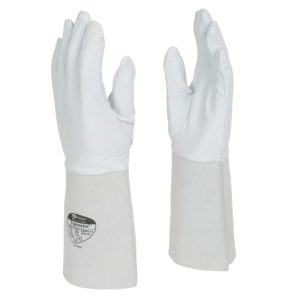
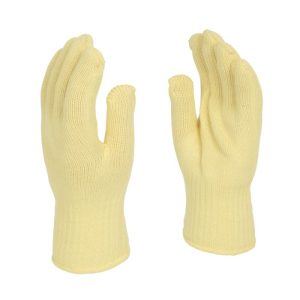
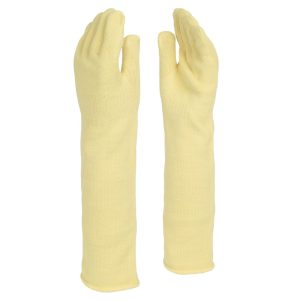
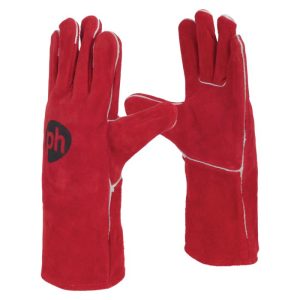
Hot handling gloves are essential PPE for Singapore foundries, glass and ceramics plants, food production lines, commercial bakeries, central kitchens, oven and autoclave operators, welding and brazing teams, and oil and gas plant maintenance. Phil Industries supplies Polyco Healthline hot handling gloves certified to EN 407:2020.
Why an ordinary glove fails
A standard handling glove fails fast at the contact temperatures common in food processing ovens, glass works and metal heat treatment. As a result, the wrong glove leads to contact burns, dropped product and reportable WSH incidents at MOM audit. Therefore we specify to the actual contact temperature and exposure time on your line, not to a generic “heat glove”.
What EN 407 actually scores
| Test | Protects against | Matters when |
|---|---|---|
| Contact heat | Touching hot objects | Oven trays, mould pulls |
| Convective heat | Hot air | Working near flame |
| Radiant heat | Radiated energy | Furnaces, glass plants |
| Small molten splash | Droplets | Welding, brazing |
| Large molten splash | Volume pours | Foundry work |
Each is scored separately, so match the rating to your specific hazard rather than the highest number on the label.
The hot handling gloves range
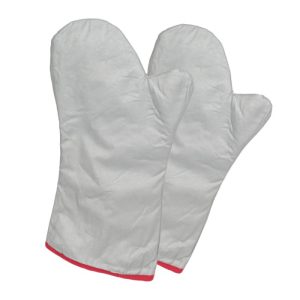
- Aramid (Kevlar) — general high-heat handling and welding.
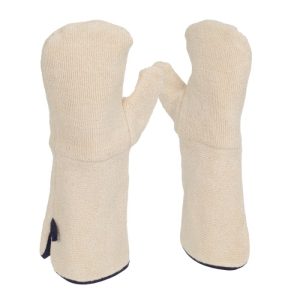
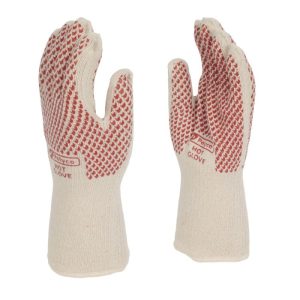
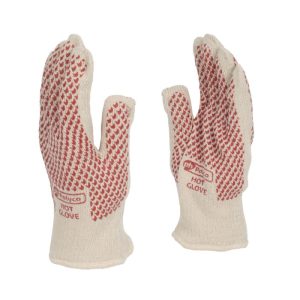
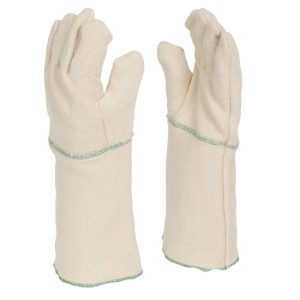
- Terry-loop cotton — bakery, kitchen and oven work, for example tray handling.
- Leather welder’s gloves — MIG, TIG and stick welding in shipyards and fabrication shops.
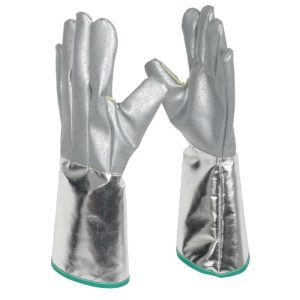
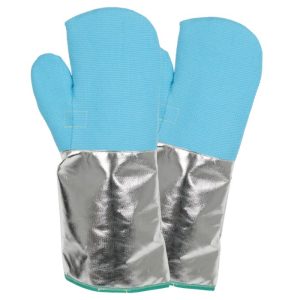
- Aluminised gloves — radiant heat in foundries and glass plants, because reflection beats insulation there.
- Silicone-coated heat gloves — so grip holds on hot, oily or wet surfaces.
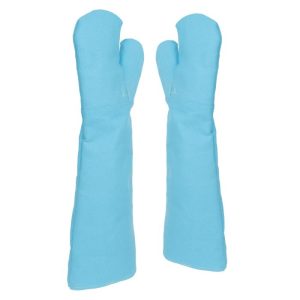
- Long-cuff gauntlets — forearm protection during oven loading.
Choosing correctly
Choice depends on contact temperature, exposure time, dexterity needs, and whether the work also involves cut, abrasion or chemical hazards. Furthermore, consider whether the user briefly touches hot parts or holds them continuously — because a glove rated for a two-second grab will not survive a ten-second hold.
Frequently asked questions
How are heat-resistant gloves rated?
To EN 407, which tests limited flame spread, contact heat, convective heat, radiant heat, and small and large splashes of molten metal — each scored separately. Therefore match the rating to your specific heat hazard.
What is the difference between contact and radiant heat protection?
Contact heat protection matters when you touch hot objects. In contrast, radiant and convective protection matter near furnaces and flames. Because EN 407 scores each, you can pick precisely.
Where are hot handling gloves used?
Foundries, glass and ceramics, commercial bakeries and central kitchens, welding and brazing, autoclave and oven operation, and plant maintenance.
Do you supply hot handling gloves in bulk in Singapore?
Yes. We stock full size runs and case quantities for F&B manufacturers, contract caterers and industrial users, with next-working-day delivery. In addition, we support MOM workplace safety audits and ISO 45001 documentation.
Order hot handling gloves in Singapore
WhatsApp +65 9853 9030 or call +65 6555 1745 with the contact temperature and exposure time. For freezer work instead, see cold handling gloves, or browse all industrial gloves.