Good lab furniture decides how a laboratory actually runs. Benches set the pace of the work. Seating decides whether an operator lasts the shift. Storage decides how quickly anyone finds anything. Yet furniture is often the last line on a fit-out budget. As a result, teams end up with office desks in a laboratory, and they pay for that later.
This guide walks through the choice properly, from bench to chair, for Singapore laboratories and cleanrooms.
Reviewed September 2026 by the Phil Industries engineering team, Singapore. Standards referenced: ANSI/ESD S20.20, IEC 61340-5-1, ISO 14644-1. Products mentioned are stocked at 51 Ubi Ave 1 for same-day quotation.
What counts as lab furniture?
Lab furniture covers every work surface, seat and storage unit inside the laboratory. In practice it falls into five families:
- Benches and worktops — fixed, modular or height-adjustable. See our ESD workbenches.
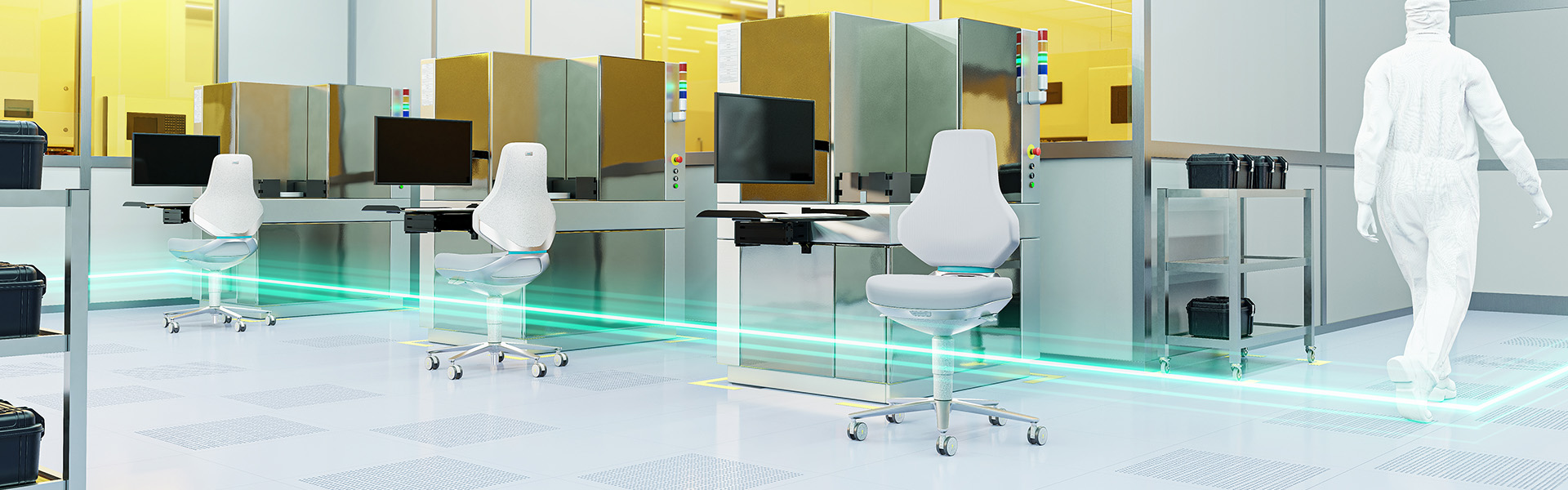
- Seating — chairs and standing aids matched to the room class. Browse laboratory chairs and stools and standing rests.
- Storage and shelving — cabinets, wire shelving and secure cages, listed under cleanroom furniture.
- Trolleys and carts — so work moves between stations without picking up contamination.
- Gowning and transition furniture — benches that mark the clean and unclean sides of a changing room.
Each family fails in a different way. Therefore it pays to specify them separately, rather than accepting one bundled package.
Start with the task, not the catalogue
Before comparing products, describe the work honestly. First, note what has to sit on the bench. Second, note whether operators sit, stand, or alternate through the day. Third, note what the surface must survive: solvents, heat, disinfectant wipe-down, or static-sensitive assemblies. Finally, note how the room is classified.
Because these four answers drive every later decision, write them down before you request a single quotation. Otherwise you will compare products that were never comparable.
Benches and worktops
The worktop is the one surface you cannot easily change later. So choose the material for the chemistry, not the look.
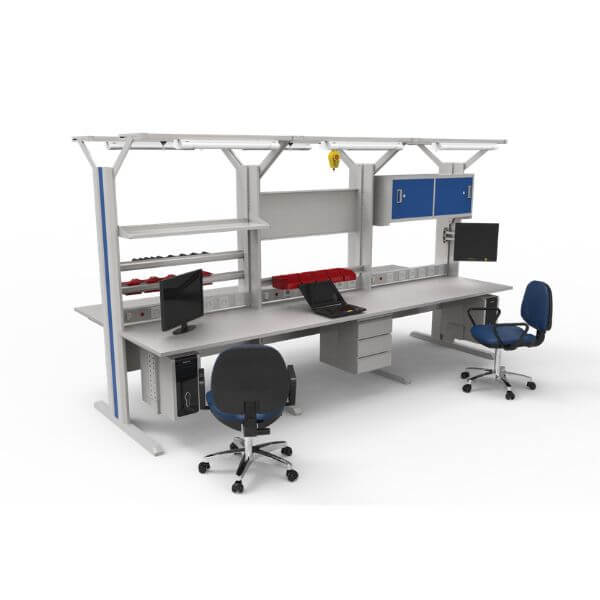
Stainless steel suits wet work, frequent disinfection and anything that must not absorb a spill. Our SS304 stainless steel table and stainless cabinets sit in this group. ESD-safe laminate suits electronics instead, because there the surface has to drain charge rather than resist acid. The ESDpro range covers that side, including modular SpaceLink Pro benches, back-to-back layouts, long height-adjustable tables, and benches with overhead shelving or integrated task lighting.
Height matters more than most specifications suggest. Fixed benches force the operator to adapt. Height-adjustable benches let the bench adapt instead. In addition, an adjustable frame lets one bench serve seated inspection in the morning and standing assembly in the afternoon.
Seating: the part most labs get wrong
A laboratory chair is not an office chair with a different label. It has to wipe clean, it must not shed particles, and in electronics it has to conduct charge away rather than store it.
We stock the Bimos laboratory range for exactly that reason, including the Labsit, Neon, Nexxit and Texon families. Bimos publishes Fraunhofer tested-device status for cleanroom suitability, rates models for use down to ISO Class 3 and Class 2 environments, and backs the range with a ten-year guarantee. Consequently these chairs tend to outlast two or three rounds of cheaper seating.
Where operators stand for long periods, a standing rest often beats a chair. Our stools and standing aids cover saddle stools and sit-stand rests. For the full selection logic, read our engineer’s guide to ESD and cleanroom chairs.
Storage, shelving and trolleys
Storage is where contamination control quietly succeeds or fails. Open wire shelving allows airflow and leaves nowhere for dust to settle unseen. Closed cabinets protect what has to stay covered. Both have a place, so most labs need a mix of the two.
Our cleanroom furniture range includes chrome wire shelving, wire trolleys, security cages and carts, stainless steel tables and a sixty-door stainless steel cabinet for personal effects. For static-sensitive parts, use dedicated ESD storage boxes, bins and trays rather than general plastic containers.
Gowning and transition furniture
A gowning bench does one job, but it does that job constantly. It marks the line between the clean and unclean sides of a changing room. It also lets people change footwear without putting a dirty sole onto the clean floor. Stainless steel versions wipe down easily and survive daily disinfection. Because gowning discipline collapses when the furniture is awkward, this is a poor place to economise.
ESD and cleanroom requirements
Two separate rule sets usually apply at once, and teams often confuse them.
Cleanroom classification governs particles. If you are unsure which class you work to, our plain-English guide to ISO 14644 cleanroom classes explains the numbering. Static control governs charge instead, and it depends on the furniture being earthed rather than merely labelled. A bench top only works once it connects to a common point ground, so read our ESD grounding guide before installing one.
In short, settle the room class first, then the static requirement, then the furniture.
Lab furniture we stock in Singapore
Because most Singapore labs buy lab furniture piece by piece as the room evolves, we keep the core items in Ubi rather than quoting long import lead times:
- Laboratory chairs from Bimos, with wipe-clean PU, vinyl or ESD upholstery and height ranges for both desk and bench work.
- ESD workbenches with dissipative laminate tops and grounding points, so electronics labs meet ANSI/ESD S20.20 from day one.
- Stainless steel workbenches and tables (SUS304, SUS316 on request) for wet chemistry, cleanrooms and food-grade areas.
- Cleanroom furniture: gowning benches, step-over benches, wire shelving and trolleys for ISO 14644-1 rooms.
- ESD storage boxes and bins for sample and component storage on the bench.
Send us the room layout and we will suggest a bench, seating and storage combination; WhatsApp +65 9853 9030 or email sales@phil-industries.com.sg.
What furniture is needed in a laboratory?
Most laboratories need five things: a work surface sized for the task, seating or standing support matched to the shift, storage that suits the material, a way to move items between stations, and gowning furniture where the room is classified. Everything else is refinement. If the budget is tight, protect the bench and the chair first, because those two touch the operator every minute of the day.
What is the best material for lab furniture?
There is no single best material, but there is usually an obvious right one. Stainless steel wins for wet chemistry, biological work and anything needing aggressive disinfection. ESD-safe laminate wins for electronics assembly and inspection. Epoxy resin suits heavy chemical exposure. Powder-coated steel frames suit dry, general-purpose labs at lower cost. Above all, match the surface to the worst thing that will land on it, not to the average.
How do you choose lab furniture in Singapore?
Start with the room classification and the work, as described above. Then check three practical points. First, confirm local stock and lead time, because imported furniture can take months. Second, confirm that the supplier quotes the accessories too, since shelves, cords, castors and footrests are usually where a specification falls apart. Third, confirm that spare parts exist, because a chair with no replacement gas lift becomes scrap.
We hold lab furniture in Singapore and quote the same day. So if you send a layout or a photograph of the bench you are replacing, we can work from that.
Talk to us about your lab
Phil Industries supplies lab furniture, ESD workbenches, cleanroom seating and storage to electronics, semiconductor, aerospace and laboratory teams across Singapore. Tell us the room class and the task, and we will put a specification together. Call +65 6555 1745 or email kenneth@phil-industries.com.sg for a same-day quotation.
Related reading: ESD standards explained (IEC 61340-5-1 vs ANSI/ESD S20.20).