Two ESD standards govern almost every static-safe production floor in the world: IEC 61340-5-1 and ANSI/ESD S20.20. They cover the same ground, they use nearly the same numbers, and yet engineers regularly get asked for one when their site is built around the other. This guide explains what each one is, where they differ, what limits your ESD protected area has to meet, and how to pass the audit without over-buying.
Reviewed September 2026 by the Phil Industries engineering team, Singapore. Standards referenced: ANSI/ESD S20.20, IEC 61340-5-1, ISO 14644-1. Products mentioned are stocked at 51 Ubi Ave 1 for same-day quotation.
⚡ What the two ESD standards actually are
ANSI/ESD S20.20 comes from the EOS/ESD Association in the United States. IEC 61340-5-1 comes from the International Electrotechnical Commission and dominates in Europe and much of Asia. Both are programme standards rather than product standards. In other words, neither one tells you which wrist strap to buy. Instead, each tells you to write a plan, ground everything conductive, control the things you cannot ground, and then prove on a schedule that the whole system still works.
Because the two committees deliberately harmonised their technical requirements, the day-to-day limits are effectively identical. Therefore a floor built properly to one will almost always satisfy the other, provided your paperwork uses the right title.
🔍 IEC 61340-5-1 vs ANSI/ESD S20.20: the real differences
| ANSI/ESD S20.20 | IEC 61340-5-1 | |
|---|---|---|
| Published by | EOS/ESD Association (US) | IEC (international) |
| Typical users | US and Asian OEMs, aerospace, defence contractors | European OEMs, EMS providers, IEC-aligned sites |
| Default device coverage | HBM 100 V and above, CDM 200 V and above, plus isolated conductors | Same thresholds, same treatment of isolated conductors |
| Test methods referenced | ANSI/ESD S and STM series | IEC 61340-2-x, 61340-4-x series |
| Certification route | Third-party certification by accredited registrars is common | Usually self-declared conformity, verified in customer audits |
| Packaging reference | ANSI/ESD S541 | IEC 61340-5-3 |
So the practical question is not which standard is stricter. It is which one your customer writes into the purchase order.
📋 What both ESD standards require you to have
Auditors look for four things, and hardware is only one of them.
- An ESD control programme plan. This is the master document. It names the person responsible, defines your ESD protected area, and lists every control measure in use.
- A training plan. Everyone who enters the EPA must be trained before they start, and then retrained on a stated cycle. Records matter as much as the training itself.
- A compliance verification plan. You must test your controls periodically, log the results, and act on failures. Auditors read these logs first, since they reveal whether the programme is real.
- Product qualification. Before a new item enters the EPA, you check it against the limits. Consequently you cannot simply buy something labelled anti-static and assume it qualifies.
📐 The limits your EPA has to meet
The numbers below are the working limits both standards are built around. Always confirm them against the current edition of the standard your customer cites, because editions do get revised.
| Control item | Requirement |
|---|---|
| Wrist strap system (person, cuff and cord together) | Less than 3.5 x 10⁷ ohms |
| Worksurface to groundable point | Less than 1 x 10⁹ ohms |
| Flooring to groundable point | Less than 1 x 10⁹ ohms |
| Person, footwear and flooring as a system | Less than 1 x 10⁹ ohms, with body voltage under 100 V |
| Seating | Less than 1 x 10⁹ ohms |
| Carts, trolleys and mobile equipment | Less than 1 x 10⁹ ohms |
| Ioniser offset voltage | Within plus or minus 35 V |
Notice the pattern. Almost everything sits under 1 x 10⁹ ohms, while the wrist strap is far tighter because it is the primary path for a seated operator.
⏱️ How often should you test?
Neither standard hands you a fixed calendar. Instead, you set intervals in your compliance verification plan and justify them. In practice, most Singapore sites settle on something like this.
- Daily — every operator tests their wrist strap and footwear at a checker before starting, and the result is logged automatically.
- Monthly or quarterly — worksurfaces, mats, chairs, shelving and trolleys are resistance tested at fixed points.
- Every six to twelve months — flooring, ionisers and the full grounding network are verified, usually alongside your other facility checks.
Above all, keep the records legible and dated. A perfect floor with missing logs still fails.
🛠️ Building an EPA: what you actually buy
Once the plan exists, the shopping list is short and predictable.
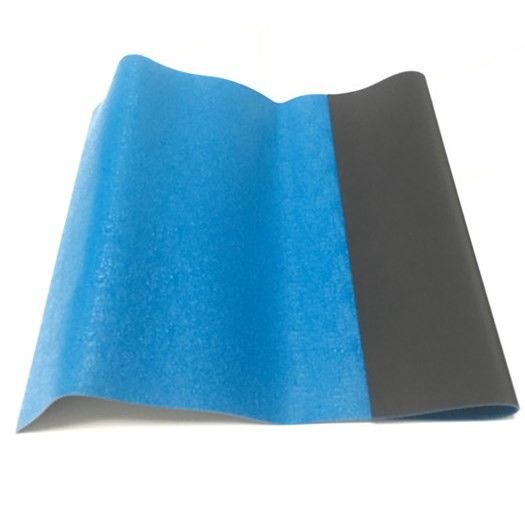
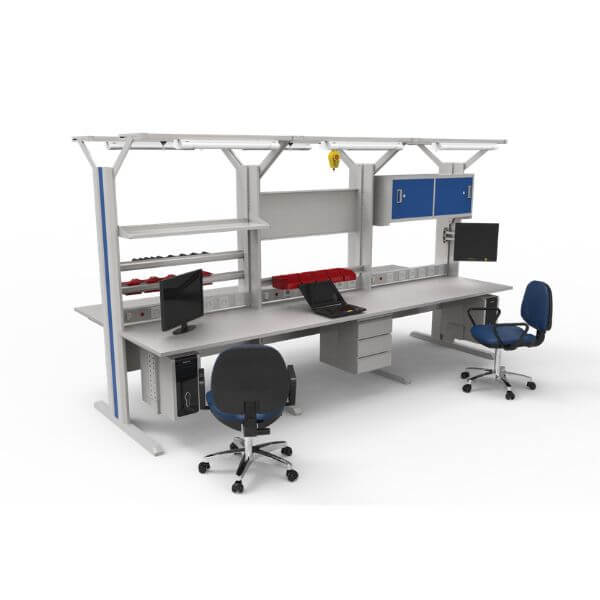
- Grounded worksurfaces. A modular ESD workbench arrives already bonded, which removes the most common source of audit findings. Alternatively, retrofit existing benches with ESD rubber matting.
- A proper grounding network. Common point ground bars, banana-jack cords, ground cords and testers all live in our ESD grounding accessories range. Our ESD grounding and workstation guide walks through the wiring in detail.
- Compliant seating. Chairs are a control item, not furniture. See the chair selection guide, then the laboratory and ESD chair range.
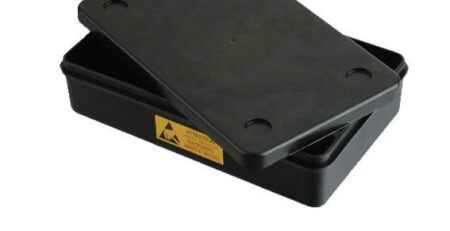
- Static-dissipative handling. Boards and subassemblies should never sit on bare plastic, so use ESD storage boxes and bins and dissipative ESD-safe materials for fixtures and trays.
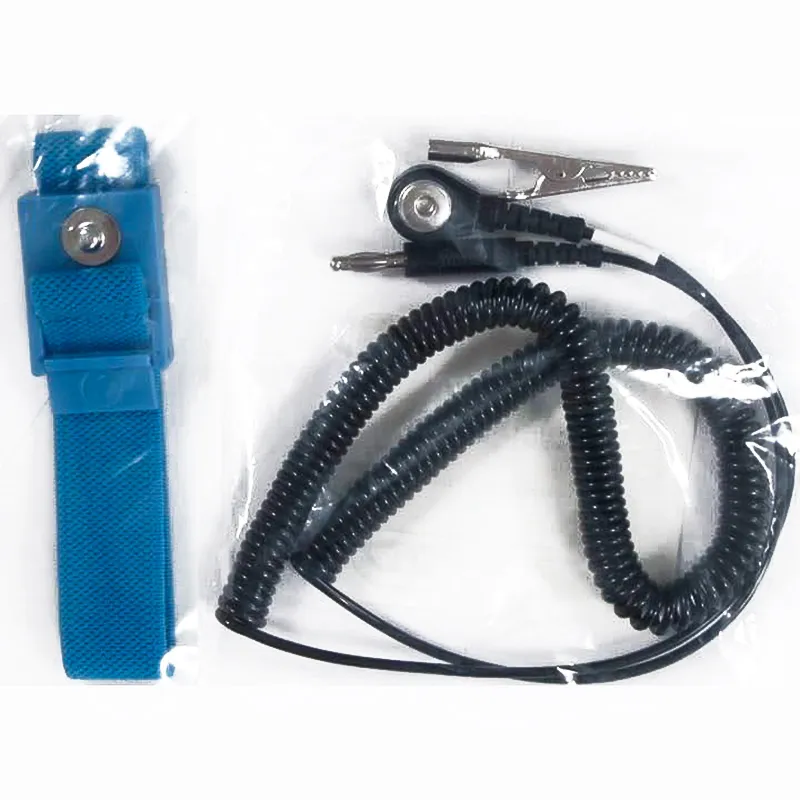
- Personnel items. Wrist straps, heel grounders and anti-static gloves complete the operator side.
📦 What happens outside the EPA
Protection does not stop at the door. As soon as a sensitive part leaves the protected area, packaging becomes the only control left. ANSI/ESD S541 and IEC 61340-5-3 both call for shielding packaging on anything moving through an unprotected environment, and for low-charging materials in contact with the device.
In short, static shielding bags for transit, dissipative bags or bins inside the EPA, and never ordinary polythene near an exposed board. Our ESD packaging materials range covers shielding bags, moisture barrier bags, dissipative bubble and conductive tote boxes.
🇸🇬 Which ESD standards apply in Singapore?
Singapore has no separate national ESD regulation, so the standard that applies is whichever one your customer specifies. Semiconductor and aerospace supply chains here most often audit to ANSI/ESD S20.20, since their parent programmes originate in the United States. European medical and automotive OEMs generally ask for IEC 61340-5-1 conformity instead.
Fortunately, the overlap is close enough that one well-built EPA can satisfy both. Therefore write your programme plan against the standard named in your largest contract, and cross-reference the other in the same document.
❌ The five findings auditors raise most often
- Unbonded add-ons. A shelf, lamp or monitor arm gets added to a bench and nobody grounds it.
- Isolated conductors. Metal fixtures, tool trolleys and equipment frames that sit inside the EPA with no path to ground.
- Missing verification records. The tests happen, but the logs stop three months back.
- Uncontrolled insulators. Coffee cups, tape dispensers, document wallets and general-purpose plastic bins on the bench.
- Untrained visitors. Contractors and auditors walking into the EPA without footwear or a briefing.
Every one of these is cheap to fix and expensive to explain. Consequently a short weekly walk-round is the highest-return habit in any ESD programme.
🧪 Working in a cleanroom too?
Many Singapore lines have to satisfy static control and particle control at the same time. Those requirements pull in different directions, since some ESD materials shed and some cleanroom materials insulate. Our ISO 14644 cleanroom classes guide explains the particle side, and the lab furniture buyer’s guide covers hardware that is rated for both.
📞 Need help specifying an EPA?
Phil Industries has supplied ESD control hardware to Singapore electronics, semiconductor and aerospace floors for years. Send us your layout or your audit finding, and we will tell you plainly what you need and what you can skip.
Call +65 6555 1745 or email kenneth@phil-industries.com.sg. Quotes come back the same working day wherever possible.