A medical device manufacturer was receiving field returns for an instrument panel lid that slammed shut on users’ fingers. The design team had specified a hinge with a mechanical stop but no damping. The fix — a TOK rotary damper — cost less than five Singapore dollars per unit and eliminated the returns entirely. The investigation took three weeks. The solution took one part number.
Rotary dampers are one of the most cost-effective ways to improve product quality and operator safety in precision equipment — and one of the most consistently under-specified components in equipment design reviews.
What a Rotary Damper Does
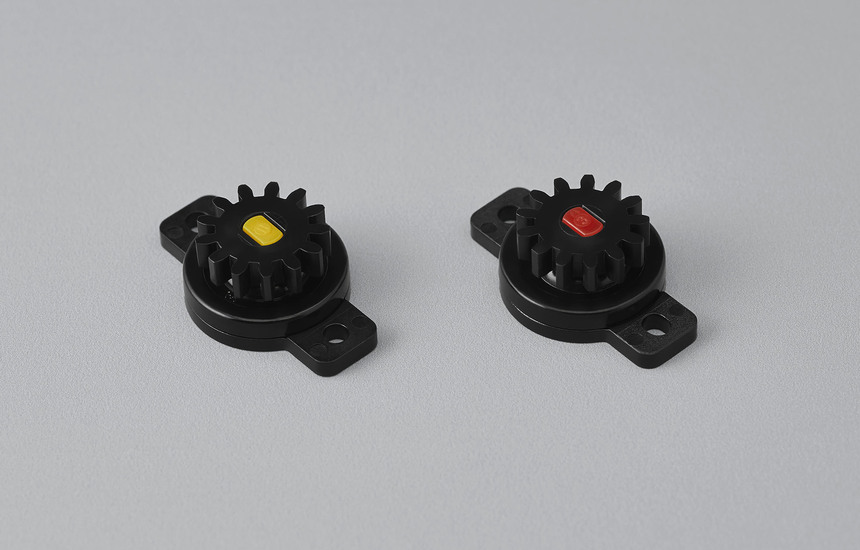
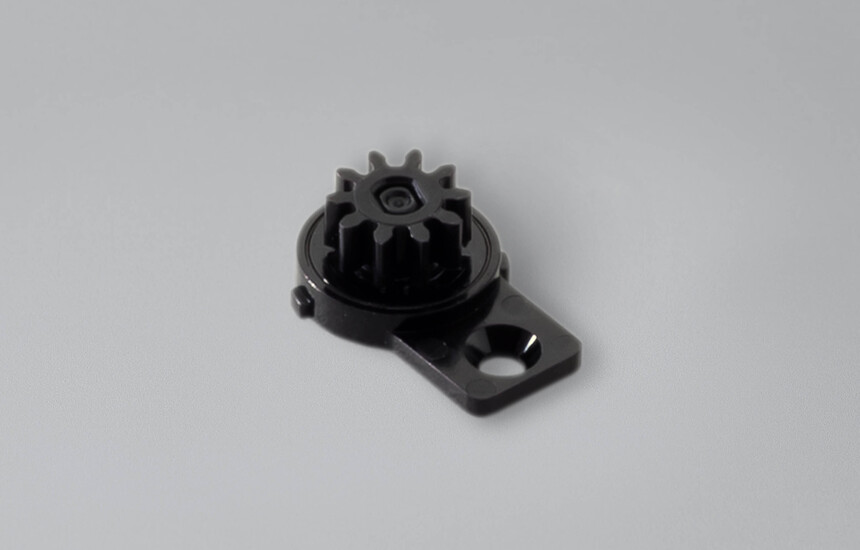
A rotary damper uses the viscous resistance of silicone oil to control angular motion. As the damper rotates, the oil creates resistance proportional to rotational speed — faster movement creates more resistance, slowing the motion smoothly and consistently. The result: a lid, door, or panel that opens or closes at a controlled rate regardless of how hard the operator pushes it.
This solves two distinct problems simultaneously: noise and impact from slamming, and safety risk from finger entrapment in enclosures and lids that close under gravity or spring force.
Selecting the Right Movement Type
| Movement Type | Application Examples | Key Selection Note |
|---|---|---|
| Continuous rotation | Film reels, cable management, rotating displays | Damping applies throughout full rotation |
| Horizontal use | Document trays, equipment lids opening horizontally | Gravity does not assist or oppose motion |
| Vertical use | Overhead panels, storage lids, gravity-assisted closures | Gravity load must be factored into torque calculation |
| Horizontal plus vertical | Multi-axis hinges, flip-open equipment panels | Bidirectional models required |
The Torque Calculation Mistake Engineers Make
The most common selection error: choosing torque value based on the weight of the lid alone, without accounting for the centre of gravity offset. A lid that weighs 500 grams but has its centre of mass 150mm from the pivot generates a gravitational moment that the damper must overcome — not simply a 500 gram load. Underestimating this leads to a damper that is overwhelmed by gravity and fails to control the closing motion from the very first use.
TOK provides a torque calculation methodology that accounts for component weight, centre of gravity offset, and desired closing time. Phil Industries can assist with this calculation for your specific application.
Temperature Sensitivity
Silicone oil viscosity increases at lower temperatures, meaning the same damper provides more resistance — and moves more slowly — in cold environments. For equipment used in cold storage facilities, refrigerated labs, or outdoor environments, confirm the damper’s performance at the actual operating temperature, not just at 20 degrees C room temperature. For Singapore manufacturing environments at 20–25 degrees C, standard TOK dampers perform within specification.
Unidirectional vs Bidirectional
Unidirectional dampers provide resistance in one direction only — typically the closing direction for lids — and free rotation in the other. Bidirectional dampers resist motion in both directions. For most lid and door applications, unidirectional is correct: you want the lid to close slowly and open freely. For applications where controlled motion is needed in both directions, specify bidirectional.
Phil Industries is an authorised TOK distributor in Singapore. Browse the TOK rotary damper range or contact us with your application specifications for a part number recommendation and torque calculation.