A practical guide for site engineers, safety officers, facility managers and abatement teams in Singapore — how to choose a vacuum for hazardous particulate work, what the filter grades mean, and where a certified Class H unit is required rather than optional.
⚡ In short: with asbestos, silica or lead dust an ordinary vacuum is an aerosol generator — it passes the finest, most dangerous fraction straight back into the air. You need the right filter grade and, critically, full containment on disposal.
⚠️ Why an ordinary vacuum is dangerous with hazardous dust
Asbestos fibres, respirable crystalline silica (RCS), lead dust and mould spores are hazardous precisely because they are fine enough to stay airborne and reach deep into the lungs. A standard vacuum makes the problem worse: it draws the dust in, passes the finest fraction straight through its filter, and blows it back into the air as a fine, invisible cloud. A hazardous-particulate vacuum is engineered to do the opposite — capture the finest particles and keep them contained inside the machine through use, transport and disposal.
🏗️ The three hazards Singapore sites deal with most
- Silica dust (RCS) — respirable crystalline silica from cutting, grinding and drilling concrete, stone and tile is one of the most common construction-dust hazards. Controlling it at source and vacuuming settled dust (rather than sweeping) is central to a WSH dust-control plan.
- Asbestos — in Singapore, asbestos work is regulated. It must be carried out by MOM-approved asbestos-removal contractors under the Workplace Safety and Health (Asbestos) Regulations, with MOM notified for the work. Equipment, including vacuums, must meet the standard the job requires.
- Lead (RRP) and mould — lead dust and chips from renovation, repair and painting of older buildings, and mould during remediation, both need contained capture so the contaminant is not spread through the building.
🔬 Reading the filter grade
Filtration for hazardous dust is graded by how much it captures at the hardest particle size:
| Grade | Efficiency | Typical use |
|---|---|---|
| H13 HEPA | 99.97% at 0.3 µm | General hazardous particulate capture |
| H14 ULPA | 99.999% at 0.12 µm | Finest dusts — asbestos, silica, lead, fibreglass, mould |
ULPA (H14) holds back finer particles at higher efficiency than HEPA, which is why the immediate-containment and certified hazardous-dust vacuums use H14 ULPA media.
🏷️ Certified Class H vs immediate containment — the distinction that matters
This is where specifications are most often confused:
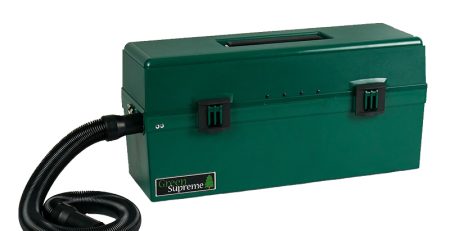
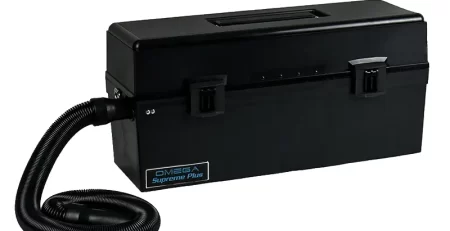
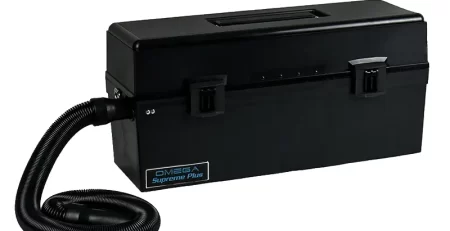
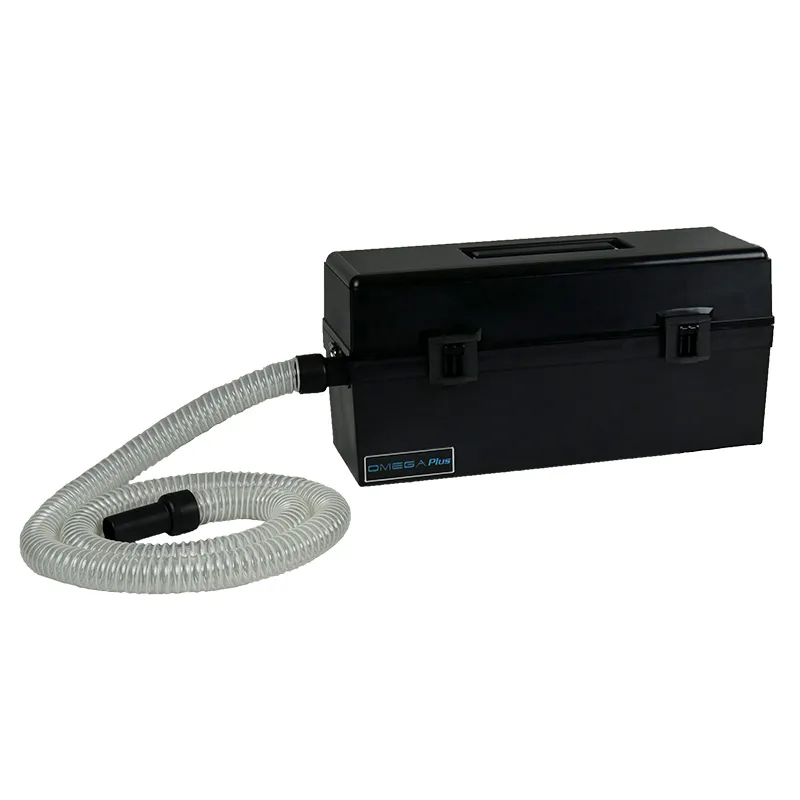
- Certified Class H — a vacuum certified to IEC/EN 60335-2-69, Annex AA-Class H is the category defined for hazardous dusts such as asbestos, silica and lead. Where a job or regulation calls for a Class H machine, only a certified unit qualifies. In the Atrix range we stock, the 230V Omega Class H14 Certified and the cordless Class H14 Certified carry this certification.
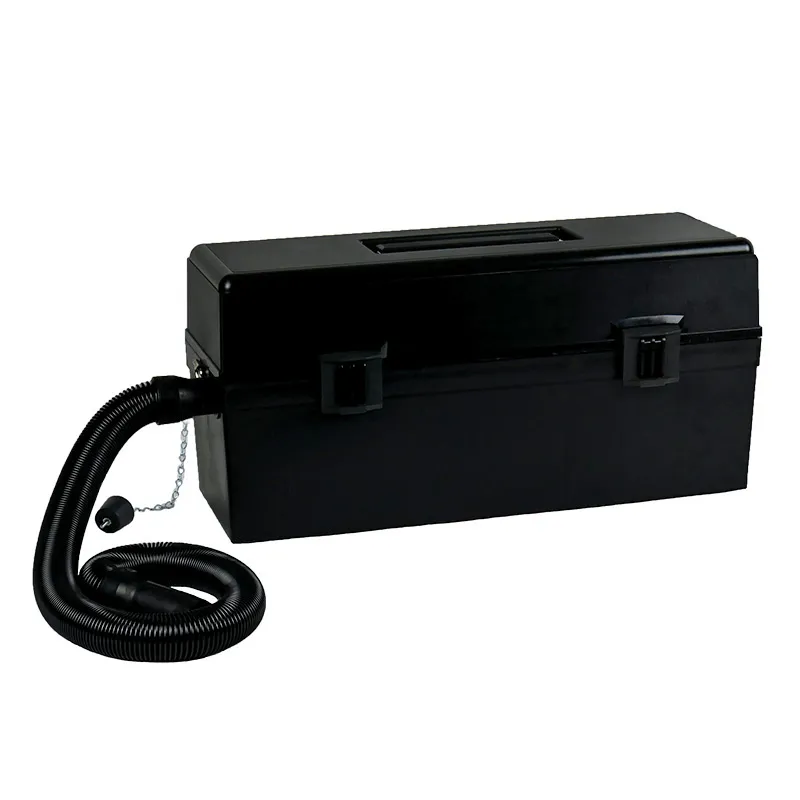
- Immediate containment H14 ULPA — the Omega Cordless Immediate Containment Vacuum (VACO22VDC) delivers the same H14 ULPA capture for hazardous particulate and seals it with a retention plug, without carrying the formal Annex AA-Class H certification. It suits hazardous-dust clean-up where H14 capture is what is needed and formal certification is not mandated.
The rule: match the vacuum to what your regulatory and project safety plan actually requires. For regulated asbestos work in Singapore, follow the MOM approved-contractor and notification requirements and specify equipment accordingly.
What “full containment” actually means
Immediate — or full — containment is the property buyers ask about most: once hazardous particulate is vacuumed, it stays sealed inside the machine and does not leak back out, and the sealed collection is removed and disposed as hazardous waste after use. On the Atrix immediate-containment units, the H14 ULPA cartridge captures the fine particulate and a heavy-duty retention plug seals it for safe removal, transport and disposal — so the operator handles a contained, sealed unit rather than loose dust. This is why immediate-containment vacuums are chosen for acutely toxic residues as well as construction dusts; for a worked example, see Vacuuming Cyanide Safely. Whatever the contaminant, the sealed collection must be disposed following your hazardous-waste procedures and safety plan.
🎯 Choosing the format for the job
| Situation | What to specify | Atrix model |
|---|---|---|
| Regulated asbestos / Class H required, mains power | Certified Class H, 230V | 230V Omega Class H14 Certified |
| Class H required, no reliable power | Certified Class H, cordless | Cordless Class H14 Certified |
| Hazardous particulate, cordless site work | Immediate-containment H14 ULPA | Omega Cordless Immediate Containment (VACO22VDC) |
| Hazardous particulate, general HEPA | D4.6 HEPA hazardous-particulate vacuum | Hazardous Particulate D4.6 HEPA |
| Mobile operator across large areas | HEPA backpack for dry hazardous particulate | Omega SafeTech HEPA Backpack |
The full lineup sits under Critical Area Vacuums.
✅ Good practice on site
- Vacuum, don’t sweep — sweeping re-suspends settled hazardous dust; contained vacuuming removes it.
- Keep the filter genuine and change on the indicator — the containment rating depends on the sealed H14/ULPA cartridge, so a full-filter light tells you exactly when to change it; genuine filters are under Atrix Filters & Accessories.
- Seal before you move — a retention plug or sealed disposal keeps captured particulate contained during transport, which is part of the safety chain, not an afterthought.
🔑 The one thing to remember: a HEPA/ULPA rating is only half the job. Certified Class H for the hazard plus sealed, immediate containment on every disposal is what actually keeps the dust contained — always follow your site’s safety plan.
Frequently Asked Questions
Do we legally need a certified Class H vacuum for asbestos in Singapore?
Asbestos work is regulated and must be done by MOM-approved asbestos-removal contractors following the WSH (Asbestos) Regulations. Follow those requirements and your project safety plan for the equipment standard — where Class H is required, use a certified unit.
Is H14 ULPA better than H13 HEPA for silica?
H14 ULPA captures finer particles at higher efficiency, which is why it is used for the finest hazardous dusts. Match the grade to your dust-control plan; both capture far more than an ordinary vacuum.
Can one vacuum cover asbestos, silica and general dust?
Keep hazardous-dust vacuums dedicated and clearly labelled — a machine used on asbestos should not be moved to general cleaning. Specify by the strictest hazard the unit will handle.
Phil Industries is an authorised Atrix distributor in Singapore, supplying hazardous-particulate and certified Class H vacuums ex-stock from our Ubi warehouse to construction, abatement, facilities and industrial-hygiene teams. Not sure which unit your job requires? Call +65 6555 1745 or WhatsApp +65 9853 9030.
Ready to specify a machine? Browse our hazardous particulate vacuums — HEPA, Class H14 and ULPA models with sealed cartridge containment, held ex-stock in Ubi, Singapore. Tell us the contaminant and we will specify the filtration class and cartridges.