ESD grounding gives static charge a safe path to earth before it reaches a sensitive component. Yet many Singapore workbenches get it half right. This guide walks through a complete setup, one part at a time.
Reviewed September 2026 by the Phil Industries engineering team, Singapore. Standards referenced: ANSI/ESD S20.20, IEC 61340-5-1. Products mentioned are stocked at 51 Ubi Ave 1 for same-day quotation.
Why ESD grounding is the foundation of every EPA
Mats, wrist straps and ESD chairs only work when they connect to a real earth point. Without that connection, a “protected” bench simply stores charge instead of draining it. As a result, boards still fail in the field even though the bench looks compliant. Therefore, auditors working to ANSI/ESD S20.20 or IEC 61340-5-1 always trace the ground path first.
The four parts of a grounded workstation
1. The common point ground
Every bench needs one defined earth point, so all surfaces drain to the same potential. A common point ground cord plugs into the bench earth and offers snap terminals for the mat and wrist strap. In short, it is the hub of the whole ESD grounding system.
2. The bench mat and its grounding cord
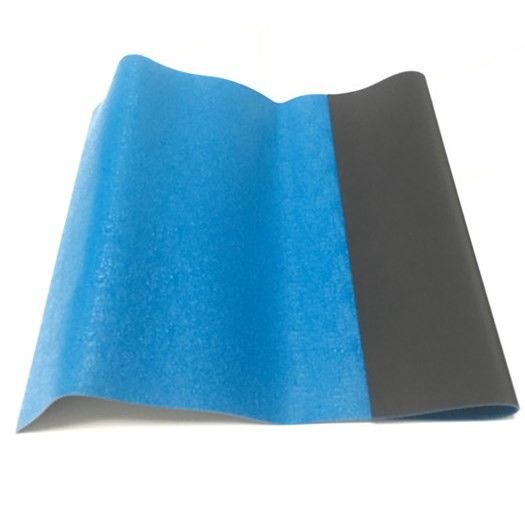
A dissipative rubber mat gives components a safe landing surface. However, the mat must connect to the common point through its own mat grounding cord. Browse our full range of ESD rubber mats for table and floor options.
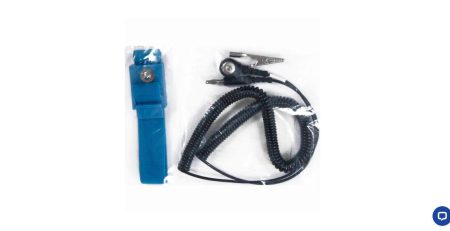
3. The wrist strap and coil cord
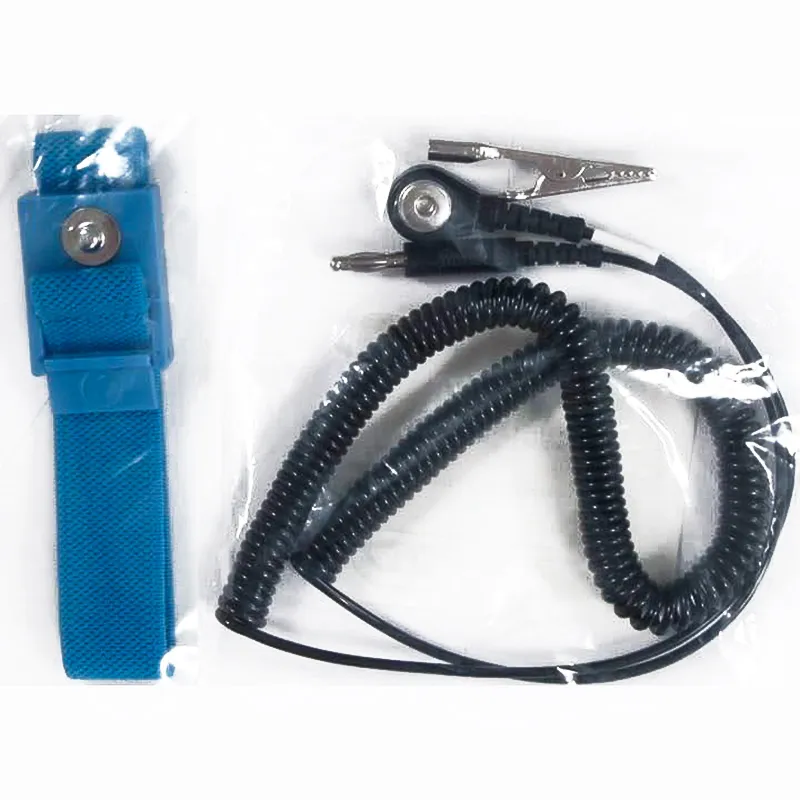
Operators generate charge just by moving. Consequently, a wrist strap with a coil cord remains the primary control for seated work. The cord includes a one-megohm resistor, which limits current for operator safety while still draining charge.
4. Footwear and flooring for standing work
Standing operators move between benches, so a wrist strap becomes impractical. Instead, ESD footwear working together with dissipative flooring keeps them grounded on the move.
Setting up ESD grounding: a five-step sequence
- First, identify a verified building earth at each bench. For example, use the earth terminal of a fixed socket circuit.
- Second, fit the common point ground cord and label it clearly.
- Third, connect the mat cord to the mat stud, and then snap it onto the common point.
- Fourth, issue each operator a wrist strap and test it before every shift.
- Finally, log the checks. Because auditors ask for records, a simple daily sheet saves hours later.
How often should you test ESD grounding equipment?
Test wrist straps daily before use, because they fail more often than any other item in the system. Check mats and ground cords on a scheduled basis, for instance monthly, using a surface resistance meter. Straps can also pass a tester yet still fail in real use. Our article on why a wrist strap passes the test but still damages components explains that trap in detail.
The 1 MΩ resistor: safe grounding, not a dead short
People are often surprised that a wrist strap does not connect straight to earth. Instead, a personnel grounding path runs through a 1 MΩ current-limiting resistor, so if the operator ever touches a live voltage, the resistor limits the current to a safe level. Charge still drains harmlessly, yet the person is protected. Equipment and mats, by contrast, are grounded directly for a fast, low-resistance path. Because these two paths behave differently, always use a cord built for the job — our ESD grounding cable is terminated for exactly this purpose.
Build your grounding kit from one place
A workstation grounds reliably only when every part matches: the common point ground, the mat cord, the wrist strap and the earth connection all have to work as one system. Sourcing them together avoids mismatched studs and missing resistors, so the fastest way to get compliant is to start from our ESD grounding & earthing accessories range and quote the whole kit at once.
ESD grounding cords stocked in Singapore
These are the grounding cords we ship most often from Ubi stock. Check each product page for resistor value, cord length and connector type:
- Common Point Ground Cord for 2-Layer ESD Rubber Table Mat
- ESD Grounding Cord with Alligator Clip and Ring Terminal
- ESD Wrist Strap Grounding Cord with Alligator Clip and Snaps
- Black ESD Grounding Cord for Dual-Operator Wrist Straps
- 2.4m ESD Wrist Strap Dual-Hole Grounding Coil Cord
- ESD Earth Facility Grounding Plug Socket, 10mm Stud, Yellow – the earth-bonding point the cords connect to.
Frequently asked questions
Can I ground a mat to a water pipe or window frame?
No. Those points carry unknown resistance and may float at a different potential. Always use a verified electrical earth, since the whole system depends on it.
Do I need both a wrist strap and a grounded mat?
Yes, for seated assembly work. The mat protects the components you set down, while the strap drains the operator. Each covers a risk the other cannot.
What does an ESD grounding kit include?
A typical kit bundles a common point ground cord, a mat cord and a wrist strap set. In addition, some kits add snap studs for retrofitting older mats. Kits save time because every part is matched and ready to connect.
Stocked in Singapore, ready for quotation
We stock ESD grounding and earthing accessories — cords, kits, straps and testers — in Singapore for next-day delivery. Send your bench count to kenneth@phil-industries.com.sg or call +65 6555 1745, and we respond within two business hours.
Related reading: ESD standards explained (IEC 61340-5-1 vs ANSI/ESD S20.20) and the lab furniture buyer’s guide.