A practical guide for engineers, facility managers and procurement teams in Singapore — why a workstation chair is a technical component, not furniture, and how to choose ESD, cleanroom and lab seating that protects both the operator and the product.
⚡ In short: a workstation chair is process control, not furniture. In an EPA it must keep the seated operator grounded through the castors and floor; in a cleanroom it must not shed particles. Match the chair to the environment and the shift.
Reviewed September 2026 by the Phil Industries engineering team, Singapore. Standards referenced: ISO 14644-1. Products mentioned are stocked at 51 Ubi Ave 1 for same-day quotation.
🪑 A chair is part of your process control
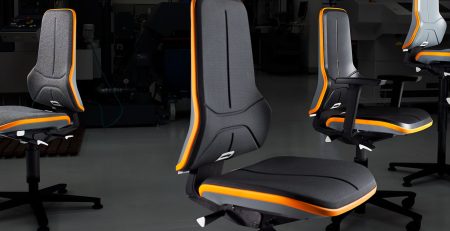
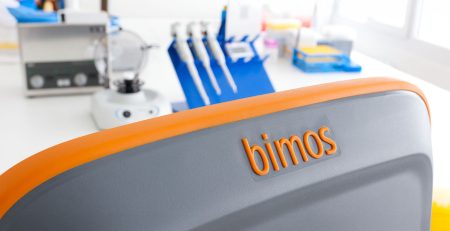
In an EPA or a cleanroom, the chair an operator sits in touches the same controlled environment as the product. The wrong chair can inject static into a static-sensitive assembly, shed particles into a cleanroom, or leave an operator fatigued and imprecise by mid-shift. That is why professional seating from makers like Bimos is specified against the same standards as the rest of the workstation — not chosen from a furniture catalogue.
⚡ ESD chairs: keeping the operator grounded
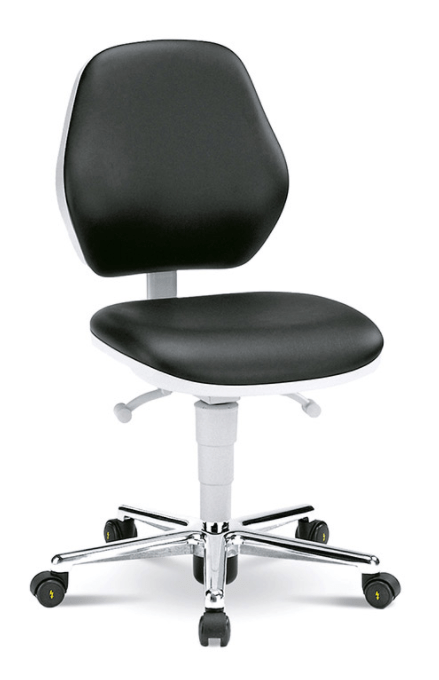
A seated operator is a large surface that accumulates static charge as they move against the chair. An ESD (conductive) chair is built from conductive materials and fitted with a conductive castor or a floor-contact glide, so charge on the operator drains continuously to a grounded floor instead of discharging into the product.
- The chair must connect to ground — conductive castors or glides plus an ESD floor complete the path; a conductive chair on an insulating floor does not work.
- It complements the wrist strap, not replaces it — the strap grounds the operator during fine work; the chair keeps them grounded as they shift and move.
- Match it to the EPA — for lab-grade electronics and semiconductor work, specify full ESD chairs; where you need cleanability plus basic static control, the ESD-safe / anti-static range fits.
🧫 Cleanroom chairs: not shedding into the room
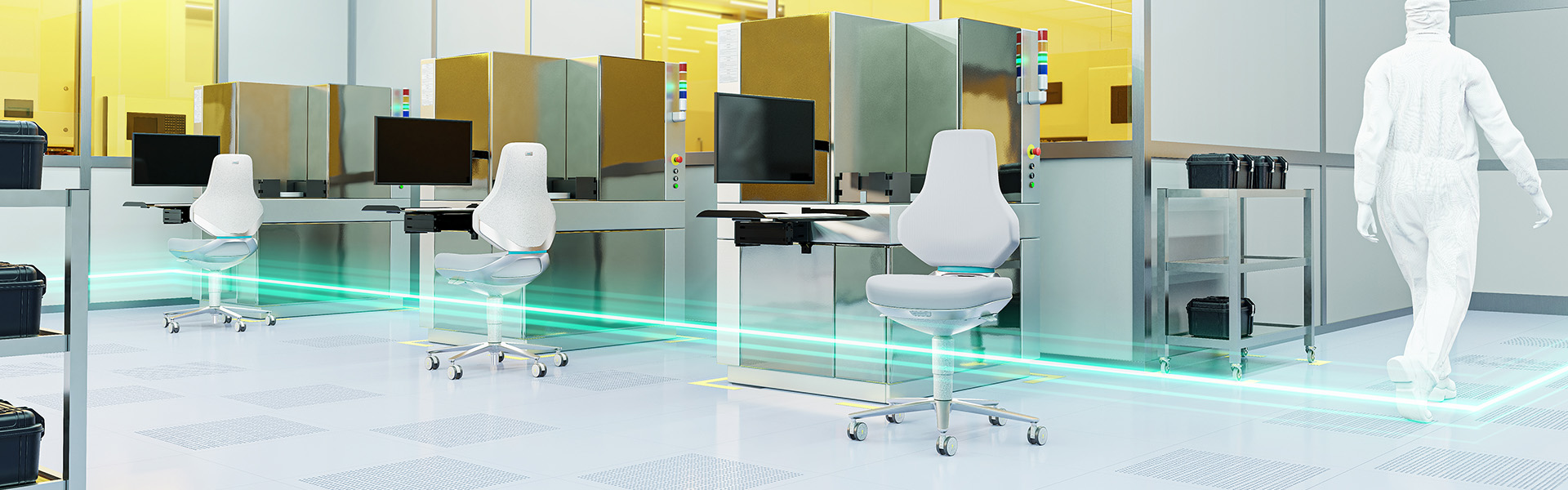
A cleanroom chair is chosen so the chair itself does not contaminate the space. That means low-particle, wipe-down materials, sealed or covered mechanisms, and construction matched to the room’s ISO 14644-1 class. The higher the cleanliness class (the lower the ISO number), the tighter the material and design requirements. Browse the cleanroom chairs range — and because seating is one part of a controlled-environment programme, it sits alongside the cleanroom vacuum selection we also supply.
🧍 Getting the ergonomics right
Whatever the environment, the same ergonomic fundamentals decide whether operators stay comfortable and accurate:
- Seat-height range — must cover your bench height and your operators, so feet rest flat (or on a footring) with thighs roughly horizontal.
- Backrest and lumbar support — adjustable support maintains the natural curve of the spine and reduces lower-back fatigue over a shift.
- Adjustability that operators will actually use — the best-specified chair fails if the controls are awkward; simple, reachable adjustments get used.
- Sit-stand and perch options — for inspection and close work, a saddle or standing-support seat opens the hip angle and keeps posture upright.
Under Singapore’s WSH approach to ergonomics, seating that prevents fatigue and awkward posture is part of workplace risk control, not a comfort extra.
🎯 Matching the chair to the environment
| Environment | What to specify | Bimos range |
|---|---|---|
| Electronics / semiconductor EPA | Conductive ESD chair + grounded castors | ESD chairs |
| Cleanability + basic static control | Hygienic anti-static / ESD-safe chair | ESD-safe chairs |
| Classified cleanroom | Low-particle, wipe-down cleanroom chair to ISO class | Cleanroom chairs |
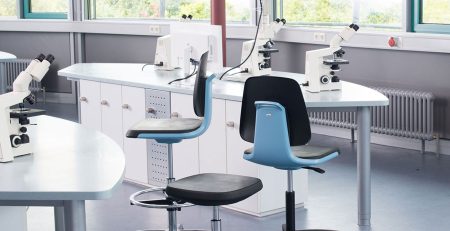
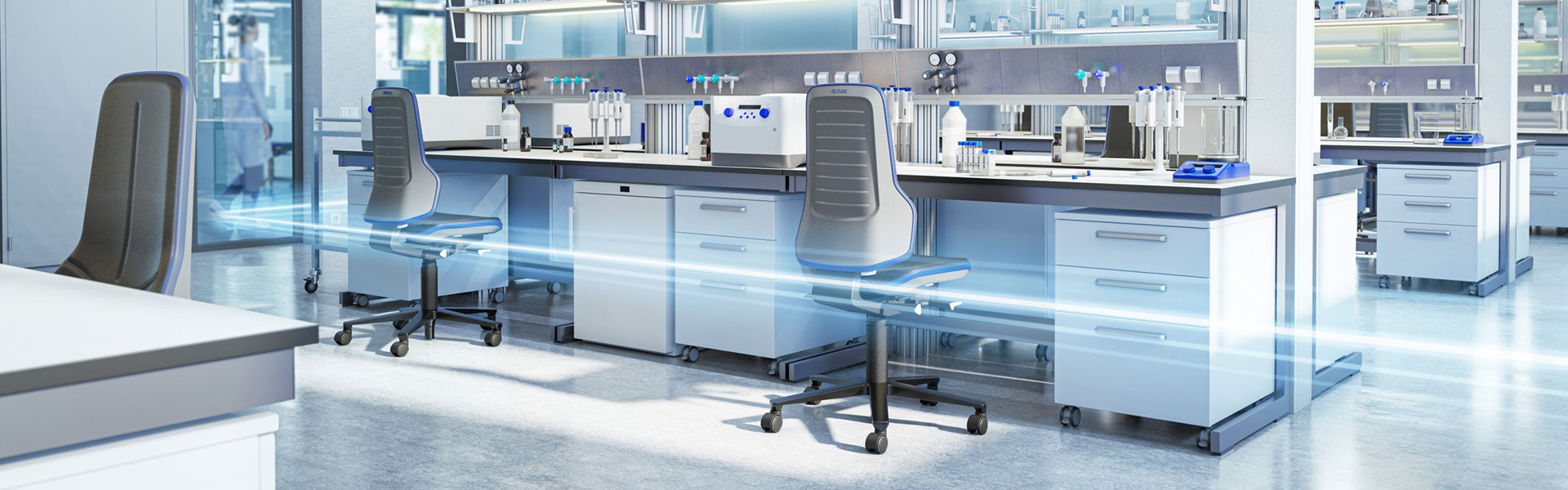
| Laboratory | Easy-clean lab chair, chemical-tolerant surfaces | Laboratory chairs |
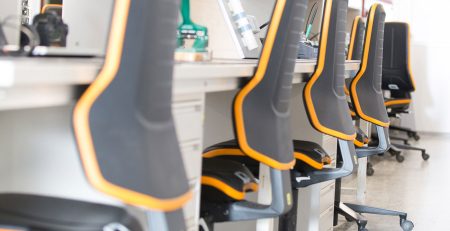
| Production line | Durable work chair for long seated shifts | Production work chairs |
| Inspection / close work | Saddle stool or standing-support seat | Standing-work seating |
What are the best ESD lab chairs?
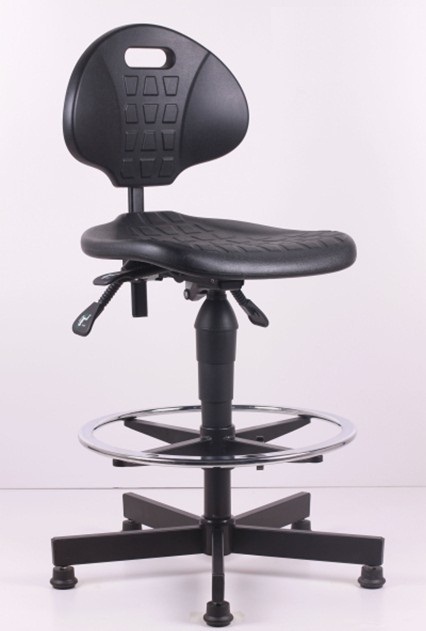
The best ESD lab chair is the one that matches your cleanroom class and work posture, not a single model. For seated lab and inspection work, a conductive PU or fabric chair with a grounded gas lift covers most needs. For higher cleanroom classes, choose sealed PU surfaces because fabric sheds particles. For standing-height benches, pick a high chair with a footring. We stock the German-made Bimos range for all three cases — browse ESD safe chairs and laboratory chairs, or ask us to match a chair to your room class and we respond within two business hours.
🔑 The one thing to remember: an ESD chair only works if the castors and floor complete the path to ground. A conductive chair on an ordinary floor grounds nothing.
Frequently Asked Questions
Does an ESD chair work on a normal floor?
No — a conductive chair needs a grounded, conductive or dissipative floor to drain charge. On an ordinary insulating floor the chair cannot complete the path to ground.
Is a cleanroom chair the same as an ESD chair?
Not necessarily — cleanroom construction controls particles, ESD construction controls static. Some chairs do both; specify against the requirements of your room, because one property does not guarantee the other.
How do we choose seat height?
Work back from your bench height and your operators, so feet are supported and thighs sit roughly horizontal. Where benches are tall, add a footring or choose a higher-range chair rather than letting feet dangle.
Phil Industries is the Bimos distributor in Singapore, supplying ESD, cleanroom, laboratory and production seating to electronics, semiconductor, pharmaceutical and medical device manufacturers — see the full Bimos seating range. Need help matching chairs to a workstation or ISO class? Call +65 6555 1745 or WhatsApp +65 9853 9030.
Related reading: lab furniture buyer’s guide and ESD standards explained.