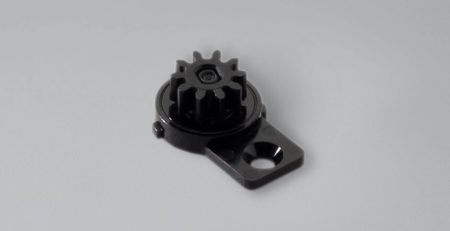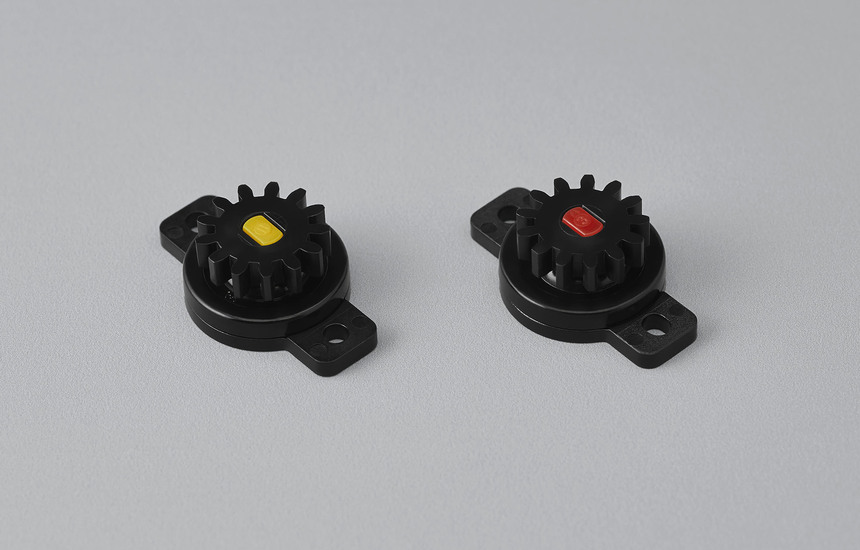
🚽 You’ve felt a rotary damper today, even if you’ve never heard the term. The toilet lid that lowers itself slowly instead of slamming. The glovebox that drops open with a controlled glide. The drawer that eases shut without a bang. That smooth, cushioned motion comes from a small, quiet component: the rotary damper.
For product designers, it’s one of the cheapest ways to make a product feel expensive — and to protect hinges, panels and components from impact damage over thousands of cycles. Here’s how it works, where it’s used, and how to choose the right one. 👇
Reviewed September 2026 by the Phil Industries engineering team, Singapore. Products mentioned are stocked at 51 Ubi Ave 1 for same-day quotation.
🔧 How a rotary damper works
Inside a rotary damper is a sealed housing filled with high-viscosity silicone oil and a rotating vane. When a lid, flap or panel turns the damper’s shaft, the vane has to push that thick oil through a small, controlled orifice.
That resistance converts the moving part’s kinetic energy into heat — slowing the motion into a smooth, predictable deceleration. No springs, no electronics, no power: just controlled fluid resistance. The result is the “soft-close” feel found in quality consumer goods and automotive interiors.
↔️ Bidirectional vs unidirectional — the key choice
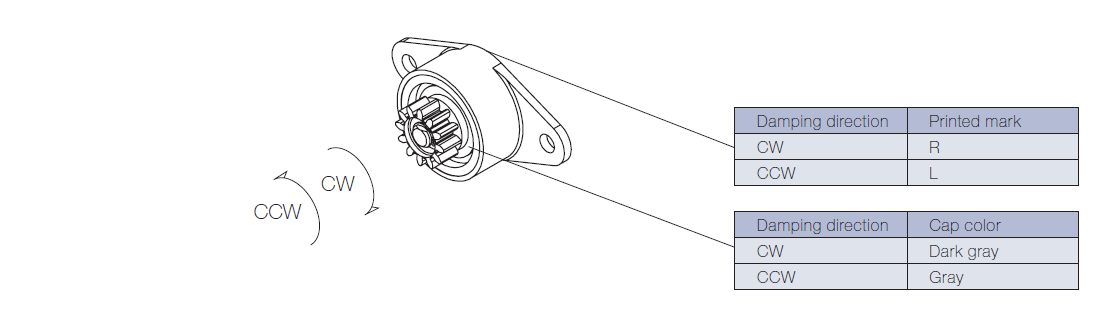
🔁 Bidirectional
Applies resistance in both rotational directions. Use it where you want controlled speed opening and closing — e.g. a toilet seat and lid.
➡️ Unidirectional
Damps in one direction and free-wheels the other. Use it for “slow close, fast open” mechanisms — e.g. dispenser lids and flip covers.
🏭 Where rotary dampers are used
| Product / industry | Damper function | Benefit |
|---|---|---|
| Toilet seats & bathroom fittings | Bidirectional slow-close on lid & seat | No slamming, protects porcelain, premium feel |
| Automotive — gloveboxes, cup holders | Controlled opening resistance | Soft landing; prevents rattle & vibration damage |
| Office furniture & storage | Drawer & lid damping | Quiet operation, no slam damage |
| Home appliances | Oven / washer lid & door damping | Reduces stress on hinges, eliminates slam |
| Consumer electronics | Flip-mechanism & hinge damping | Precise, premium opening feel |
| Medical & precision instruments | Controlled panel / lid movement | Protects delicate samples and internals |
📐 How to choose the right damper
Four questions get you to the right model:
- How heavy is the moving part, and how far from the pivot? This sets the torque rating you need — too little and it still slams; too much and it won’t close.
- One direction or both? Bidirectional vs unidirectional (above).
- What’s the operating temperature? Silicone-oil viscosity changes with temperature. For automotive exterior or cold-chain use, you need a low-temperature grade (stable to −40°C).
- What’s the space and load? Form factor ranges from ultra-compact (<10 mm) for electronics to zinc-alloy-shaft, high-torque units for heavy automotive panels.
⚙️ The TOK TD series
TOK is a Japanese manufacturer specialising in precision damping. Their TD series covers the full range product designers need:
- 🔁 Bidirectional & unidirectional standards across diameters from ~3 mm to 60 mm+
- 🔬 Ultra-compact (<10 mm) for portable electronics and flip covers
- 💪 High-torque models for heavy panels and gloveboxes
- 🚗 Zinc-alloy shaft for automotive and heavy-duty loads
- ❄️ Low-temperature grade stable down to −40°C
✅ Why source TOK through Phil Industries
- 🇸🇬 Singapore distributor — genuine TOK dampers with manufacturer specs and datasheets
- 📐 Application engineering — help choosing torque rating, damping direction and form factor
- 🧪 Samples — evaluate in your prototype before committing to production volumes
- 📦 OEM & production supply — clear quotations for regular quantities
- ⚡ Fast local access — Singapore stock avoids long development-cycle lead times
📞 Designing a soft-close mechanism?
Phil Industries is the Singapore distributor for TOK rotary dampers — TD-series bidirectional, unidirectional, compact and high-torque models for consumer, industrial and automotive products.
📱 WhatsApp: +65 9853 9030
☎️ Tel: +65 6555 1745
✉️ Email: kenneth@phil-industries.com.sg
👉 Browse the TOK rotary damper range or read the TOK brand guide & FAQ.