📊 “We need an ISO 7 cleanroom.” What does that number actually mean? Cleanroom classes aren’t a vague rating — they’re a precise limit on how many airborne particles are allowed in a cubic metre of air. Get the class right and you control contamination; get it wrong and you either fail audits or overspend on a room cleaner than you need.
Here’s what the ISO 14644-1 classes mean, how to read them, and which class fits which job. 👇
Reviewed September 2026 by the Phil Industries engineering team, Singapore. Standards referenced: ANSI/ESD S20.20, IEC 61340-5-1, ISO 14644-1. Products mentioned are stocked at 51 Ubi Ave 1 for same-day quotation.
🔢 What a cleanroom “class” really measures
The standard is ISO 14644-1. It defines nine classes — ISO 1 (cleanest) to ISO 9 (dirtiest) — based on the maximum number of particles, at given sizes, allowed per cubic metre of air.
📋 The ISO 14644 classes at a glance
The most-referenced figure is the limit for particles ≥ 0.5 micron:
| ISO Class | Max particles ≥0.5µm per m³ | Old US (FED-STD-209E) | Typical use |
|---|---|---|---|
| ISO 3 | 35 | Class 1 | Semiconductor photolithography |
| ISO 4 | 352 | Class 10 | Advanced semiconductor fabs |
| ISO 5 | 3,520 | Class 100 | Aseptic pharma filling, semiconductor |
| ISO 6 | 35,200 | Class 1,000 | Medical devices, precision optics |
| ISO 7 | 352,000 | Class 10,000 | Electronics assembly, pharma support |
| ISO 8 | 3,520,000 | Class 100,000 | General cleanrooms, packaging |
ISO 1 and ISO 2 are rarer, ultra-clean classes measured at smaller particle sizes (≥0.1µm). Limits shown are from ISO 14644-1:2015.
🏭 Which class do you actually need?
- 🔬 Semiconductor fabs → ISO 3–5 (photolithography is the strictest)
- 💊 Sterile / aseptic pharma → ISO 5 at the point of fill, inside an ISO 7 surrounding
- 🩺 Medical device manufacturing → typically ISO 7–8
- 💡 Electronics & PCB assembly → ISO 7–8, often with ESD control
- 📦 Packaging / general controlled areas → ISO 8
⏱️ The detail auditors check: occupancy state
A cleanroom’s particle count is measured in one of three states — and the class only means something if you state which:
🏗️ As-built
Empty room, systems running, no equipment or people.
⚙️ At-rest
Equipment installed and running, but no operators present.
👷 Operational
Fully working — equipment running and people present. The toughest state to pass.
🧪 How a cleanroom is tested and certified
Classification is a measurement, not a paperwork exercise. Therefore ISO 14644-1 sets out where to sample and how many locations to use, based on the floor area of the room. First you agree the occupancy state. Then you fix the particle sizes that matter for your process. Finally the testing house counts particles at every required location and reports the result against the class limits.
Two companion standards carry the rest of the load. ISO 14644-2 covers the ongoing monitoring plan, so you can show the room still performs between formal classifications. ISO 14644-3 covers the test methods themselves, including airflow velocity, pressure differentials, filter integrity and recovery time. In practice, most Singapore facilities bundle all of this into one annual visit from an accredited testing contractor.
🔁 How often must a cleanroom be recertified?
Older guidance set rigid intervals by class. However, the 2015 revision of ISO 14644-2 moved to a risk-based approach instead. As a result, you build a monitoring plan around your own process risk, and you re-demonstrate classification at a defined maximum interval — twelve months is the figure most sites work to. Yet a room running a critical sterile fill or a high-yield semiconductor step is usually monitored far more often, sometimes continuously.
Between certifications, the cheap wins are routine. Fixed-point particle counts, pressure-differential logs, filter change records and a gowning discipline that nobody is allowed to shortcut will catch most drift long before an auditor does.
🌬️ Air changes per hour by cleanroom class
ISO 14644 does not specify air changes per hour. It specifies a particle result, and the air change rate is simply the usual engineering route to that result. So treat the figures below as normal design practice rather than as a clause you can be audited against.
- ISO 8 — roughly 5 to 50 air changes per hour
- ISO 7 — roughly 60 to 100 air changes per hour
- ISO 6 — roughly 150 to 250 air changes per hour
- ISO 5 — roughly 250 to 500, or unidirectional airflow across the critical zone
Above ISO 5, rooms normally move to full unidirectional flow, because turbulent mixing can no longer hold the count down on its own.
ISO Class 9 cleanroom: what the requirements actually are
An ISO Class 9 cleanroom is the least stringent class in ISO 14644-1:2015. The limit is 35,200,000 particles of 0.5 µm or larger per cubic metre of air, which is roughly the quality of ordinary filtered office air. In practice an ISO 9 room is a controlled space rather than a true cleanroom: it needs positive pressure, filtered supply air, a defined gowning routine and a cleaning schedule, but not the laminar flow or high air-change rates of ISO 5–7. Because the requirements are modest, ISO 9 is the usual choice for packaging areas, warehouses that feed a cleaner room, and general electronics assembly where the real static risk is handled by an ANSI/ESD S20.20 programme rather than by particle control.
Class 100K cleanroom (ISO 8) for moulding and assembly
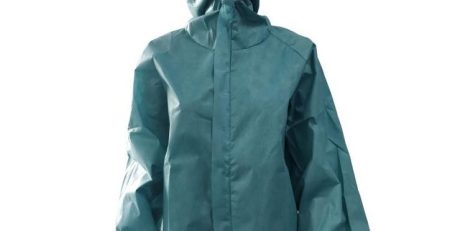
“Class 100K” is the old FED-STD-209E name for a room that allows 100,000 particles of 0.5 µm or larger per cubic foot. Its ISO 14644-1 equivalent is ISO Class 8, with a limit of 3,520,000 particles per cubic metre. Class 100K rooms are the workhorse for injection moulding of medical and electronic parts, PCB assembly and box-build, because they keep gross contamination away from the product without the running cost of ISO 7. Typical specifications call for HEPA-filtered supply air, 10–25 air changes per hour depending on occupancy, sticky mats at the entrance, hooded cleanroom coveralls, and wipe-down of moulding tools with polyester-cellulose or IPA wipers between runs. For reference, ISO 7 corresponds to the old Class 10,000 (352,000 particles/m³) and ISO 5 to Class 100 (3,520 particles/m³).
🏷️ Is ISO 14644 the same as GMP Grade A to D?
No, although the two systems overlap closely. ISO 14644 is a general cleanliness standard used across every industry. EU GMP Annex 1, by contrast, is a pharmaceutical framework, and it grades rooms A to D. Broadly, Grade A lines up with ISO 5, Grade B with ISO 5 at rest and ISO 7 in operation, Grade C with ISO 7 at rest and ISO 8 in operation, and Grade D with ISO 8 at rest.
Because GMP also sets microbiological limits, a room can meet an ISO particle class and still fail its GMP grade. In short, the particle count is necessary but not sufficient.
💡 What ISO class do electronics and semiconductor lines use?
It varies by process step, not by industry. Wafer fabrication and photolithography sit at the strict end, typically ISO 3 to ISO 5, and the tightest air is often handled inside minienvironments rather than across the whole room. Device assembly, test and rework usually run at ISO 7 or ISO 8. Meanwhile, general electronics production, PCB assembly and inspection frequently run at ISO 8, or inside a controlled ESD-protected area with no formal particle class at all.
That last case matters, since many Singapore lines need static control more urgently than particle control. If that describes your floor, start with our ESD grounding and workstation guide instead.
🧤 What keeps your room in-class
Maintaining a classification is a daily discipline, not a one-off certification. The everyday products that hold particle counts down:
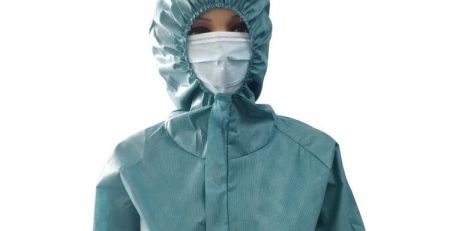
- 🧤 Cleanroom gloves & garments — contain the particles people shed
- 🧻 Low-lint wipers & cleanroom paper — clean without adding fibres
- 🪑 Cleanroom-rated seating — non-shedding, wipeable, ESD-safe chairs
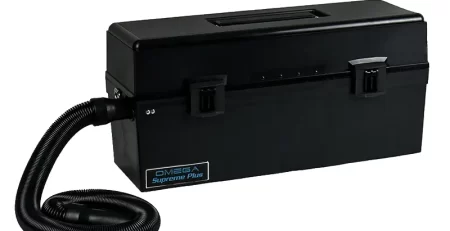
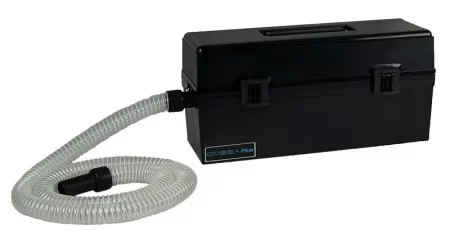
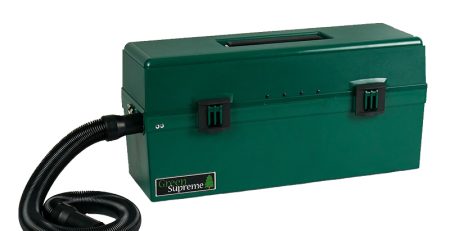
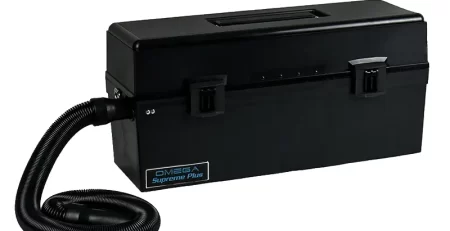
- 🌀 HEPA/ULPA vacuums — capture sub-micron particles instead of redistributing them
- 🦶 Sticky mats & rollers — stop particles entering at the door
Beyond airflow, the practical kit below is what most Singapore sites actually buy to hold a class. Above all, people are the biggest recurring particle source, so gowning, wiping and surface control do more for your count than any late-stage HVAC tweak.
- Seating — cleanroom-rated chairs in wipeable, non-shedding upholstery. Our chair selection guide explains the class ratings, and the laboratory chairs range covers ISO Class 3 and 2 tested models.
- Benches and storage — stainless or laminate surfaces with no particle traps. See the cleanroom furniture range, or read the full lab furniture buyer’s guide first.
- Wiping — sealed-edge cleanroom wipers matched to your class, never general-purpose cloth.
- Entry control — sticky mats at every transition, changed on a schedule rather than when they look dirty.
- Documentation — cleanroom paper and cleanroom-safe pens, since ordinary notebooks shed heavily.
📞 Equipping a cleanroom in Singapore?
Phil Industries supplies the consumables and equipment that keep cleanrooms in-class — ESD & cleanroom gloves, low-lint wipers, sticky mats, cleanroom-rated seating, and HEPA/ULPA vacuums.
📱 WhatsApp: +65 9853 9030
☎️ Tel: +65 6555 1745
✉️ Email: kenneth@phil-industries.com.sg
👉 Browse ESD & cleanroom consumables, cleanroom chairs or cleanroom vacuums.
Related reading: ESD standards explained (IEC 61340-5-1 vs ANSI/ESD S20.20).