This practical guide is for technicians and junior engineers in electronics manufacturing. It covers three things: why an ordinary vacuum is a static hazard, what “ESD safe” really means on a vacuum, and how to pick the right filtration level for toner, dust and cleanroom work.
Watch: Regular vacuum in an ESD zone? Fried batch
⚡ In short: a vacuum is a static generator. In an EPA the hose and housing must be conductive or dissipative and grounded, or the machine discharges into the boards you are cleaning. Then match the filter to the job — toner, dust, or a certified cleanroom.
Reviewed September 2026 by the Phil Industries engineering team, Singapore. Products mentioned are stocked at 51 Ubi Ave 1 for same-day quotation.
⚡ The problem: a vacuum cleaner is a static generator
Every vacuum moves air and particles at high speed through a hose. That friction — called tribocharging — builds static charge on the hose and housing. It works exactly the way shuffling across carpet charges you up. On an ordinary vacuum, the plastic body is an insulator, so the charge has nowhere to go. It builds up until it finds a discharge path. Often that path runs through a PCB, a wafer or a connector pin. The discharge then wrecks the component on the spot.
The dangerous part is that you feel nothing. A person only senses a discharge above roughly 3,000 volts. Yet far smaller events can degrade or destroy many modern semiconductor components. A damaged part may also pass initial test and fail later in the field. That is the most expensive kind of failure to trace.
🛡️ What makes a vacuum “ESD safe”
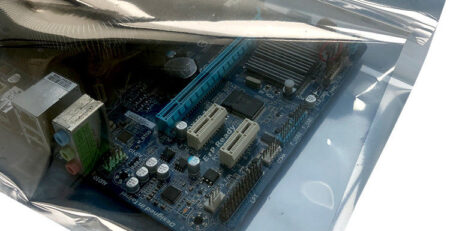
- Conductive or dissipative housing, hose and attachments — every part in the airflow or work area uses a material that conducts charge rather than storing it.
- A continuous path to ground — the airflow’s charge drains away safely, so no voltage builds up next to your product.
- ESD-safe accessories as a system — one standard plastic crevice tool or replacement hose breaks the ground path. Therefore, genuine ESD-safe parts belong in the specification, not an optional extra.
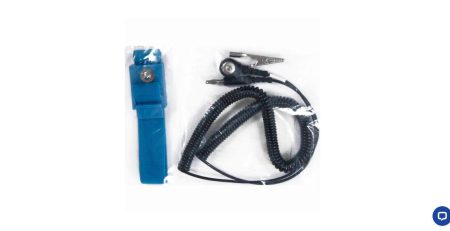
This is why a wrist strap on the operator is not enough. The strap grounds you, while the vacuum keeps generating its own charge next to the board.
🖨️ Toner needs its own filtration class
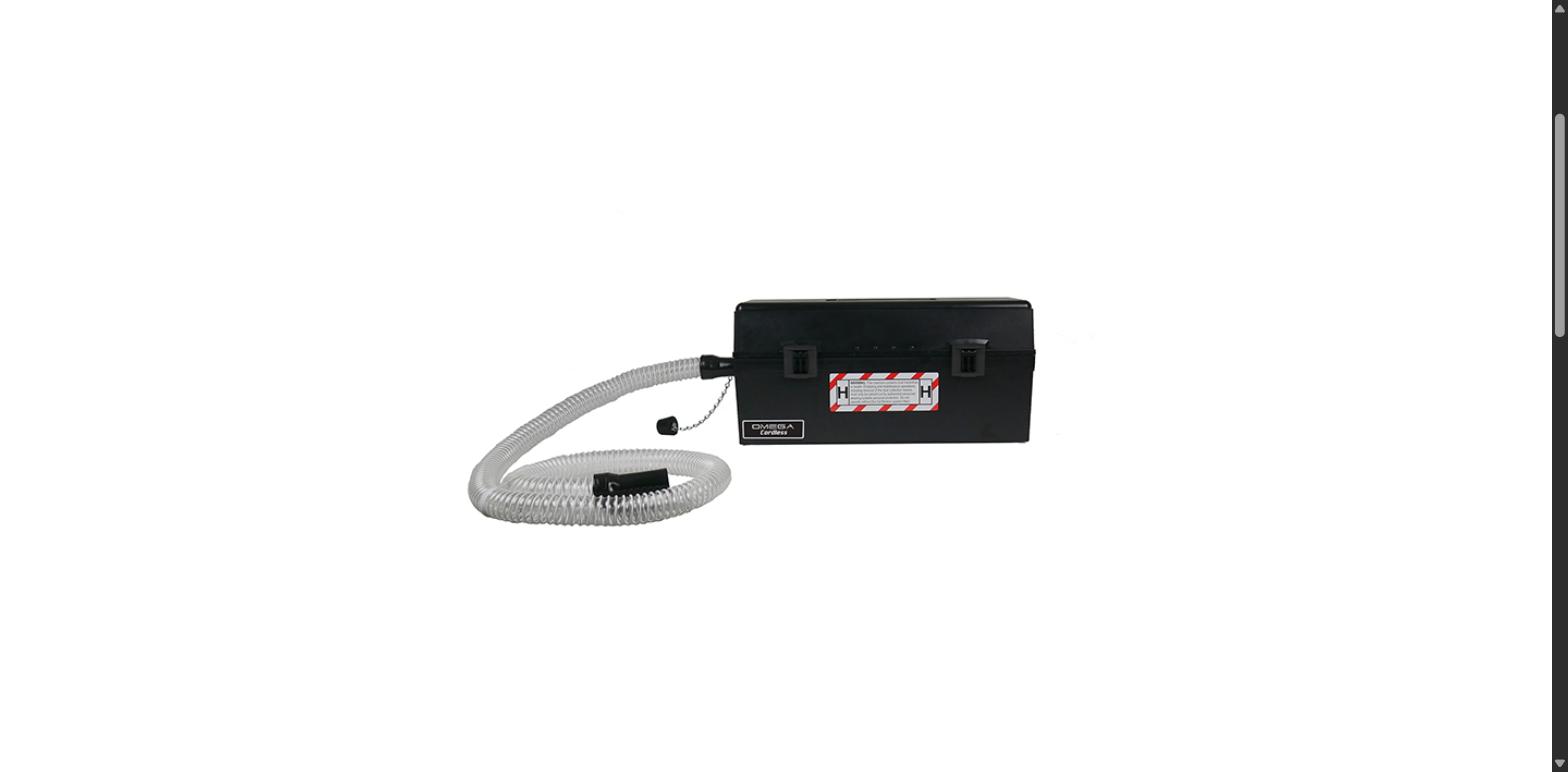
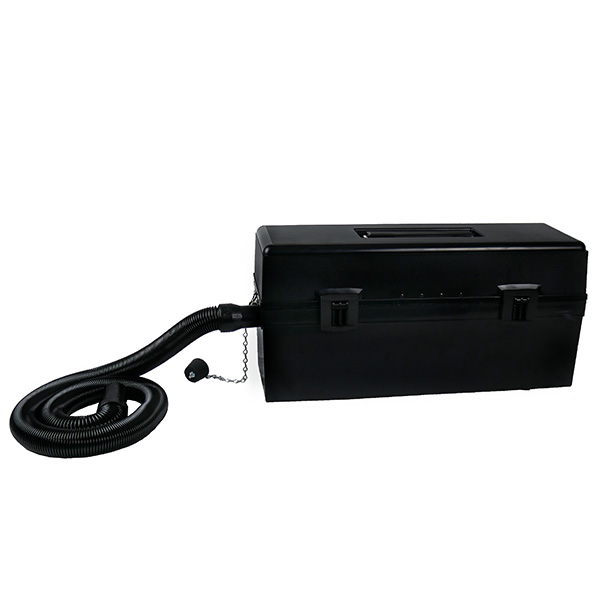
Toner particles are only a few microns across. They slip straight through a household vacuum bag. Then they coat the motor and blow back into the room as a black haze. Service vacuums therefore use sealed ultrafine containment cartridges designed for toner, including colour toner. On the Atrix cordless ESD unit, that cartridge is a patented one-gallon design (US Patent 7,048,773). It delivers 88% efficiency at 0.3 microns across 43 cellulose pleats. In short, it suits toner and printer service work rather than cleanroom certification.
🎯 Matching filtration level to the job
| Task | Filtration to specify | Atrix model we stock |
|---|---|---|
| Copier/printer service, data centres, ATMs, telecom cabinets | ESD safe + H12 ultrafine toner cartridge | Omega Cordless ESD Vacuum (VACO22VESD) — 30+ min cordless runtime, 67 dB |
| Production floors and facilities — dry hazardous particulate | True HEPA, backpack mobility | Omega SafeTech HEPA Backpack (VACOSTBV) — 69 dB |
| ISO 8 / Class 100,000 electronics cleanrooms | Sealed dual HEPA (99.97% @ 0.3 µm), ESD safe | Omega Supreme Plus HEPA (VACOMEGASECRH) |
| ISO 8 cleanrooms needing finer capture | H14 ULPA (99.999% @ 0.12 µm), ESD safe | Omega Supreme Plus ULPA (VACOMEGASECRU) |
The full anti-static range — corded, cordless and high-capacity — sits under ESD & Toner Vacuums, and the certified cleanroom units under Critical Area Vacuums.
✅ Good habits for the EPA
- Keep the system genuine — replace hoses and tools with ESD-safe parts from Atrix Filters & Accessories, because a standard replacement hose silently breaks the ground path.
- Dedicate units to zones — a vacuum from the general workshop carries dust on its wheels and housing, so it should not cross into the EPA or cleanroom.
- Change cartridges on the indicator — models with a full-filter light tell you when the cartridge is full; an overfull cartridge loses suction and containment.
🔑 The one thing to remember: a wrist strap grounds the operator, not the vacuum. The vacuum makes its own charge from airflow, so ESD-safe construction has to be specified at the machine itself.
Frequently Asked Questions
Is an ESD vacuum still needed if operators wear wrist straps?
Yes. The strap grounds the operator only. The vacuum generates its own charge from airflow friction, so the vacuum itself must provide a path to ground.
Why is the toner cartridge “only” 88% efficient when HEPA is 99.97%?
They solve different problems. The H12 ultrafine cartridge holds fine toner without clogging during service work. The certified HEPA and ULPA units suit rooms where auditors check the cleanliness class. Match the filter to the task, not the biggest number.
Can one ESD vacuum cover both the SMT line and the cleanroom?
Specify by the stricter zone. Inside an ISO-classed room, you need a sealed cleanroom-rated unit. A service vacuum belongs on the line and in the field.
Phil Industries is an authorised Atrix distributor in Singapore, holding ESD vacuum stock locally in Ubi with delivery across Southeast Asia. Not sure which unit fits your EPA? Call +65 6555 1745 or WhatsApp +65 9853 9030.