An ESD mat looks like the simplest item in a static-controlled workstation, yet choosing the wrong one — or fitting it without a proper ground — leaves your electronics just as exposed as no mat at all. This guide explains the real choices behind ESD matting in Singapore: bench versus floor, rubber versus vinyl, what surface resistance actually means, and how to ground a mat so it does its job.
What an ESD mat actually does
An ESD mat gives static charge a safe, controlled path to ground. When a charged tool, board or hand touches the mat, the dissipative surface bleeds that charge away slowly — slowly enough that it never releases as a damaging spark into a sensitive component. Crucially, a mat only works when it is connected to earth. On its own, an unearthed mat is just a rubber sheet, so grounding is not optional; it is the whole point.
Bench mat or floor mat? They do different jobs
The first decision is where the mat sits, because bench and floor mats protect different things.
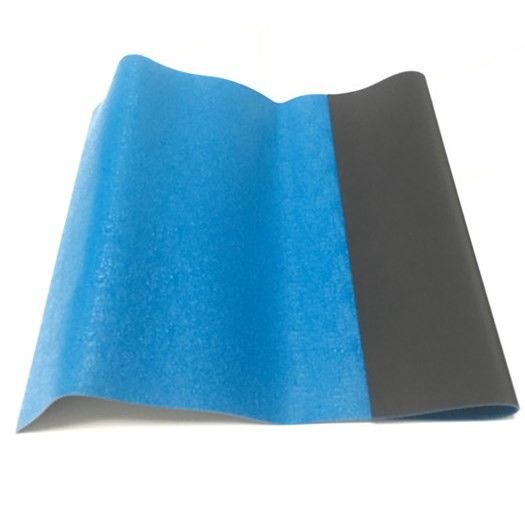
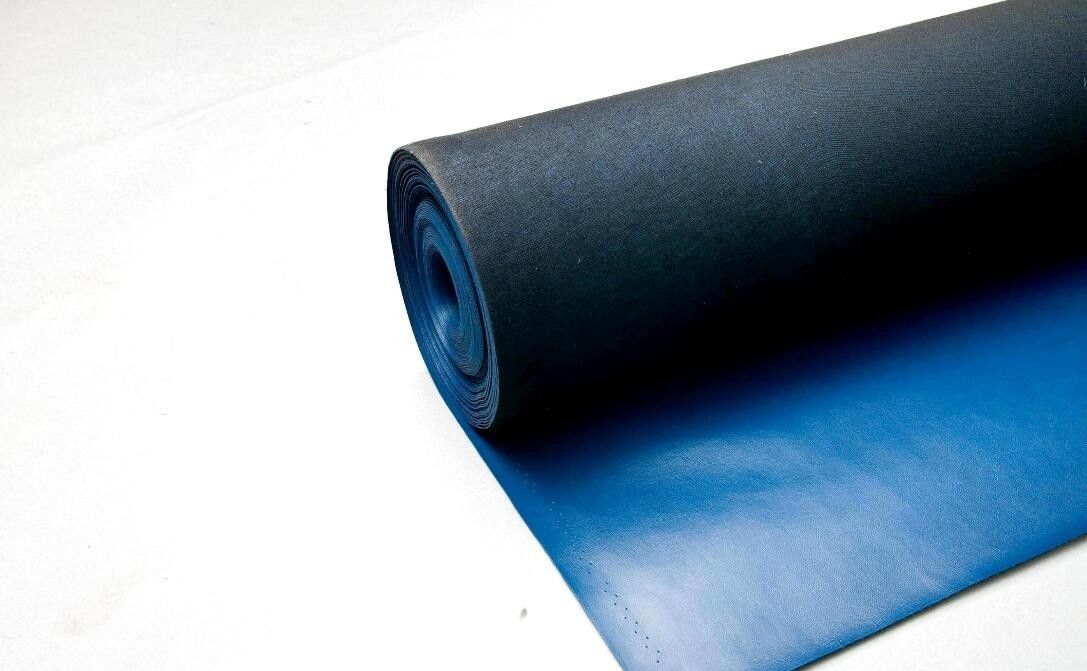
- Bench (table) mats sit on the worktop where parts are handled, so they protect boards and tools directly. Our anti-static PVC ESD table mat is a two-layer example, with a dissipative top over a conductive base.
- Floor mats go underfoot to ground standing operators through their ESD footwear, therefore they complement a bench mat rather than replacing it. Our anti-static rubber floor & bench mat also cushions long standing shifts.
Most proper ESD-protected areas use both: the bench mat protects the work, and the floor mat grounds the worker.
Rubber or vinyl? Match the material to the hazard
The two common mat materials behave differently, so pick by process, not by price.
- Rubber resists soldering heat, oils and solvents, therefore it suits rework benches, hot-work stations and floor use where durability matters most.
- Vinyl (PVC) is lighter and more economical, so it fits general assembly benches where heat and chemical exposure stay low.
If your operators solder, use aggressive cleaners, or the mat goes on the floor, rubber is usually worth the extra cost. For a clean, low-heat assembly bench, vinyl does the job.
Surface resistance: the number that matters
ESD mats are rated by surface resistance, and the useful range for a working mat is 106–109 Ω — the static-dissipative band. That range is deliberate: it is high enough to drain charge without a sudden discharge, yet low enough to actually carry the charge away. A “conductive” mat below 106 Ω drains faster but offers less protection against a hard discharge, while anything above 1010 Ω is really an insulator and will not ground reliably. For most benches, aim for the dissipative range and confirm it on the datasheet.
How to ground an ESD mat properly
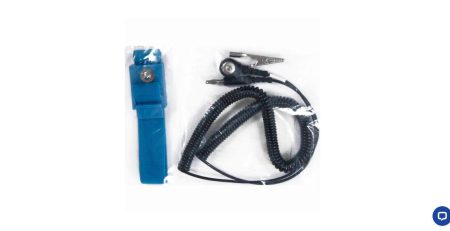
A mat earns its rating only through its ground connection. Fit a snap stud to the mat, run a grounding cord from that stud to a common point ground, and connect the common point ground to a verified earth. Add a wrist strap for the operator, and the workstation becomes a complete system: mat, cord, strap and earth all working together. Our dual-wire ESD wrist strap pairs with the mat for personnel grounding, and our full ESD grounding guide walks through wiring the whole workstation step by step. Never ground a mat to a water pipe or window frame; use a proper earth point.
Anti-fatigue ESD floor mats for standing work
Operators who stand all shift need more than static control; they need comfort too. Anti-fatigue ESD floor mats combine a cushioned surface with dissipative properties, so they ground the worker through ESD footwear while easing strain on legs and back. As a result, a single mat solves two problems at once — static safety and standing fatigue — which makes it a popular choice on assembly and inspection floors.
How to choose: a quick guide
| Need | Choose |
|---|---|
| General assembly bench, low heat | Vinyl bench mat |
| Soldering / rework / chemicals | Rubber bench mat |
| Ground standing operators | Rubber floor mat |
| Standing all shift | Anti-fatigue ESD floor mat |
| Any mat | Add grounding cord + wrist strap |
Testing and maintenance
Even the best mat drifts out of spec if it is neglected. Wipe mats with an ESD-safe cleaner rather than ordinary detergents, because silicone-based products leave an insulating film that blocks dissipation. Check the ground cord and snap connection regularly, and periodically verify surface resistance with a meter as part of your ESD audit. A mat that tests outside 106–109 Ω needs cleaning or replacing.
Frequently asked questions
Does an ESD mat work without grounding it?
No. An unearthed mat cannot drain charge, so it gives no ESD protection. Always connect the mat to a verified ground through a cord and common point ground.
What surface resistance should an ESD mat have?
Aim for the static-dissipative range of 106–109 Ω. That range drains charge safely without a sudden discharge and still grounds reliably.
Do I need both a bench mat and a floor mat?
For a full ESD-protected area, yes. The bench mat protects the parts and tools, while the floor mat grounds the standing operator. They do different jobs.
Rubber or vinyl ESD mat — which is better?
Rubber handles heat, solvents and floor use, so it suits rework and standing areas. Vinyl is lighter and cheaper for general low-heat benches.
Where can I buy ESD mats in Singapore?
Phil Industries stocks bench mats, floor mats, anti-fatigue mats and grounding hardware in Singapore with fast quotation. Browse the ESD mat range or contact us for a recommendation.