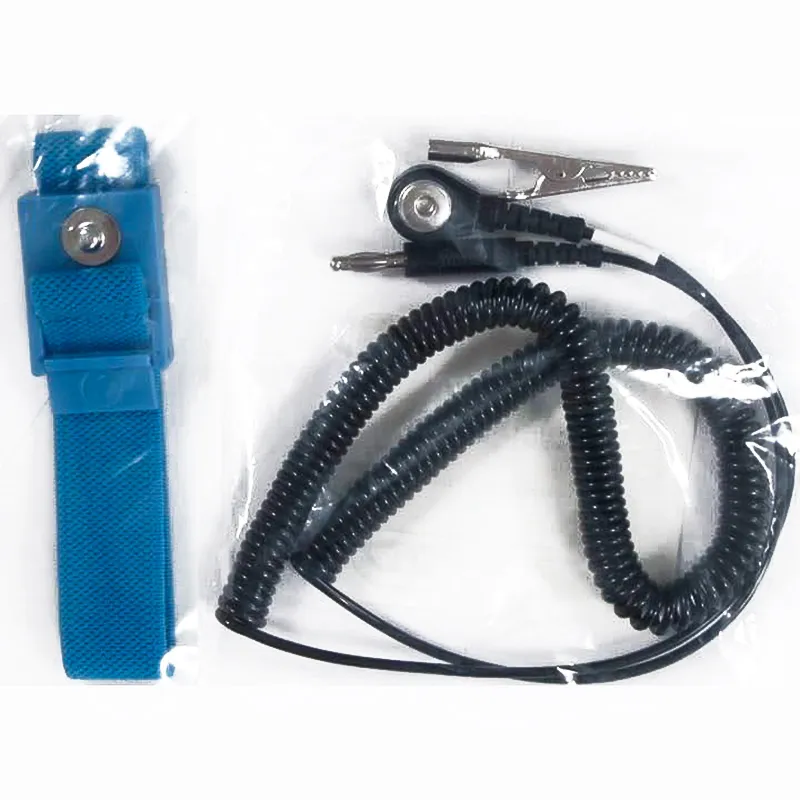
An ESD wrist strap is the most common personal grounding device on an electronics line, and also the one most often trusted without proof. Because a strap can look perfectly fine while its cord has failed inside, testing is the only way to know it works.
Reviewed September 2026 by the Phil Industries engineering team, Singapore. Products mentioned are stocked at 51 Ubi Ave 1 for same-day quotation.
How do you test an ESD wrist strap?
Use a wrist-strap tester: put the strap on, plug the cord into the tester, and press to read PASS or FAIL. The tester checks the full loop, which is skin contact, band, cord, and resistor, in one step. A daily touch-test at a station tester takes only seconds.
How often should you test it?
Test at the start of every shift, and again after any drop or damage. For critical work, a continuous monitor watches the loop all day and alarms the moment it breaks, so you are not relying on memory.
Intermittent wrist strap connection: what to try before replacing the strap
Question: when using the wrist strap tester you find that your wrist strap connection is intermittent. Before replacing the strap, what should you try first?
Answer: first improve the skin contact and the snap contact, because those two points cause most intermittent readings. Tighten the band so the inner plate sits flat on the wrist, then apply an approved ESD hand lotion if the operator’s skin is dry, since dry skin in an air-conditioned Singapore facility is the single most common cause. Next, clean the wrist strap snaps and the coil cord snap with an ESD-safe cleaner to remove oxide and skin oils. Only if the reading is still intermittent should you swap the coil cord, and then the band. Re-checking the mains outlet with a ground polarity tester or changing the mat grounding cord does not fix an intermittent wrist strap reading, because the tester measures the operator-to-cord path, not the bench earth.
Wrist strap testers and monitors stocked in Singapore
Phil Industries stocks these testers at 51 Ubi Ave 1 for same-day or next-day dispatch:
- HZR-171 portable wrist strap tester – hand-held PASS/FAIL tester for daily checks at any station.
- 498 ESD wrist strap tester for EPA areas – compact tester for shift-start checks.
- 518-1 wrist strap monitor with alarm – continuous monitoring that alarms the moment the loop breaks.
- 518-2 ESD wrist strap monitor – continuous monitor for critical workstations.
- ESD wrist strap online monitor – station-mounted online monitor.
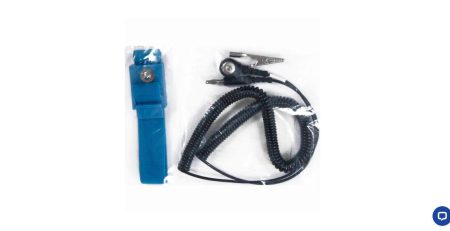
Need replacement straps or cords? See our ESD wrist straps and ESD grounding cords and accessories, or WhatsApp +65 9853 9030 for a same-day quote.
What a FAIL usually means
- Too high: a broken cord, a dried-out band, or loose skin contact, so replace the band or cord.
- Too low: a shorted resistor, which removes the safe current-limiting path, so replace the cord.
- Intermittent: a cracked cord that passes at rest and fails in motion, so use a continuous monitor to catch it.
A strap can also pass its test and still let damage through, which we cover in why a wrist strap that passes can still damage components. Phil Industries stocks ESD wrist straps and testers for electronics, medical, and OEM lines.
Frequently asked questions
Can I just look at a wrist strap to check it? No; the failure is usually inside the cord, so only a tester or continuous monitor confirms the loop.
What resistance should a wrist strap read? Testers are pre-set to the accepted band and simply show PASS or FAIL, so you do not need to read ohms at the bench.
Setting up ESD control for your line? Contact Phil Industries at kenneth@phil-industries.com or WhatsApp +65 9853 9030.