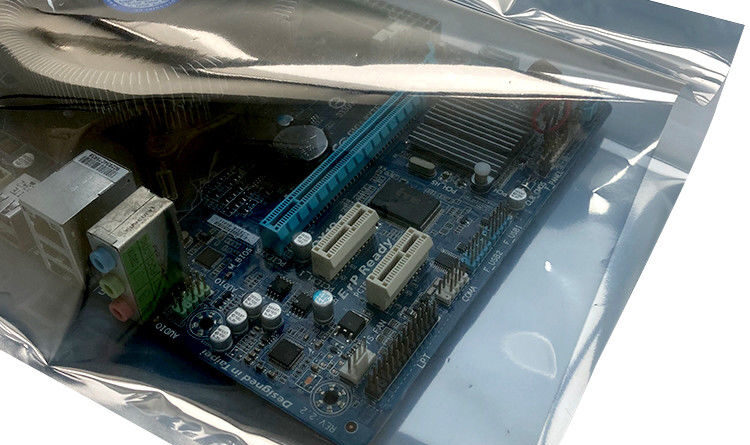
The pink anti-static bag is one of the most misunderstood products in electronics manufacturing. It is sold as ESD protection. Procurement teams specify it for sensitive components. And for a broad category of modern ICs — including any component rated HBM Class 0 — it provides essentially none of the protection that matters.
Three Bag Types: What Each One Actually Does
Pink Poly (Anti-Static) Bags
Pink polyethylene bags are treated with an anti-static coating that prevents the bag itself from building up triboelectric charge. This means the bag won’t generate static by friction — but it provides no shielding against external electrostatic fields. A component inside a pink bag is fully exposed to induced charge from fields in the surrounding environment.
Static-Dissipative Bags
Static-dissipative bags (typically amber or black) allow charge to flow slowly, preventing rapid discharge. They provide limited shielding. Suitable for components with HBM sensitivity above 1,000V (Class 1B and above) in controlled environments.
Static-Shielding (Metalized) Bags
Static-shielding bags have a metallic layer that creates a Faraday cage effect — external electrostatic fields cannot penetrate the bag to induce charge on the component inside. This is the only bag type that provides real protection for HBM Class 0 components. The standard is ANSI/ESD S11.4: a compliant bag must achieve less than 20 nanojoules of penetrating energy in the shielding test.
Selecting the Right Bag by Sensitivity Class
| HBM Sensitivity Class | Withstand Voltage | Required Bag Type |
|---|---|---|
| Class 0Z | Below 50V | Static-shielding mandatory |
| Class 0A | 50V–125V | Static-shielding mandatory |
| Class 0B | 125V–250V | Static-shielding strongly recommended |
| Class 1A/1B/1C | 250V–2kV | Static-dissipative or shielding depending on risk |
| Class 2 and above | Above 2kV | Anti-static poly acceptable in low-risk environments |
Why Modern ICs Are More Vulnerable Than Ever
Advanced IC packaging — flip-chip, wafer-level CSP, system-in-package — routinely places devices in HBM Class 0A and 0B. A person walking across standard flooring generates 10,000–15,000 volts of static. That field penetrates a pink bag and induces charge sufficient to damage a 50V-sensitive device. The component arrives at the next production step already degraded — no visible damage, no obvious root cause.
If you are seeing unexplained random failure patterns in components that passed incoming inspection, review your packaging specifications against the actual HBM sensitivity class of those components.
ESD Packaging at Phil Industries Singapore
Phil Industries stocks the full range of ESD packaging — pink poly, static-dissipative, and metalized static-shielding bags in all standard sizes — from our Ubi warehouse. Browse ESD packaging materials or contact us for specification advice matched to your component sensitivity class.
Is cardboard ESD safe?
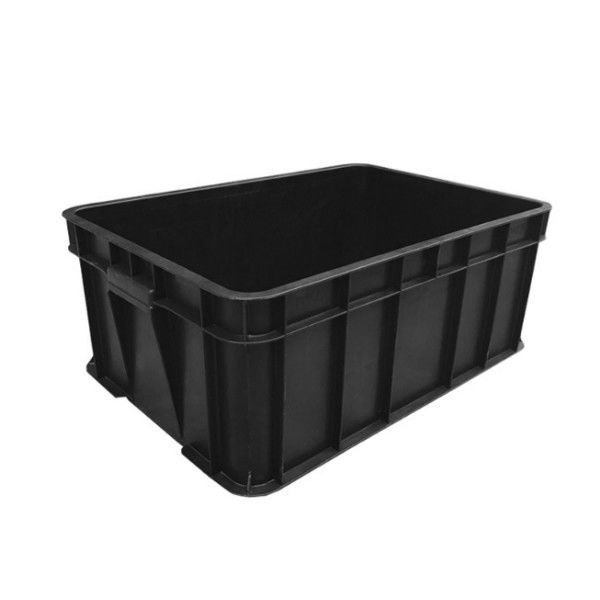
Ordinary cardboard is not ESD safe. It charges less than plastic, but it offers no shielding and its surface resistance swings with humidity. Therefore most audited EPAs ban plain cardboard at the bench. If you need boxes inside the protected area, use conductive corrugated cartons or conductive ESD storage boxes instead.
What can I use instead of an anti-static bag?
It depends on the job the bag was doing. For transport between facilities, a static shielding bag remains the right tool because it blocks external fields. For storage and movement inside the EPA, conductive boxes, bins and IC trays do the same job with better stacking and reuse. In short, swap the bag for a container with the same or better protection level, and never for plain plastic. Our ESD storage box buyer’s guide covers the container options.