Electrostatic discharge (ESD) is invisible, instantaneous, and devastatingly expensive. A single uncontrolled discharge of static electricity — often less than 100 volts, far below the threshold of human sensation — can permanently damage a semiconductor device, degrade its performance, or introduce latent defects that only surface after a product reaches the customer. For Singapore’s electronics and semiconductor manufacturing sector, which sits at the heart of one of Asia’s most advanced precision-engineering ecosystems, robust ESD control is not a compliance checkbox. It is a competitive necessity.
This guide covers everything Singapore manufacturers need to know: the governing international standards, the components of an effective ESD Control Programme (ESDCP), how to set up and audit an ESD Protected Area (EPA), and the specific products and practices that keep static damage off your production floor.
Why ESD Control Matters in Singapore’s Manufacturing Sector
Singapore’s electronics industry accounts for a significant share of its total manufacturing output. Wafer fabrication, PCB assembly, disk-drive production, medical device manufacturing, and aerospace electronics are all ESD-sensitive environments. In these industries, the cost of ESD damage is rarely a single dead component — it is rework, warranty returns, customer complaints, and the reputational damage that follows a field failure traced back to a production-line static event.
Modern semiconductor devices operate at increasingly low voltages and feature smaller geometries. A component rated for 3.3 V operation is susceptible to damage from a discharge well below the 3,000 V that a person typically feels when touching a doorknob. ESD awareness cannot be treated as a basic housekeeping matter. It requires a structured programme underpinned by recognised international standards.
The Governing Standards: ANSI/ESD S20.20 and IEC 61340-5-1
Two international standards dominate the global ESD control landscape, and both are widely adopted by Singapore manufacturers supplying OEMs and multinational customers.
ANSI/ESD S20.20
Published by the ESD Association (ESDA), ANSI/ESD S20.20 is the most widely recognised ESD programme standard for electronics manufacturing. It specifies the requirements for developing, implementing, and maintaining an ESD Control Programme capable of protecting devices with withstand voltages down to 100 V Human Body Model (HBM). The standard covers training, compliance verification, grounding and bonding, personnel grounding, EPA requirements, packaging, and documentation. Third-party certification to ANSI/ESD S20.20 is recognised by major OEMs including Apple, Samsung, and Intel as a supplier qualification requirement.
IEC 61340-5-1
The IEC 61340-5-1 standard, published by the International Electrotechnical Commission, is the dominant ESD programme standard in Europe and increasingly adopted across Asia. Its companion document, IEC 61340-5-2, provides the user guide and implementation examples. IEC 61340-5-1 and ANSI/ESD S20.20 are broadly harmonised in technical requirements, and dual certification is achievable from a single quality management system. Singapore manufacturers supplying to European OEMs or CE-marked product lines will typically encounter IEC 61340 requirements in customer audits.
Both standards share a common framework: identify ESD-sensitive items (ESDs), establish an EPA wherever those items are handled, control all conductors within the EPA, and verify compliance through regular testing and documentation.
Key Components of an ESD Control Programme
An ESDCP is not a single product purchase. It is a system of interconnected controls, each addressing a different pathway through which static electricity can accumulate or discharge. Here are the essential elements every Singapore electronics manufacturer should have in place.
1. ESD Protected Area (EPA) Definition
An EPA is any defined area in which ESD-sensitive devices are handled. The EPA boundary must be clearly marked — typically with yellow-and-black ESD floor tape or signage. Access to the EPA must be controlled, and all personnel and materials entering must be checked for compliance. Floor-to-work-surface continuity, proper equipment grounding, and controlled movement of insulators are all EPA requirements under both S20.20 and IEC 61340.
2. Personnel Grounding: Wrist Straps and ESD Footwear
The most common ESD damage pathway is a charged person touching an ESD-sensitive device. Wrist straps connected to a verified ground point provide continuous body grounding for seated operators. ESD footwear (shoes or heel straps) combined with conductive or dissipative flooring provides grounding for standing or mobile workers. Both must be tested daily — wrist straps with a continuous monitor at the workstation or a point-of-entry tester, footwear with a calibrated resistance tester at the EPA entry point.
3. ESD Workstation Surfaces
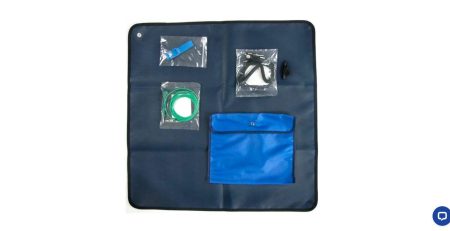
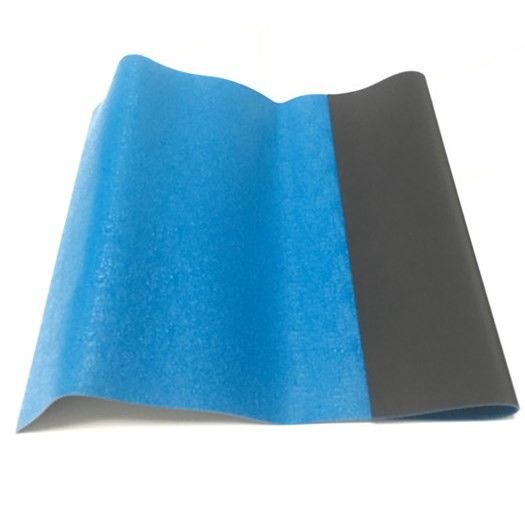
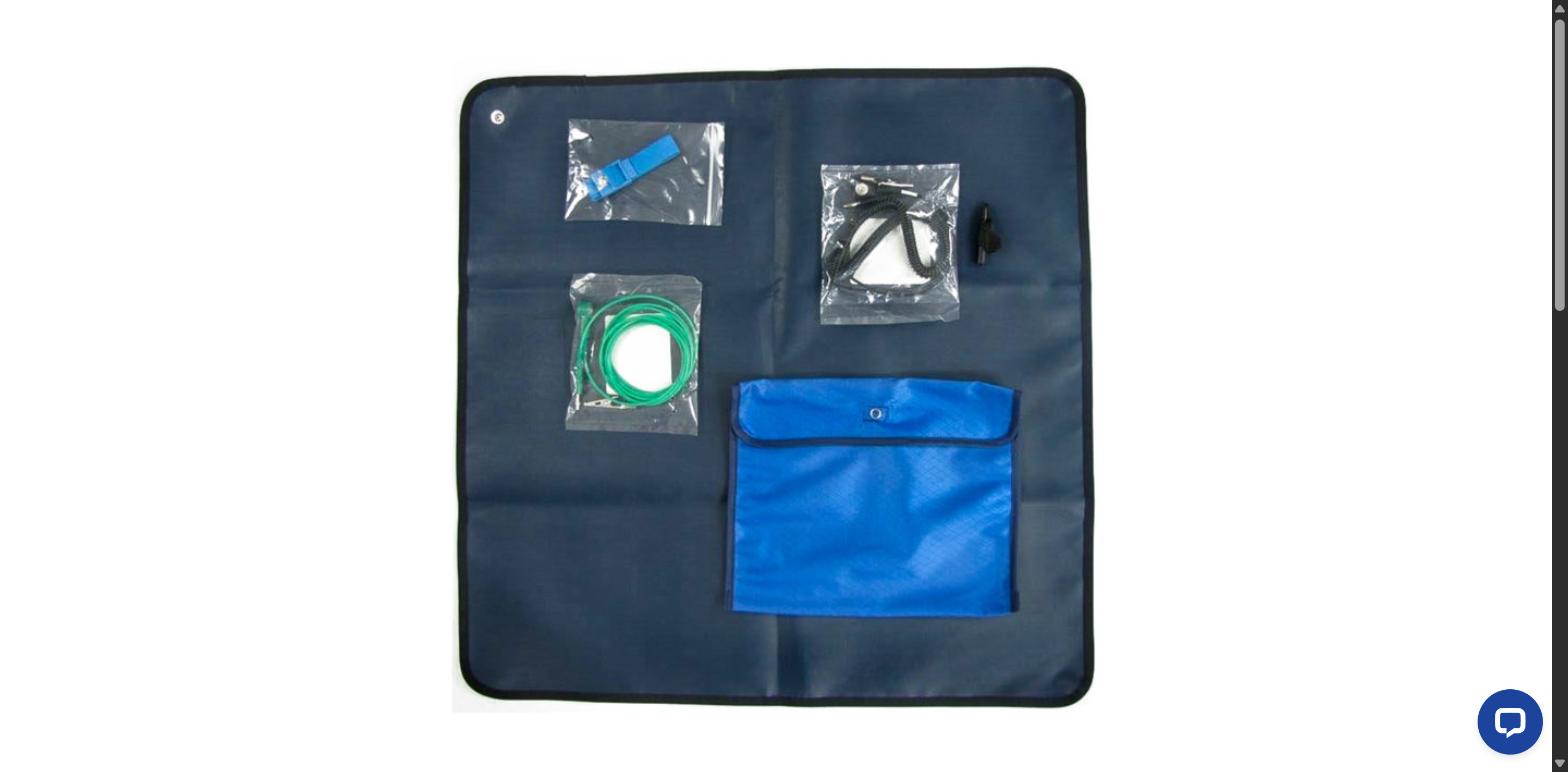
ESD-dissipative or conductive worksurface mats prevent charge accumulation on the work area and provide a safe resting surface for sensitive components. Surfaces must meet resistance-to-ground requirements per ANSI/ESD S20.20 (104 to 109 ohms) and must be grounded through a verified common point ground system. Worksurface mats should be tested at intervals defined in your ESD control plan — typically every six months or after any damage or chemical cleaning.
4. ESD Flooring
Standard vinyl or epoxy flooring can accumulate thousands of volts of static charge as operators walk across it. ESD flooring — whether conductive vinyl tiles, dissipative epoxy coatings, or anti-static carpet — forms the ground path for personnel wearing ESD footwear. Flooring resistance-to-ground values must be verified at installation and periodically thereafter. For critical cleanroom areas, flooring must also meet ISO 14644 particulate requirements, requiring a product that balances ESD performance with cleanroom compatibility.
5. ESD Seating
ESD-compliant chairs and stools — with conductive casters or drag chains — prevent the seat from becoming an isolated charged conductor. Bimos ESD-certified laboratory and industrial chairs meet IEC 61340-5-1 requirements and are designed for long-duration precision assembly work. Seat resistance-to-ground values should be tested with a surface resistance meter as part of regular EPA compliance checks.
6. ESD Packaging and Material Handling
ESD-sensitive devices must travel in ESD-protective packaging whenever they leave the EPA boundary. This means shielding bags (metal-in or metal-out) for transit, static dissipative totes and containers for in-process movement, and pink poly foam for cushioning — never ordinary white polystyrene foam, which is highly charge-generating. All packaging materials used inside the EPA must be low-charging and must not generate triboelectric static when in contact with devices or surfaces.
7. ESD-Safe Tooling and Equipment
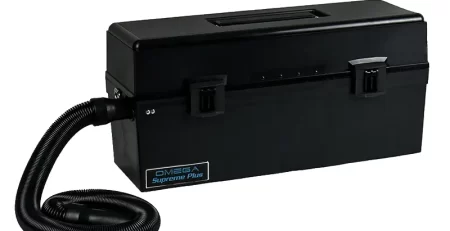
Every tool that contacts an ESD-sensitive device must either be grounded, dissipative, or otherwise ESD-safe. This includes soldering irons with grounded tips, ESD-safe tweezers, screwdrivers, and vacuum pick-up pens. Atrix ESD-safe vacuum systems are widely used in Singapore semiconductor facilities for component handling and cleanroom vacuuming without introducing charge-generating airflow. All electronic test equipment must also be bonded to the common point ground to prevent discharge through measurement probes.
8. Ionisation
Some areas of the production process cannot use grounding alone. Process-essential insulators — PCB substrates, plastic housings, glass components — cannot be grounded and can accumulate charge through normal handling. Air ionisers neutralise charge on these surfaces by flooding the area with balanced positive and negative ions. Ionisers must be tested and balanced regularly; an improperly calibrated ioniser can itself introduce net charge onto sensitive devices.
9. Training and Documentation
ANSI/ESD S20.20 requires that all personnel who handle ESD-sensitive items receive initial ESD awareness training and annual refresher training. Training records must be maintained and available for audit. Beyond the formal requirement, effective training is what makes a programme work: an operator who understands why a wrist strap must be worn — not just that it is required — is far less likely to bypass it.
Setting Up an ESD Protected Area in Singapore: Practical Steps
For a Singapore manufacturer starting from scratch or formalising an existing programme, here is a practical sequence:
- Identify all ESD-sensitive devices in your process and their withstand voltage levels. Create an ESD-sensitive item list.
- Map all handling locations — workstations, storage areas, inspection points, shipping stations — where sensitive devices are present. These become your EPA boundaries.
- Assess existing infrastructure: flooring type and resistance, existing grounding points, current packaging materials.
- Define your EPA requirements based on the lowest withstand voltage in your process. Devices with HBM withstand below 100 V require enhanced controls.
- Procure and install compliant equipment: ESD worksurface mats, wrist strap monitors, ESD footwear testers, ionisers where needed, dissipative flooring where the existing floor fails resistance testing.
- Establish a compliance verification schedule for all ESD control items, and assign ownership for each test point.
- Train all relevant personnel and document training records.
- Conduct a baseline audit using the test methods in ANSI/ESD S20.20 or IEC 61340-5-1 to establish a compliance baseline before pursuing certification.
ESD Compliance in Singapore Cleanroom Environments
Many Singapore semiconductor and medical device manufacturers operate in cleanrooms classified to ISO 14644 standards. Cleanroom ESD control introduces additional complexity: standard ESD packaging materials may generate particles, certain ESD-safe clothing materials may not meet cleanroom garment requirements, and some ioniser designs are not suitable for laminar-flow cleanroom environments.
In cleanroom applications, all ESD products must be selected for both electrical performance and particulate shedding. Low-linting ESD wrist strap cords, cleanroom-compatible ESD smocks, and ULPA-filtered ESD-safe vacuum systems are among the products required in ISO Class 5 and Class 6 environments. Phil Industries supplies ESD-rated cleanroom products specifically evaluated for combined ESD and cleanroom performance.
Common ESD Programme Failures — and How to Avoid Them
Audits of electronics manufacturing facilities in Southeast Asia consistently surface the same recurring weaknesses:
- Untested wrist straps. Operators wear wrist straps that have never been verified to make reliable skin contact or that have a broken resistor. Daily testing with a wrist strap tester — or a continuous monitor — is the only reliable safeguard.
- Insulators inside the EPA. Ordinary plastic cups, non-ESD packaging, personal mobile phones, and regular plastic bags are all strong charge generators. A policy of removing all non-essential insulators from the EPA — enforced at the entry point — is required by both S20.20 and IEC 61340.
- Floating conductors. An ungrounded metal trolley, a metal component tray not bonded to the common point, or a metallic product jig with no ground path is an ESD risk equal to or greater than an insulator. Every conductor in the EPA must be bonded to ground.
- Inadequate packaging at the EPA boundary. Sensitive devices taken from a workstation to a storeroom or shipping area in unprotected plastic bags are exposed at the moment of highest risk — the transition zone between EPA and uncontrolled environment.
- Training treated as a one-time event. Staff turnover, process changes, and complacency mean that annual refresher training is a genuine requirement, not a bureaucratic formality.
ESD Products Available from Phil Industries
Phil Industries Pte Ltd is a Singapore-based supplier of ESD control and cleanroom products, serving electronics manufacturers, semiconductor facilities, aerospace MRO operations, and precision engineering firms across the island. Our ESD product range includes:
- ESD wrist straps, heel straps, and foot grounders
- ESD-safe smocks, gloves, and finger cots
- ESD worksurface mats and floor mats
- ESD-compliant seating (Bimos ESD chairs and stools)
- ESD shielding bags, pink poly bags, and static dissipative totes
- ESD-safe tweezers, screwdrivers, and handling tools
- Atrix ESD-safe vacuum systems for cleanroom and SMT line use
- Wrist strap and footwear testers
- Surface resistance meters and ESD audit kits
We can advise on building a compliant EPA from the ground up, supply audit checklists referenced to ANSI/ESD S20.20 and IEC 61340-5-1, and provide ongoing replacement consumables on scheduled delivery.
Conclusion
ESD control in Singapore’s electronics manufacturing sector is a manageable, well-defined challenge. The standards are clear, the products are established, and the return on investment — in reduced rework, fewer warranty returns, and stronger customer audit performance — is demonstrable. Whether you are building a new EPA for a wafer-handling line or upgrading an existing programme to meet ANSI/ESD S20.20 certification requirements, the key is to treat ESD control as a system, not a collection of individual product purchases.
Contact Phil Industries at kenneth@phil-industries.com.sg or call us at +65 6555 1745 to discuss your ESD control requirements. We supply across Singapore with next-day delivery for in-stock items.
Phil Industries’ Singapore Perspective
Over the years supplying ESD consumables to semiconductor wafer fabs, PCB assembly lines and medical device manufacturers across Singapore, the most common compliance gap we encounter isn’t a lack of awareness — it’s inconsistent implementation. Facilities often invest in ESD flooring and wrist straps but overlook ESD packaging at the incoming goods stage, or they use non-ESD-rated cleaning consumables that quietly undo their static control measures. We stock the full IEC 61340-5-1 product range so customers can close every gap in a single order.
For pricing, stock availability and local delivery from our Ubi warehouse, contact Phil Industries at +65 6555 1745 or kenneth@phil-industries.com.sg.