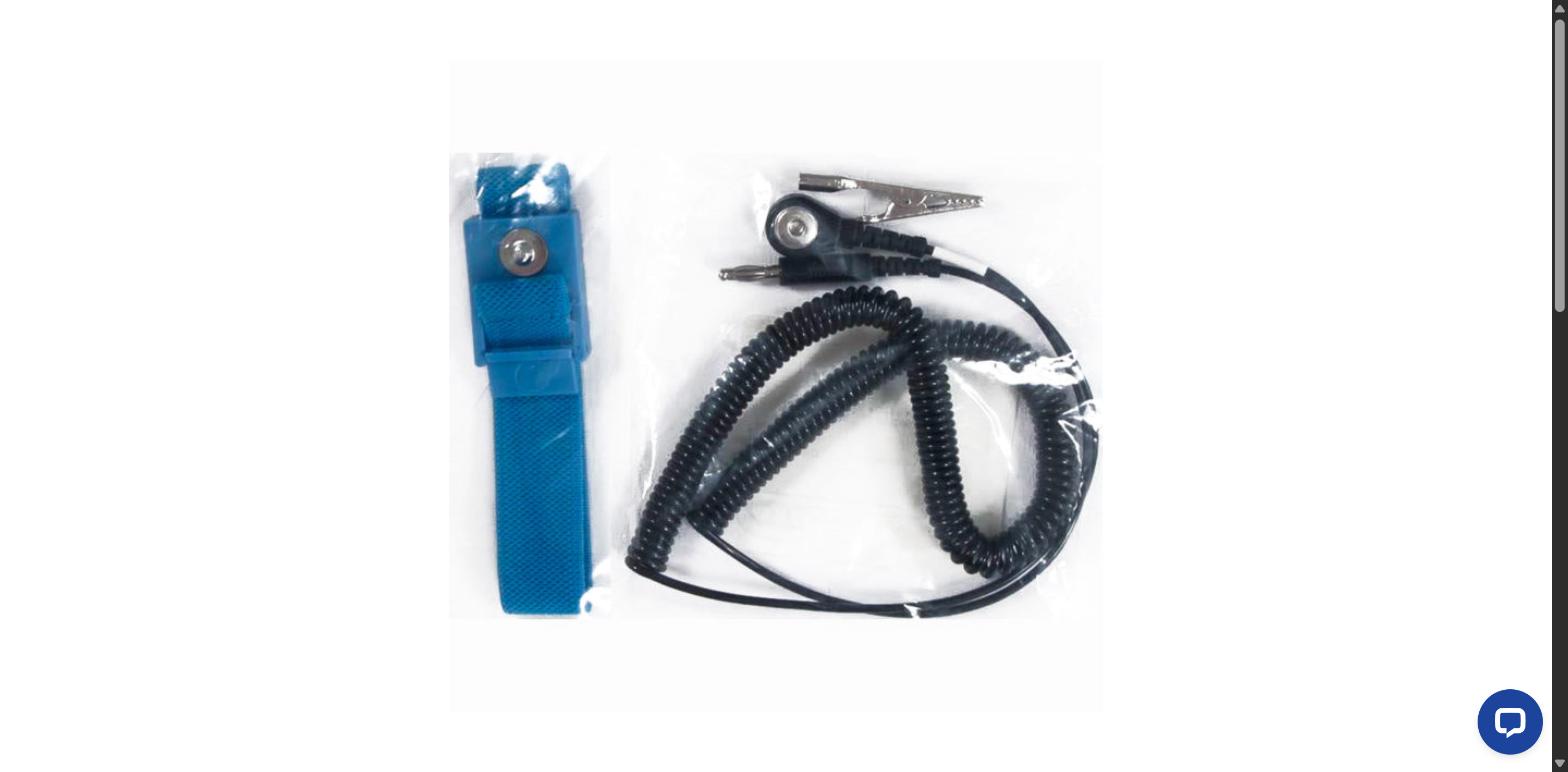
Your operator tests the wrist strap at the start of the shift. The tester flashes green. Three days later, a batch of components fails incoming inspection — and the root cause traces back to electrostatic discharge at that workstation.
This is one of the most common quality escapes we investigate at Phil Industries. In 15 years supplying ESD equipment to Singapore’s electronics manufacturers, the pattern is consistent: the wrist strap didn’t fail. The system around it did.
Failure Mode 1 — Humidity Below 40% RH: Singapore’s Air-Con Problem
Singapore factories run air conditioning year-round. In well-cooled areas — semiconductor packaging, precision assembly, test areas — relative humidity commonly drops to 35–40% RH. Below 40% RH, human body resistance increases significantly. A wrist strap that tests within spec at 8am can provide reduced protection by 2pm as humidity drops through the afternoon.
The fix: Install a humidity monitor at each ESD workstation. Add a bench-top air ioniser to neutralise charge on non-conductive surfaces — ionisers are required at 40% RH or below, not only for semiconductor-level EPAs. Singapore’s climate makes this a baseline requirement for any EPA running air conditioning.
Failure Mode 2 — Coiled Cord Fatigue: The Most Overlooked Component
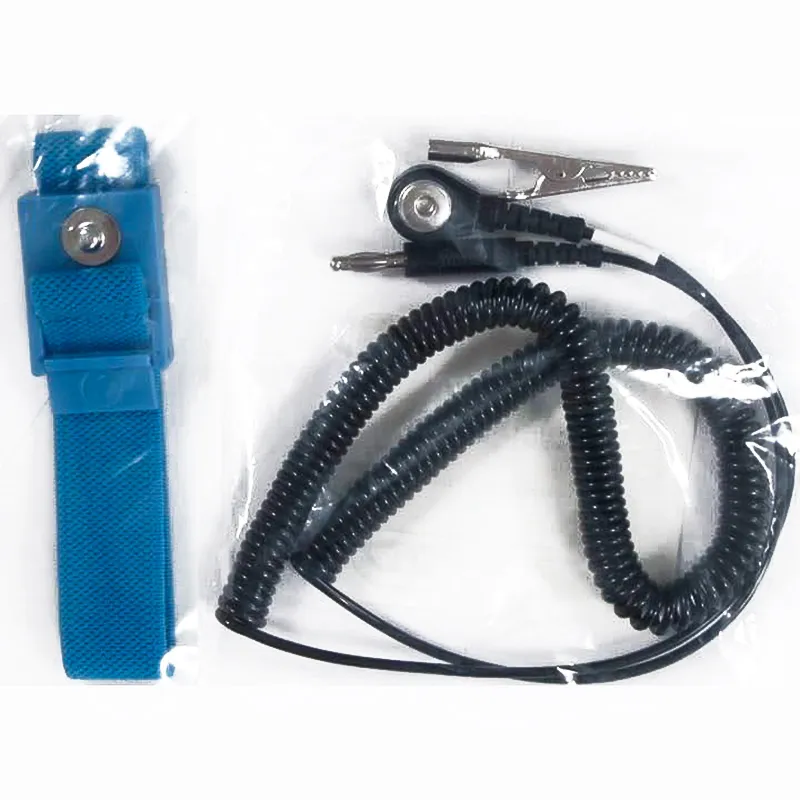
The coiled cord is the weakest link in any wrist strap system. Repeated stretching and coiling fatigues the internal conductor wire. A cord with a hairline break at a bend point will pass visual inspection and may even pass a standard end-to-end resistance test — right up until it doesn’t.
The fix: Replace coiled cords on a scheduled basis — every six months in normal production use, more frequently in high-throughput environments. Store spare cords at each workstation. When operators report intermittent test failures, replace the cord first before investigating the wrist band or tester.
Failure Mode 3 — Operator Bypass: What Audit Trails Don’t Show
This is harder to document. Operators who wear gloves for part of their task sometimes leave the wrist strap loose under the glove. Operators who work standing occasionally disconnect the coiled cord to move — and forget to reconnect. These behaviours don’t show in a daily test log. They show up in field returns.
The fix: For Class 0 or HBM 0A/0B component lines, introduce continuous monitoring wrist strap systems that alert supervisors immediately when continuity is broken. For standard assembly lines, conduct unannounced spot checks as part of your ESD audit schedule.
Building a Complete Wrist Strap Programme
| Component | Specification | Action Interval |
|---|---|---|
| Wrist band | Adjustable, 1MΩ safety resistor inline | Inspect weekly |
| Coiled cord | 750kΩ–35MΩ (ANSI/ESD S1.1) | Test daily, replace every 6 months |
| Wrist strap tester | Calibrated per ANSI/ESD S1.1 | Calibrate annually |
| Test records | Operator, station, result, date | Every shift start |
| Humidity monitor | Alert at 40% RH or below | Continuous |
| Air ioniser | Clean emitter needles monthly | Required at 40% RH or below |
What to Ask for When Buying Wrist Straps in Singapore
Confirm the wrist band includes a 1MΩ current-limiting resistor — never use a direct-connect strap without one. Confirm the coiled cord is rated to ANSI/ESD S1.1 and that your supplier holds local stock. Coiled cords need regular replacement; long import lead times mean a single cord failure can take a station offline for weeks.
Phil Industries stocks ESD wrist straps, coiled cords, and calibrated testers from our Ubi warehouse with same-week delivery across Singapore. Browse our wrist strap range or speak to our ESD team for EPA specification advice.
How often should ESD wrist straps be tested?
Test every wrist strap daily, before the operator starts work. Straps fail more often than any other item in an ESD program, because the wear items degrade quietly: the band stretches, sweat corrodes the contacts and the coil cord conductor fatigues at the strain relief. A ten-second check at a wall-mounted tester catches this before it costs you a board.
Most testers pass a strap system that measures between roughly 0.8 and 35 megohms from skin to plug. In addition, log each result. Auditors working to ANSI/ESD S20.20 expect records, and a simple sign-in sheet at the tester satisfies them. For high-value assembly, continuous monitors go one step further because they alarm the moment the connection drops mid-shift.
Remember that the strap is only one link in the chain. Our ESD grounding guide walks through the full workstation setup, from the common point ground to the mat cord.