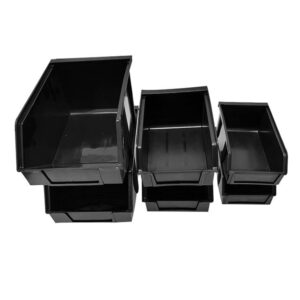
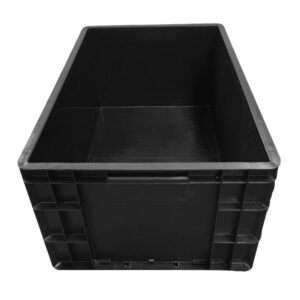
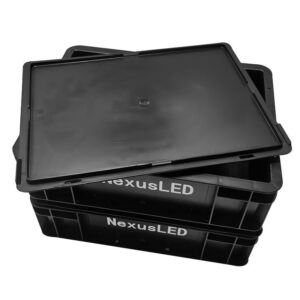
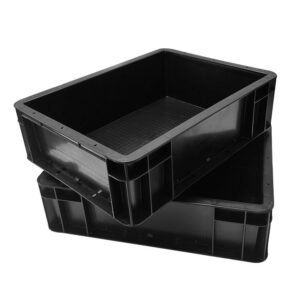
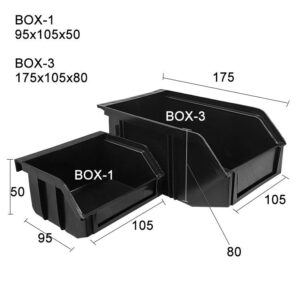
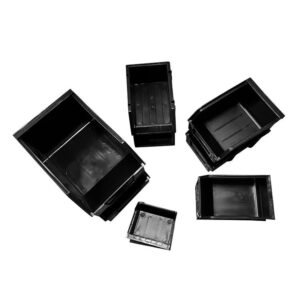
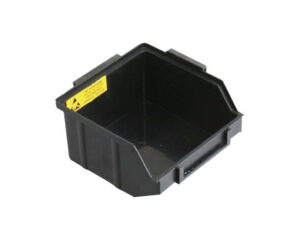
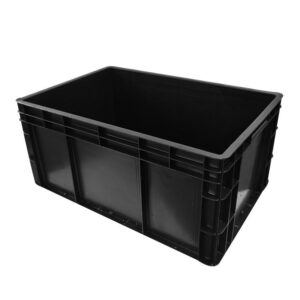
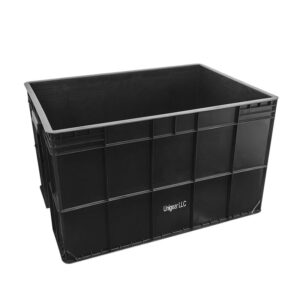
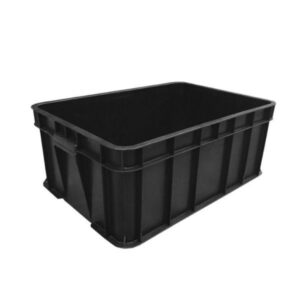
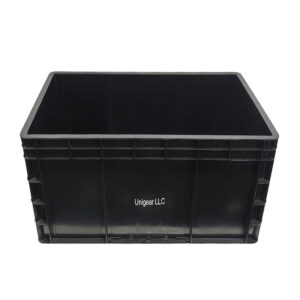
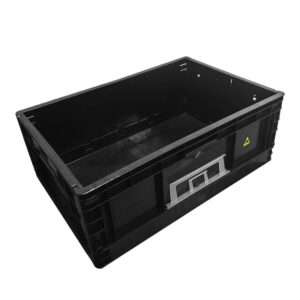
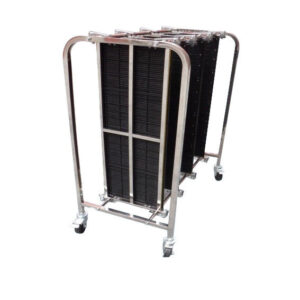
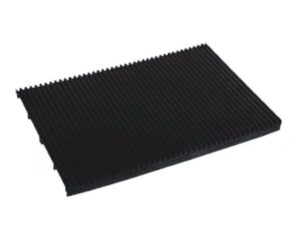
ESD packaging materials protect components once they leave the protected bench — in transit, in stores and on the line. The colour of the bag tells you what it actually does, and choosing the wrong one is a common and expensive mistake. Phil Industries stocks ESD packaging ex-stock in Singapore. Looking for boxes rather than bags? Our dedicated ESD storage boxes, bins and totes range covers conductive and dissipative containers with lids, dividers and PCB racks.
Which bag do I need?
| Type | Looks like | What it does | Use for |
|---|---|---|---|
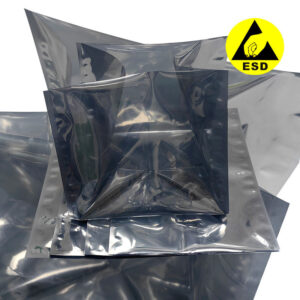
| Shielding (metal-in / MBB) | Silver / translucent grey | Faraday cage — blocks external fields | Boards & devices leaving the EPA |
| Dissipative | Pink / rose | Won’t generate charge; no shielding | Non-sensitive parts inside the EPA |
| Conductive | Black | Low resistance, some shielding | Bins, trays, in-house transport |
| Moisture barrier (MBB) | Silver foil | Blocks moisture + static | MSL parts, long storage, reflow |
The rule of thumb
Leaving the EPA? Use shielding. Pink anti-static bags do not shield — they only avoid generating charge.
Moisture-sensitive devices need a foil moisture-barrier bag with desiccant and a humidity indicator card.
Seal it — an open shielding bag is not a Faraday cage.
Don’t reuse damaged bags — creases and punctures break the shield layer.
Also in this range
Shielding and moisture-barrier bags, bubble bags and pouches
Conductive and dissipative bags, foam and trays
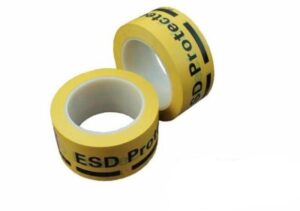
ESD labels, tape and desiccant / humidity indicator cards
See also ESD Storage Boxes, Bins & Trays
Frequently asked questions
What’s the difference between pink and silver bags?
Pink is anti-static/dissipative — it won’t generate charge but offers no shielding. Silver metal-in bags act as a Faraday cage and shield the contents from external fields. Anything leaving the EPA should be in a shielding bag.
What is a moisture barrier bag?
A foil bag that blocks both moisture and static, used with desiccant and a humidity indicator card for moisture-sensitive (MSL) devices before reflow.
Can I reuse ESD bags?
Only if undamaged. Creases, punctures and abrasion degrade the shielding layer — inspect before reuse.
Need a size or spec not listed? Call +65 6555 1745 or WhatsApp +65 9853 9030.
What is the difference between anti-static packaging and an ESD protection bag?
They overlap. “Anti-static packaging” is the umbrella term for any material that stops charge building up around sensitive parts, and an “ESD protection bag” is one item within it. Because the levels differ, the choice matters: shielding bags block external fields and are the safe default for boards leaving an EPA, dissipative pink-poly bags only stop charge generation, and moisture barrier bags add humidity protection for long storage. We supply anti-static packaging in Singapore across all three levels.
Anti static and static dissipative packaging
This range is searched under several names in Singapore — anti static packaging, static dissipative packaging, electrostatic discharge packaging and ESD packaging all describe the same materials. They protect components from charge while they are being stored, moved or shipped.
The three bag types, and when to use each
- Pink antistatic bags — low-charging polyethylene. Stops triboelectric charge building on the bag itself. Suitable for non-sensitive items and as a dust cover; it does not shield.
- Metallised shielding bags (silver) — a Faraday cage. The only type that protects the contents from an external discharge. Use for boards and unpackaged semiconductors leaving the EPA.
- Black conductive bags — low resistance throughout, typically for high-value devices where charge must be carried away quickly.
The rule of thumb: if the part leaves your ESD Protected Area, it needs a shielding bag, not just an antistatic one. Packaging requirements sit under IEC 61340-5-1 and ANSI/ESD S20.20. Tell us the part size and whether it ships outside the building and we will point you to the right bag.
Related categories and guides
- Related categories: ESD Rubber Mat, ESD Storage Boxes, Bins & Trays, ESD Grounding & Earthing Accessories, ESD Wrist Strap.
- Back to ESD Products Singapore.
- Guides: anti-static vs static-shielding bags and ESD standards IEC 61340 and ANSI/ESD S20.20.