This practical guide is for junior engineers, biomedical technicians and facilities teams in pharma and healthcare. It explains how to choose a hospital vacuum for wards, GMP production areas and MRI suites. It also shows why each zone has different rules.
⚡ In short: a hospital is three cleaning problems, not one — hygiene-critical wards, classified GMP rooms, and the MRI suite where the magnet sets the rules. Match the vacuum to the zone; one unit rarely fits all three.
🏥 Hospitals and GMP plants are three cleaning problems, not one
A hospital vacuum that suits a general ward may be wrong for a sterile production core. Inside an MRI suite, it can be dangerously wrong. Therefore, before specifying equipment, split the facility into zones:
- Hygiene-critical zones — first, the wards, theatres, pharmacies and GMP rooms, where auditors track contamination and microbial control.
- Classified cleanrooms — second, the production and filling areas with a defined ISO or GMP grade.
- Imaging suites — finally, the MRI rooms, where the magnet itself sets the safety rules.
🧼 Zone 1: hygiene-critical areas need antimicrobial construction
In healthcare settings, the vacuum itself must not become a reservoir for microbes. The Atrix Antimicrobial Class 100 Cleanroom HEPA Vacuum (ATIBCV) handles exactly this. For example, its housing and attachments carry an antimicrobial additive that inhibits bacterial growth. In addition, it delivers true HEPA filtration at 99.97% efficiency at 0.3 microns. Four filtration stages — HEPA pre-motor, HEPA post-motor, a pretreated polyester filter and a high-capacity paper bag — also capture even the fine carbon dust from the motor. Because the tank holds 6 gallons, bag changes stay infrequent. Finally, it carries an ISO 5 / Class 100 rating, so it runs quietly enough for occupied wards.
🏷️ Zone 2: classified rooms — match the vacuum to the grade
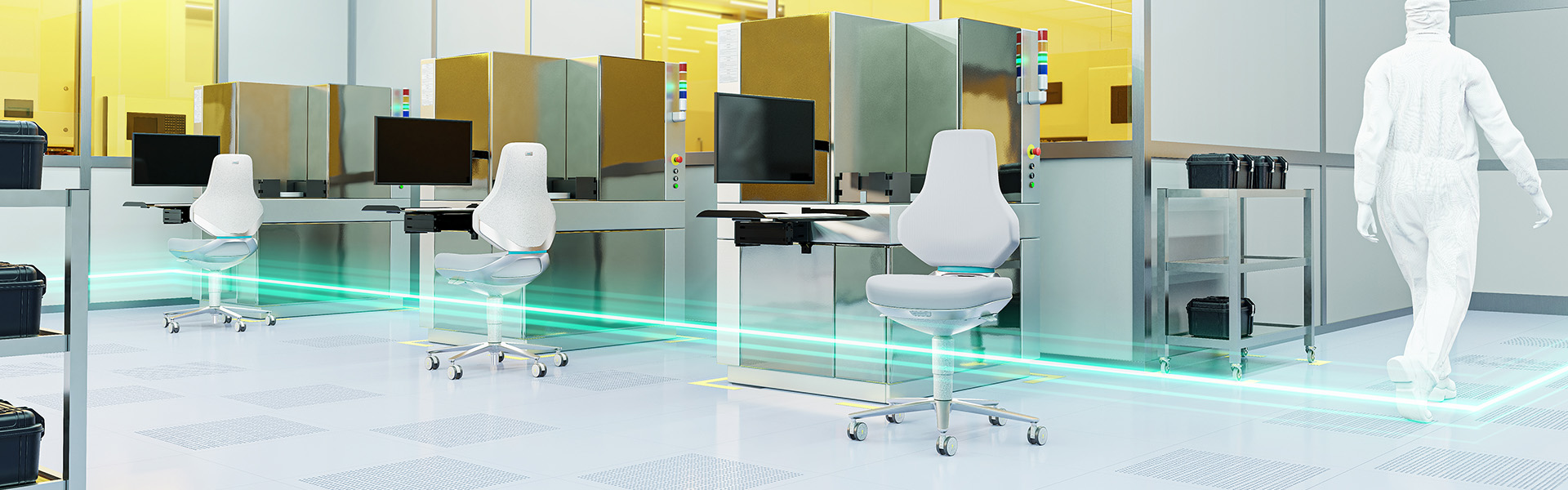
GMP cleanroom grades commonly map to ISO 14644-1 classes. For example, sterile cores sit around ISO 5, while surrounding support rooms run ISO 7 to ISO 8. Therefore, two rules keep an audit clean:
- ISO 5 / Grade A–B areas — first, specify the ISO 5-rated antimicrobial unit above, because the room grade is the binding requirement.
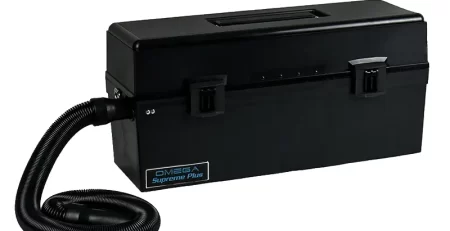
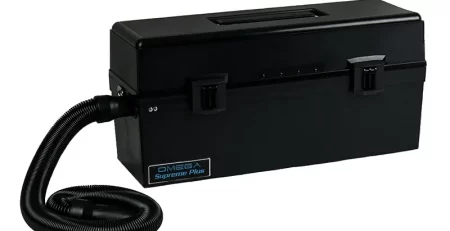
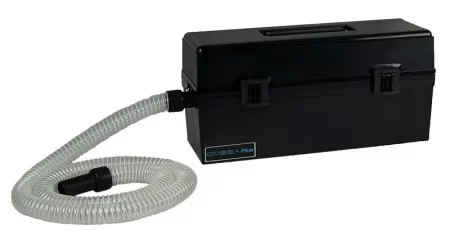
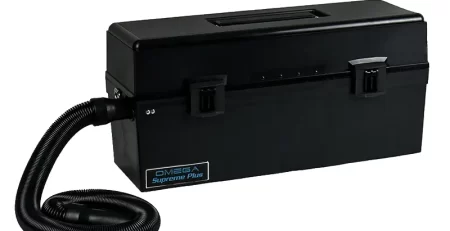
- ISO 8 support and packaging areas — second, choose the ESD-safe Omega Supreme Plus HEPA (dual HEPA, 99.97% at 0.3 µm) or the ULPA version (99.999% at 0.12 µm). Both carry a Class 100,000 / ISO 8 rating, and they store their accessories inside a sealed tool-box housing.
For the full selection logic — particle counts, HEPA vs ULPA, and why facilities ban ordinary vacuums — see our companion guide, How to Choose a Cleanroom Vacuum by ISO Class.
🧲 Zone 3: the MRI suite — the magnet writes the rules
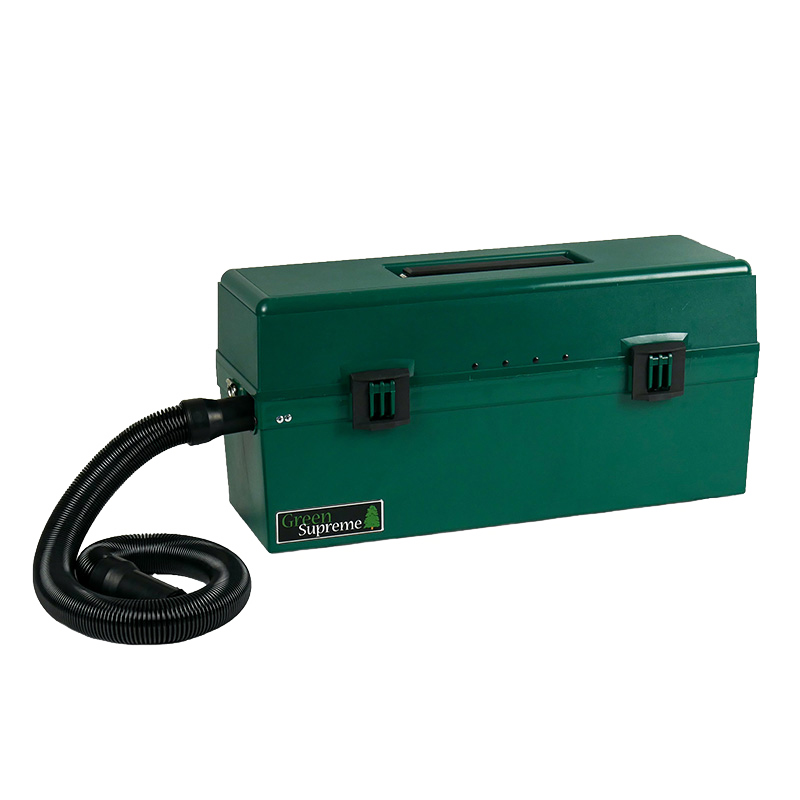
An MRI magnet is always on. As a result, it attracts ferromagnetic objects with enough force to turn loose equipment into projectiles. That is why ordinary cleaning machines stay outside. The Atrix Omega Supreme MRI Hospital Vacuum (VACOSMRI) solves the problem with distance. For example, a custom 15 ft non-metallic, ESD-safe hose reaches the machine, while the unit itself stays up to 15 feet from the magnetic field. In addition, it combines H13 HEPA filtration (99.97% at 0.3 microns), three filtration levels and a 1,000-hour Ametek Advantek II motor. Its ESD-safe construction also matters when servicing the sensitive electronics around imaging equipment.
⚠️ When the job is decontamination, not housekeeping
Renovation and remediation in healthcare buildings can disturb asbestos, lead paint or mould. Therefore, that work calls for a vacuum with IEC/EN 60335-2-69 Annex AA-Class H certification — a legal category, not a marketing label. For those jobs, we stock the 230V Omega Class H14 (suits Singapore mains directly) and a cordless version with 30+ minutes of runtime for areas without power.
🔑 The one thing to remember: keep units dedicated to their zone. Equipment that moves between zones carries contamination on its wheels and hoses — and inside an MRI suite, only a non-metallic, distance-safe unit belongs.
Frequently Asked Questions
Can the ward vacuum also serve the GMP production core?
Keep them dedicated. Equipment that moves between zones carries contamination on wheels, housings and hoses. Therefore, most facilities assign one unit per zone and label them.
Why does an MRI vacuum need to be ESD safe?
Because servicing work happens around sensitive imaging electronics, the vacuum airflow itself generates static. In turn, ESD-safe construction gives that charge a controlled path to ground.
What paperwork should we keep for audits?
Keep the filter specifications, replacement records and certification documents for each unit. In short, auditors want evidence that genuine parts maintain the filtration ratings. Replacement filters and bags sit under Atrix Filters & Accessories.
The complete range for these environments sits under Critical Area Vacuums and Cleanroom & Medical Vacuums. Phil Industries is an authorised Atrix distributor in Singapore, holding hospital vacuum stock locally in Ubi. Call +65 6555 1745 or WhatsApp +65 9853 9030 to match units to your zones.