A practical guide for junior engineers, facilities technicians and cleanroom operators in Singapore — what the ISO classes actually mean, why an ordinary vacuum is banned from a cleanroom, and how to match the vacuum to the room.
⚡ In short: a cleanroom vacuum is matched to your room’s ISO 14644-1 class — the cleaner the class, the finer the filtration (HEPA vs ULPA) and the more the construction matters. An ordinary vacuum re-emits the fine particles you are trying to remove.
🏷️ First, what does an ISO class actually mean?
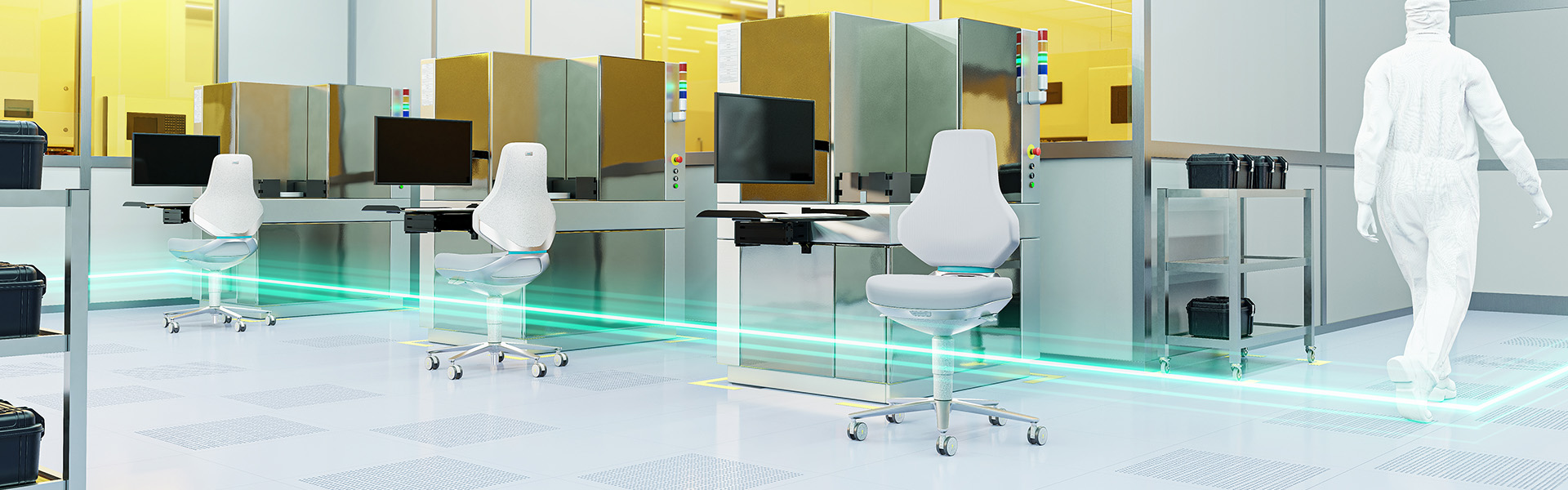
Cleanrooms are classified under ISO 14644-1 by how many particles are allowed per cubic metre of air. The lower the class number, the cleaner the room. Two classes come up constantly in Singapore fabs, pharma plants and hospitals:
- ISO 5 (legacy name: Class 100) — a maximum of 3,520 particles ≥0.5 µm per m³. Typical for semiconductor front-end areas, sterile pharma filling and critical medical zones.
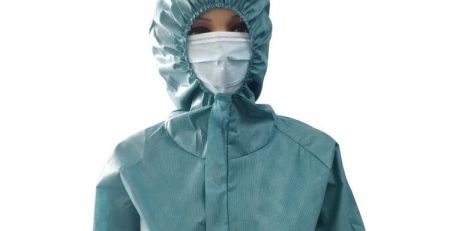
- ISO 8 (legacy name: Class 100,000) — up to 3,520,000 particles ≥0.5 µm per m³. Typical for gowning rooms, electronics assembly and general GMP support areas.
The legacy Class names come from the old US FED-STD-209E standard, and manufacturers still print them on equipment — so “Class 100” and “ISO 5” on a datasheet mean the same room.
🚫 Why you cannot bring a normal vacuum into a cleanroom
A household or workshop vacuum makes a cleanroom dirtier, not cleaner, for four reasons:
- Exhaust leakage — most vacuums exhaust unfiltered or partially filtered air, so the finest particles pass straight through and back into the room.
- Filter bypass — because ordinary housings are not sealed, air simply leaks around the filter instead of through it.
- Motor emissions — brushed motors shed fine carbon dust as they wear; cleanroom vacuums capture this internally with a post-motor filter.
- Shedding materials — rough plastics and cloth bags release their own particles as they move.
A true cleanroom vacuum solves all four: sealed construction, certified filter media, post-motor filtration and smooth, wipe-down housings.
🔬 HEPA vs ULPA — the numbers that matter
Filter efficiency is quoted at a specific particle size, so always read both numbers together:
- HEPA — captures 99.97% of particles at 0.3 µm. The Atrix cleanroom models use H13-grade HEPA cartridges.
- ULPA — captures 99.999% at 0.12 µm, so it holds back finer particles at higher efficiency. Atrix H14 ULPA cartridges carry this rating.
Why 0.3 µm? Because particles around that size are the hardest for any filter to catch — smaller and larger particles are actually captured more easily. Rating filters at the toughest size keeps the numbers honest.
🎯 Matching the vacuum to the room — a selection table
| Your environment | What to specify | Atrix model we stock |
|---|---|---|
| ISO 5 / Class 100 — sterile pharma, hospitals, critical zones | ISO 5-rated unit, antimicrobial construction | Antimicrobial Class 100 Cleanroom HEPA Vacuum (ATIBCV) |
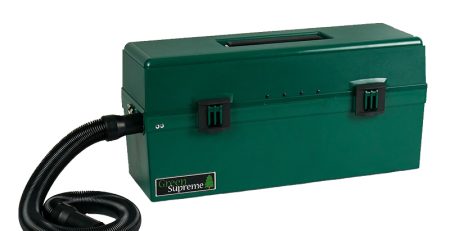
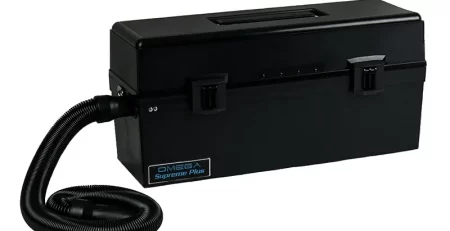
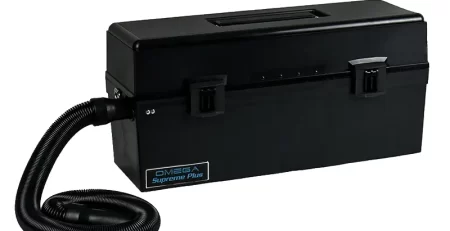
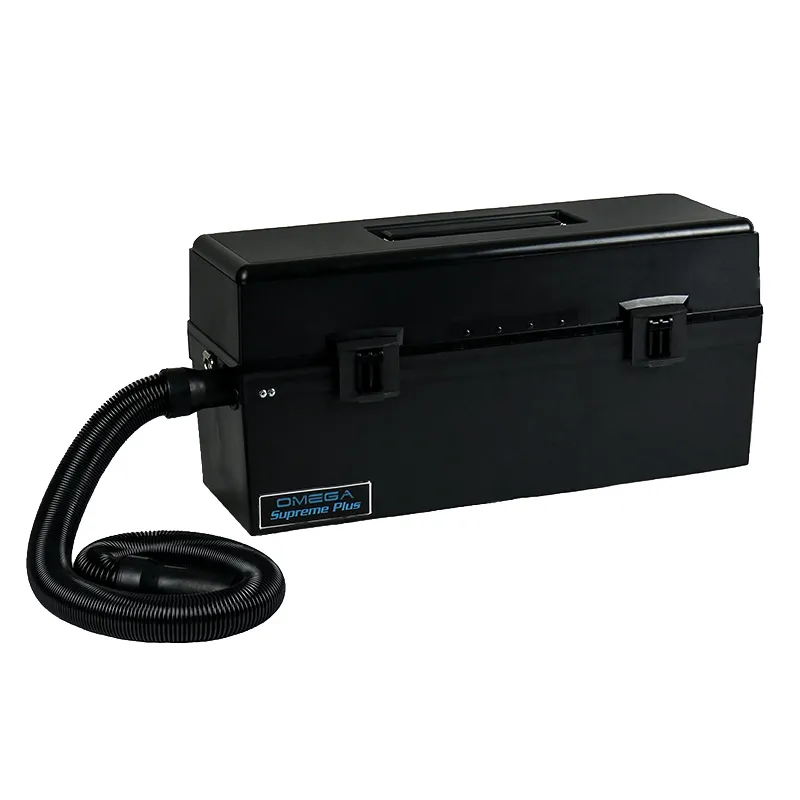
| ISO 8 / Class 100,000 — electronics assembly, GMP support areas | Sealed dual-HEPA, ESD safe | Omega Supreme Plus HEPA (VACOMEGASECRH) |
| ISO 8 where finer capture is preferred | ULPA media, ESD safe | Omega Supreme Plus ULPA (VACOMEGASECRU) |
| MRI suites and imaging rooms | 15 ft non-metallic ESD hose; unit stays outside the magnetic field | Omega Supreme MRI Hospital Vacuum (VACOSMRI) |
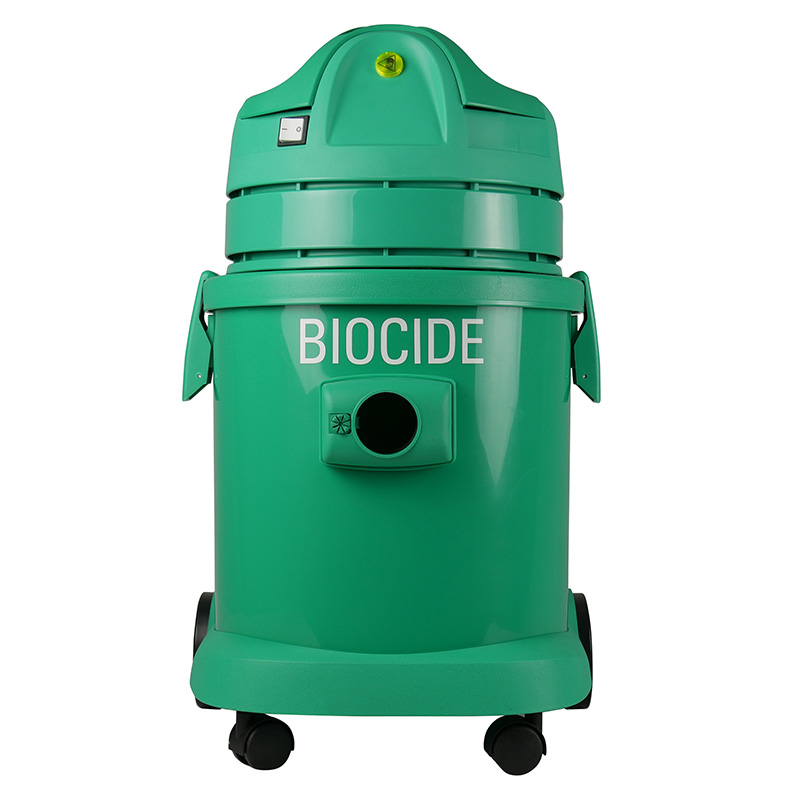
| Hazardous dust — asbestos, silica, lead, mould | Certified to IEC/EN 60335-2-69 Annex AA-Class H | 230V Omega Class H14 (VACOMEGAUM2F) or the cordless version |
The full range sits under Critical Area Vacuums and Cleanroom & Medical Vacuums.
⚡ Do not forget ESD
If the cleanroom handles wafers, PCBs or any static-sensitive assembly, the vacuum must also be ESD safe — a conductive housing and hose that give static charge a controlled path to ground. Rubbing air and particles through a plastic hose generates charge fast, and an ungrounded vacuum can put thousands of volts right next to your product. The Atrix cleanroom models above are manufactured ESD safe; the wider anti-static range is under ESD & Toner Vacuums.
✅ Three habits that keep the rating valid
- Use genuine filters — the certification applies to the sealed system, so a third-party cartridge voids the rating. Genuine parts are under Atrix Filters & Accessories.
- Change filters on the indicator, not on a guess — models with a full-filter light tell you exactly when capacity is reached.
- Bag and seal before you leave the room — contained disposal is part of the contamination-control chain, and therefore just as important as the filtration itself.
🔑 The one thing to remember: the filter grade must match the room class, and the vacuum must be sealed so captured particles cannot leak back out. A HEPA number on the box means nothing if the housing bypasses it.
Frequently Asked Questions
Can one vacuum serve both our ISO 8 cleanroom and the workshop outside?
Keep dedicated units. A vacuum that has ingested workshop dust carries it on wheels, housing and hose — moving it into the cleanroom defeats the purpose.
Is ULPA always better than HEPA?
Not always — ULPA captures finer particles, but HEPA at 99.97% is the specified level for most ISO 8 work. Specify ULPA where your contamination-control plan calls for sub-0.3 µm capture.
What does “Class H certified” mean on a vacuum?
It refers to IEC/EN 60335-2-69 Annex AA — the requirement for vacuums used on hazardous dusts such as asbestos, silica and lead. Where regulations demand a Class H unit, an ordinary HEPA vacuum does not qualify.
Phil Industries is an authorised Atrix distributor in Singapore, holding cleanroom vacuum stock locally in Ubi with delivery across Southeast Asia. Need help matching a unit to your room class? Call +65 6555 1745 or WhatsApp +65 9853 9030.
>