ESD safe materials are static-dissipative engineering plastics, foams, bins and trolleys — formulated with carbon, conductive polymer or surfactant additives — so charge cannot build up on the things your parts sit in, sit on, or travel in. Phil Industries stocks 77+ ESD safe material SKUs in Singapore: bins, totes, dividers, trolleys, sheets and foams in dissipative or conductive grades.
The ESD safe materials range
- ESD bins, totes and dividers — conductive polypropylene; because they stack, they also save bench and rack space.
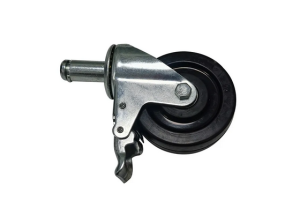
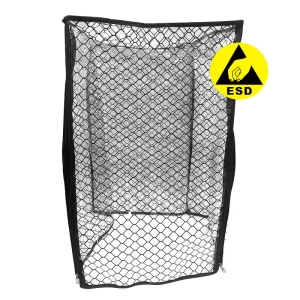
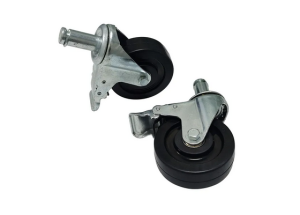
- ESD trolleys and shelving — powder-coated steel, so the frame stays earthed through conductive casters.
- ESD foam (conductive and dissipative) — polyethylene and polyurethane; we die-cut these to your drawing.
- ESD sheet and rod — acrylic, PVC and HDPE in static-dissipative grades, for example for fixtures and guards.
- ESD labels, tapes and tags — static-aware identification supplies.
All grades meet IEC 61340-5-1 and ANSI/ESD S20.20 where applicable.
Compare grades and lead times
| Material type | Standard | Surface resistance | Lead time |
|---|---|---|---|
| ESD bin / tote | ANSI/ESD S541 | 10⁶–10¹¹ Ω | Ex-stock |
| Conductive foam (pink/black) | IEC 61340-5-1 | < 10⁶ Ω | Ex-stock |
| Trolley with ESD casters | ANSI/ESD S20.20 | 10⁶–10¹¹ Ω | Ex-stock |
| Die-cut foam inserts | — | Maintained | 1–2 weeks |
Frequently asked questions
Do you stock ESD foam in Singapore?
Yes. Black conductive PE foam sheets for IC, PCB and component packing are held in Ubi and cut to size; see the conductive PE ESD foam listing for thicknesses. Pink anti-static foam is available on request for non-sensitive packing, while shielding bags and ESD boxes cover parts that leave the protected area.
What are ESD safe materials?
They are engineering plastics, foams and metal-frame products built with conductive or dissipative properties, so static charge cannot accumulate on them. Dissipative grades measure 10⁶–10¹¹ Ω, because charge must bleed away slowly enough to avoid spark damage to ICs. In contrast, conductive grades measure below 10⁶ Ω and suit shielding and high-charge environments. ANSI/ESD S541 specifies both for packaging.
Are pink and black foams the same?
No. Pink anti-static foam is static-dissipative (10⁶–10¹¹ Ω), so it protects pinned ICs from charge. Black conductive foam measures below 10⁴ Ω; therefore it works as a Faraday-cage insert for shielding DIP packages and PCB assemblies in transit.
Do ESD bins lose their properties over time?
Carbon-loaded bins keep their properties permanently, because carbon does not migrate. However, surfactant-treated bins fade in 6–12 months as the additive washes off. As a result, we supply only carbon-loaded permanent ESD bins in Singapore.
Can I order custom-cut ESD foam inserts?
Yes. We die-cut foam inserts to your DXF or DWG drawing in Singapore, with 1–2 week lead time and a minimum order of 25 pieces. In addition, both pink dissipative and black conductive grades are available.
How do I order ESD safe materials in Singapore?
Email kenneth@phil-industries.com.sg, WhatsApp +65 9853 9030, or call +65 6555 1745 with the grade, size and quantity. Quotations return within one working day.
If you are specifically after ESD storage boxes, bins and totes, that dedicated category lists every conductive and dissipative container we hold in Ubi, with lids, dividers and PCB racks, so it is the faster place to compare sizes.
Related categories
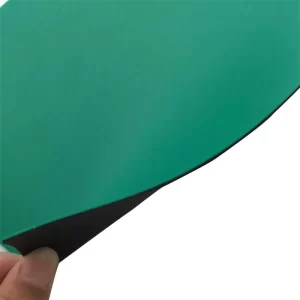
For a full EPA build, combine ESD safe materials with ESD fabric, ESD packaging materials and ESD rubber mats. For the complete catalogue, return to the ALL ESD Products hub.
Reviewed by the Phil Industries Technical Team — Singapore industrial & ESD specialists since 2009. See also ESD Products Singapore and ESD Packaging Materials.