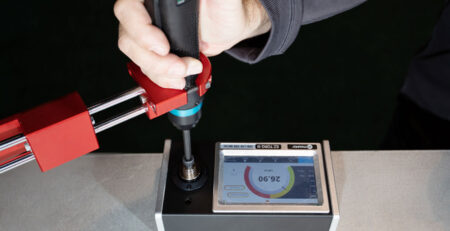
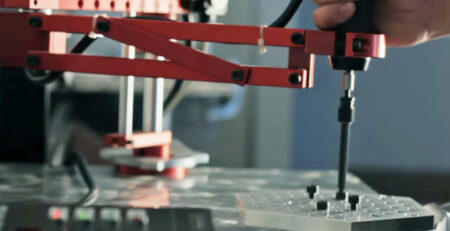
An ESD torque screwdriver looks like any other precision driver — but in an electronics EPA or a cleanroom, the wrong construction can quietly damage your product. This guide is written for electronics, semiconductor and medical-device assembly teams in Singapore. It explains when a torque screwdriver needs to be ESD-safe, when it needs to be cleanroom-rated, when it needs both, and how to match the tool to the zone.
⚡ In short: If your product is static-sensitive, you need an ESD-safe driver. If your room is particle-controlled, you need a cleanroom driver. Semiconductor and many medical lines need both. This guide shows how to tell which applies — and matches each case to a Mountz FG model.
Reviewed September 2026 by the Phil Industries engineering team, Singapore. Standards referenced: IEC 61340-5-1, ISO 14644-1, ISO 6789. Products mentioned are stocked at 51 Ubi Ave 1 for same-day quotation.
Start with the joint, not the tool
A torque screwdriver exists to do one thing: apply a controlled, repeatable clamp load to a small fastener. Under-tighten, and the joint loosens under vibration. Over-tighten, and you strip threads or crack a board. So the baseline requirement is accuracy — a tool calibrated to ISO 6789, holding roughly ±6% or better across its range. This guide assumes that accuracy is already non-negotiable. The real question here is the environment the tool works in, because a perfectly accurate screwdriver can still cause damage if it is the wrong construction for the zone.
Choosing an ESD torque screwdriver: the EPA problem
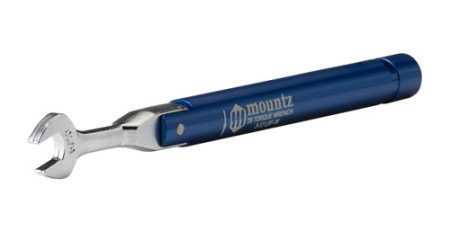
An ESD torque screwdriver is a precision preset or adjustable driver built with a static-dissipative handle and body, so it can apply a calibrated torque inside an Electrostatic Protected Area (EPA) without becoming a source of static discharge.
Inside an EPA, the whole point is to keep every conductive path at the same potential and drain charge safely to ground. Operators wear wrist straps, and floors and benches are dissipative. Yet the tool in the operator’s hand is often overlooked. A standard screwdriver with an insulative plastic handle can hold a charge and discharge it straight into a static-sensitive device on contact — exactly where the damage is most expensive.
An ESD torque screwdriver solves this with a dissipative handle and construction that keeps the tool within the EPA’s grounding scheme, in line with IEC 61340-5-1. “Dissipative” is specific: the material bleeds charge away in a controlled way, rather than either insulating it like plastic or dumping it instantly like bare metal. As a result, the tool stops being a floating charge source next to your product. Note too that the wrist strap grounds the operator — it does nothing for a tool that holds its own charge, which is why ESD-safe construction has to be specified at the screwdriver itself.
🧫 The cleanroom problem: particles and outgassing
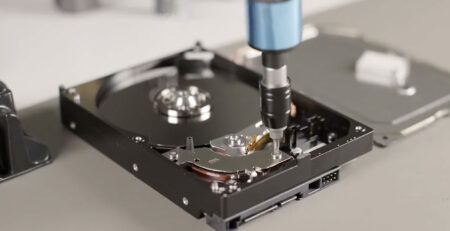
A cleanroom screwdriver solves a different problem: it must not add particles or volatile contamination to a controlled environment. Two things matter. First, materials and finishes that do not shed particles and that wipe down cleanly. Second — and this is the detail most buyers miss — the lubricant. An ordinary grease slowly outgasses and migrates, which is unacceptable in a semiconductor or medical cleanroom. That is why the cleanroom units in the Mountz FG line use high-vacuum grease (HVG): a low-outgassing lubricant made for vacuum and controlled-environment use, so the mechanism stays smooth without contaminating the space. The right cleanroom driver is matched to your room’s ISO 14644-1 class; the cleaner the class, the more the construction and lubrication matter.
🔀 ESD, cleanroom, or both?
These are two independent requirements, and confusing them leads to buying the wrong tool. Use this as a quick decision guide:
- ⚡ ESD-safe, standard environment — first, an electronics EPA (PCB assembly, SMT rework, connector work) where static is the hazard but the room is not particle-classified. Here you need ESD construction, not cleanroom lubrication.
- 🧫 Cleanroom, no static-sensitive parts — second, a classified room where particle and outgassing control is the hazard. Here you need cleanroom materials and, for the cleanest classes, high-vacuum grease.
- 🔀 Both — finally, semiconductor and many medical-device lines are both an EPA and a classified cleanroom. Because of that, you need a driver that is dissipative and low-particle at the same time; specifying only one leaves a real exposure in the other.
🎯 Matching the Mountz FG range to your zone
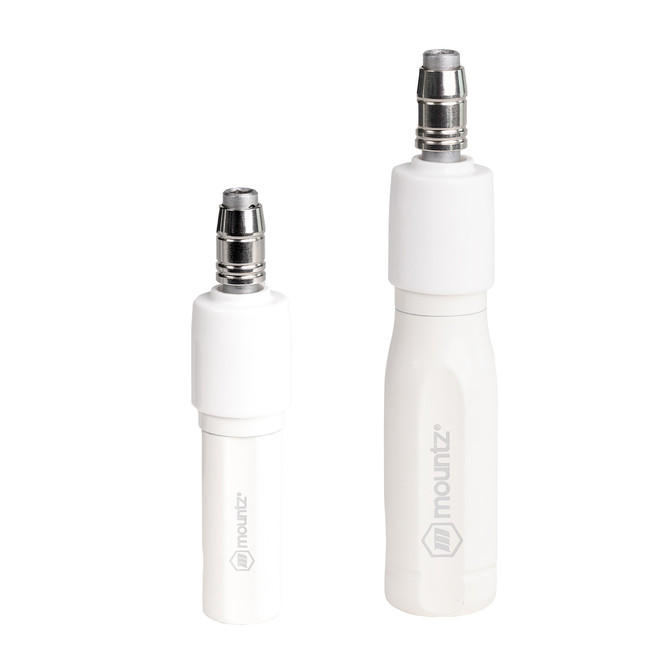
Phil Industries stocks the Mountz FG preset torque screwdriver family in Singapore, covering each of these cases. Presets are the usual choice for production, because the torque value is locked and error-proofed — the operator cannot dial it off-spec. The Mini variants cover low torque for fine work, while the standard variants extend higher.
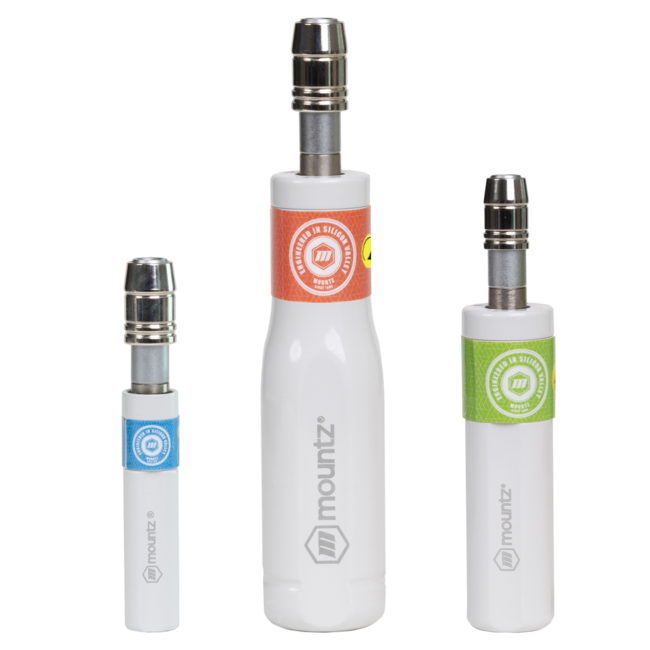
| Model | ESD-safe | Cleanroom | Torque (approx.) | Best for |
|---|---|---|---|---|
| FG ESD Preset | Yes | — | up to ~90 cN·m (8 lbf·in) | Electronics EPA, standard torque |
| FG Mini ESD Preset | Yes | — | low torque (~2–35 cN·m) | Fine electronics work in an EPA |
| FG Cleanroom Preset | — | Yes | up to ~90 cN·m | Classified rooms |
| FG Mini Cleanroom Preset | — | Yes | low torque (~2–35 cN·m) | Fine work in classified rooms |
| FG Cleanroom Preset HVG | — | Yes (HVG) | up to ~90 cN·m | Vacuum / highest cleanliness |
| FG Mini Cleanroom HVG | — | Yes (HVG) | low torque (~2–35 cN·m) | Low-torque vacuum/cleanroom |
📋 Don’t forget calibration
An ESD or cleanroom screwdriver is still a precision instrument, and its accuracy drifts with use. Therefore, specify tools calibrated to ISO 6789, keep the calibration certificate for audits, and set a recalibration interval based on cycle count and your quality system — commonly every 5,000 cycles or annually, whichever comes first. In audited semiconductor, aerospace and medical lines, that paperwork is part of the deliverable, not an afterthought.
🔑 The one thing to remember: a wrist strap grounds the operator, not the tool. In an EPA, the screwdriver itself must be dissipative — accuracy and ESD-safety are two separate specs, and you need both.
Frequently Asked Questions
Does an ESD wrist strap make an ESD torque screwdriver unnecessary?
No. The wrist strap grounds the operator, while the screwdriver can still hold or generate its own charge and discharge it into the device on contact. In an EPA, the tool itself must be dissipative and within the grounding scheme.
Why do cleanroom screwdrivers use high-vacuum grease?
Because ordinary grease outgasses and migrates, which adds volatile contamination to a controlled environment. High-vacuum grease is a low-outgassing lubricant, so the mechanism stays smooth without contaminating a semiconductor or medical cleanroom.
Can one screwdriver be both ESD-safe and cleanroom-rated?
Yes, and semiconductor and many medical lines need exactly that, because the zone is both an EPA and a classified cleanroom. Specify a driver that is dissipative and low-particle rather than solving only one requirement.
Preset or adjustable for production?
Preset, in most cases. The torque is locked to the specified value, so an operator cannot dial it off-spec — which error-proofs the line. Adjustable drivers suit rework or multi-value stations where the setting genuinely needs to change.
Above roughly 5 N·m, or wherever the fastener takes a socket rather than a bit, a torque wrench is the better tool. For example, the Mountz TBX break-over wrenches cover 2.4 to 25 N·m and are also available in ESD versions for use inside an EPA.
Browse the full range under ESD Screwdrivers and Cleanroom Screwdrivers, or start with the fundamentals in our torque control basics guide. Related reading: our torque tool selection guide and ESD vacuum guide for the wider EPA. Phil Industries is an authorised Mountz distributor in Singapore, holding stock locally in Ubi. Not sure which model fits your line? Call +65 6555 1745 or WhatsApp +65 9853 9030 to match a driver to your zone and torque spec.