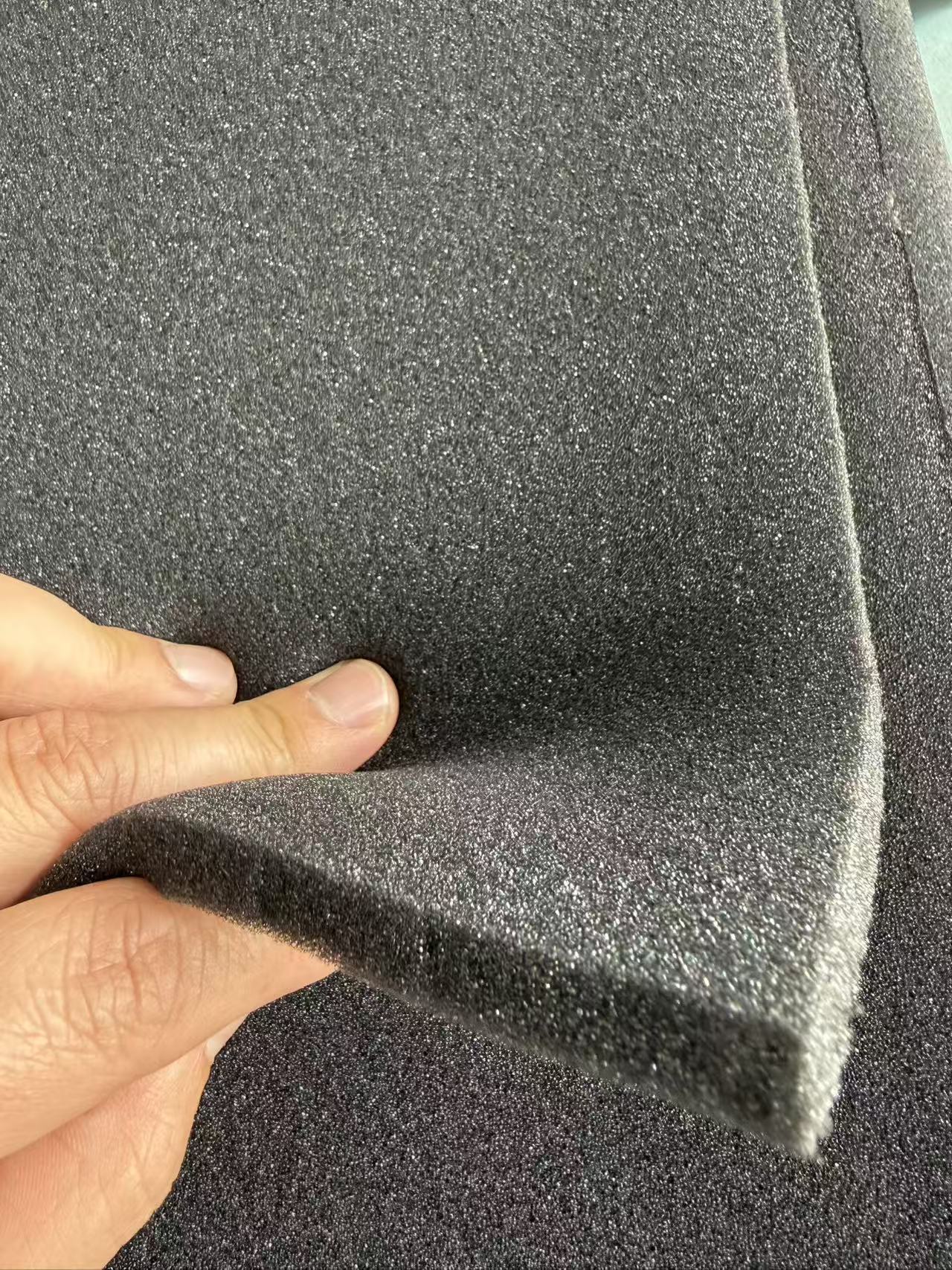
ESD conductive foam and anti-static foam are not interchangeable. Conductive foam — usually black, carbon-loaded polyurethane — has a low surface resistance (typically below 104 ohms) and provides a controlled ground path that safely drains charge from the leads of ICs and PCBs. Anti-static foam — usually pink polyethylene — only limits triboelectric charging during handling and does not bleed charge fast enough to protect bare component pins. Choosing the wrong one is the most common, and most expensive, ESD packaging mistake we see in Singapore.
Conductive vs Anti-Static (Dissipative) Foam: The Key Difference
The two foams look almost identical in a warehouse, but their electrical behaviour is completely different:
- Black conductive foam — surface resistance below 104 Ω. It shorts component leads together and provides a fast, low-resistance path to ground. Use it for IC and PCB pin storage, kitting trays, and shipping inserts where components are exposed.
- Pink anti-static (dissipative) foam — surface resistance of roughly 109–1011 Ω. It prevents the foam itself from generating static during movement, but it does not ground component pins. Use it only as cushioning where surface charging is the sole risk.
How to Specify ESD Foam Correctly
Three parameters decide whether a foam is fit for purpose:
- Resistance — specify conductive foam to ANSI/ESD STM11.11 (surface) and packaging to ANSI/ESD S541. Conductive grade for pin grounding; dissipative grade for transport-only cushioning.
- Thickness — 6 mm for inserting component leads, 12 mm for general storage trays, and 20–25 mm where the foam also has to absorb shock for parts shipped overseas.
- Material — conductive PU ether foam carries its carbon loading throughout the material, so its conductivity is permanent and does not wash off like some surface-treated anti-static foams.
All ESD foam used inside an EPA should support an overall programme compliant with IEC 61340-5-1, the standard most Singapore semiconductor and electronics manufacturers are audited against.
Phil Industries’ Take: ESD Foam Selection for Singapore Electronics Packaging
Phil Industries supplies ESD conductive and dissipative foam to Singapore semiconductor packaging houses, electronics distributors, and research labs. The most common specification error we see is using pink polyethylene anti-static foam (which only prevents triboelectric charging during transport) in applications that require true ESD-safe storage — where the foam needs to provide a controlled ground path for component pins. Pink anti-static foam and black conductive foam look similar in a warehouse but have completely different electrical properties, and mixing them in a storage or shipping workflow creates a compliance gap that’s invisible until an ESD audit or field failure analysis surfaces it.
We stock both conductive and dissipative foam in multiple densities and cut-to-size for Singapore customers. Contact Phil Industries at +65 6555 1745 or email kenneth@phil-industries.com.sg for ESD foam specification support and samples.
Frequently Asked Questions
Is pink anti-static foam the same as conductive foam?
No. Pink anti-static foam only stops the foam generating static during handling; it has a high resistance (around 109–1011 Ω) and does not ground component pins. Black conductive foam has a low resistance (below 104 Ω) and is the correct choice for protecting exposed leads.
What surface resistance should ESD conductive foam have?
Conductive foam should measure below 104 ohms surface resistance. Dissipative foam falls between 104 and 1011 ohms. The right grade depends on whether you need a ground path (conductive) or only charge-free cushioning (dissipative).
How thick should ESD foam be?
Use 6 mm for inserting IC or connector leads, 12 mm for general kitting and storage, and 20–25 mm where shock protection is needed for shipping sensitive assemblies.
Which standards apply to ESD foam in Singapore?
ANSI/ESD S541 covers ESD packaging, ANSI/ESD STM11.11 covers surface resistance measurement, and IEC 61340-5-1 is the overall ESD control standard used in most local audits.
Get the Right ESD Foam for Your Application
Phil Industries stocks both conductive and dissipative ESD foam in Singapore, alongside our full range of ESD packaging materials and ESD safe materials. If you are unsure which grade your application needs, send us your component and shipping details and we will specify the correct foam. Call +65 6555 1745 or request a quote.