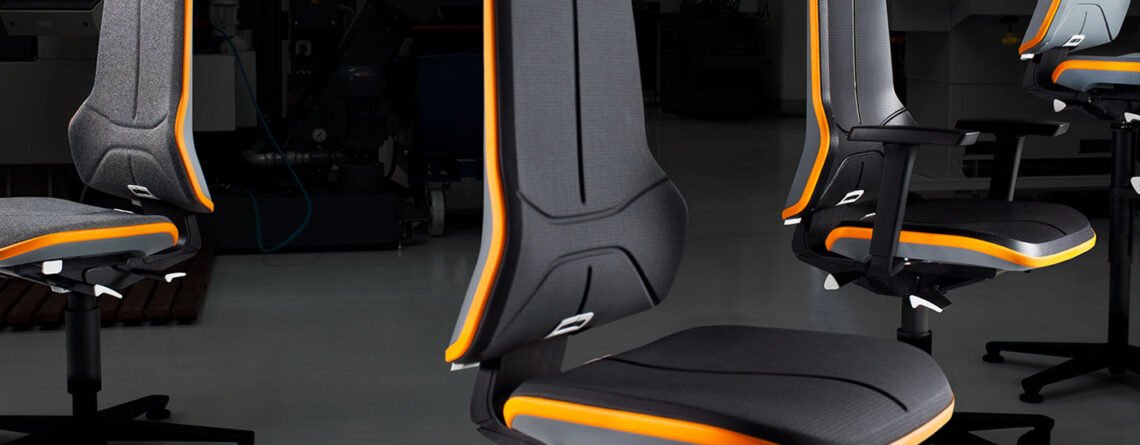
Worn production chairs quietly cost you output through fatigue, poor posture, lost time, and compliance failures. Here are five signs your seating is due for replacement — and what each one is costing you.
1. Flattened or Worn Seat Foam
Once the foam loses its support, operators sink and slump. The result is back and neck fatigue that builds through the shift, slowing fine-assembly work and increasing errors and sick days.
2. Seized or Broken Adjustments
A height or backrest mechanism that no longer locks forces workers into a fixed, poor posture. Ergonomic seating only works if it adjusts to the operator and the bench height.
3. Cracked or Split Upholstery
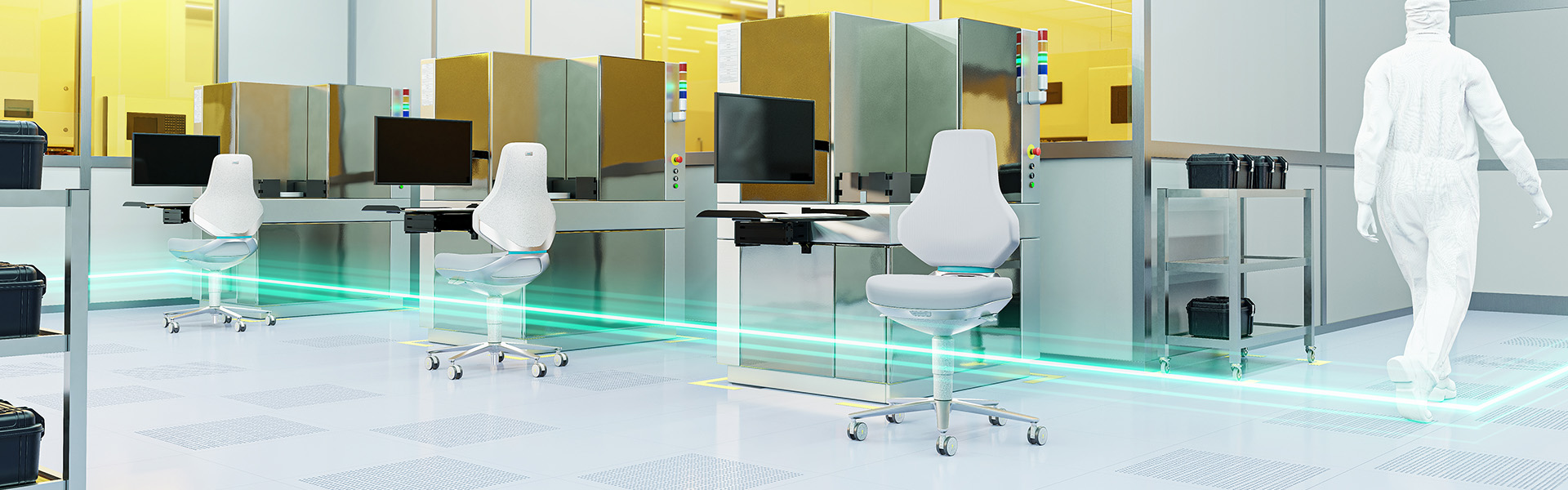
Cracked upholstery harbours contamination in cleanrooms and breaks the conductive path on ESD chairs — turning a compliance asset into a compliance risk.
4. Unstable Base or Dragging Castors
A wobbling base or castors that no longer roll freely are both a safety hazard and a daily drag on movement at the workstation.
5. Failed ESD Resistance Test
An ESD chair that no longer passes its point-to-ground resistance check (per ANSI/ESD STM12.1) is no longer protecting your devices, even if it looks fine.
Phil Industries’ Take: The Productivity Cost Our Singapore Customers Didn’t Expect
When Singapore production managers come to us for Bimos chair quotations, they’re often already past the point of debating whether new chairs are needed. The trigger is usually a failed ergonomic assessment, a spike in MSD (musculoskeletal disorder) claims, or a quality audit finding. What surprises them is how quickly the chair cost is recovered — not through reduced sick leave (though that does follow), but through immediate, measurable improvement in operator focus time. Operators who aren’t adjusting uncomfortable seating, shifting position to avoid pain, or taking unscheduled breaks complete more consistent work per shift. For Singapore electronics assembly where cycle times are measured in seconds, this adds up quickly.
Contact Phil Industries at +65 6555 1745 to arrange a Bimos chair trial at your Singapore production facility.
Frequently Asked Questions
How long should production chairs last?
A quality industrial chair lasts around 7 to 10 years with normal use and basic maintenance. Gas lifts, castors, and upholstery typically wear first.
Do worn chairs really affect productivity?
Yes. Poor support causes fatigue and posture problems that slow fine work, raise error rates, and contribute to musculoskeletal sick days.
When should an ESD chair be replaced?
When it fails its periodic resistance test or the upholstery cracks — both break the grounding path that protects sensitive components.
Upgrade Your Workstation Seating
Phil Industries supplies Bimos cleanroom, lab and production chairs in Singapore, including ESD chairs. Tell us your bench height and environment and we will specify the right seating. Call +65 6555 1745 or request a quote.