Key takeaways
- ISO 6789 uses a baseline of 12 months or about 5,000 cycles, whichever comes first, for recalibrating hand torque tools.
- An out-of-spec tool causes under-clamped joints or stripped threads, and those failures often surface long after assembly.
- A calibration certificate only counts when it is traceable to a national standard, which in Singapore means SAC-SINGLAS.
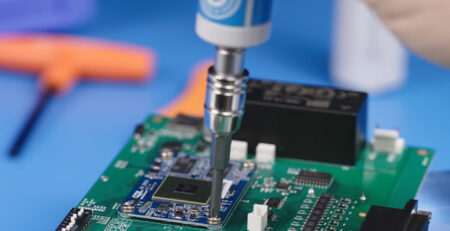
A torque wrench that reads 5 Nm is not automatically applying 5 Nm. Over months of use, a click wrench can drift 10 to 25 percent out of spec. On an aerospace bracket, a medical-device housing, or a PCB standoff, that gap is the difference between a joint that holds and one that fails inspection.
How often should you calibrate a torque tool?
As a rule, recalibrate every 12 months or every 5,000 operations, whichever comes first, which is the baseline behind ISO 6789. Because heavy daily use, a drop, or a safety-critical joint all accelerate wear, many aerospace and medical lines calibrate quarterly instead.
What does ISO 6789 actually require?
ISO 6789 is the international standard for hand torque tools, and it sets both the accuracy limits and the test method your calibration lab follows. Typical limits are plus or minus 4 percent for torque wrenches and plus or minus 6 percent for torque screwdrivers. In addition, it splits certificates into Type I, a simple conformance check, and Type II, measured values with stated uncertainty; for critical work, ask for Type II.
Why does traceability matter more than the certificate?
A certificate only proves accuracy when it is traceable to a recognised national standard. Without that chain, the number on the paper cannot be defended in an audit or a failure investigation. In Singapore, therefore, look for SAC-SINGLAS accreditation on the calibration report.
| Tool | Typical accuracy (ISO 6789) | Baseline recalibration interval |
|---|---|---|
| Torque wrench | ±4% | 12 months / 5,000 cycles |
| Torque screwdriver | ±6% | 12 months / 5,000 cycles |
| Digital torque tester | Per manufacturer | 12 months |
What this means for your line
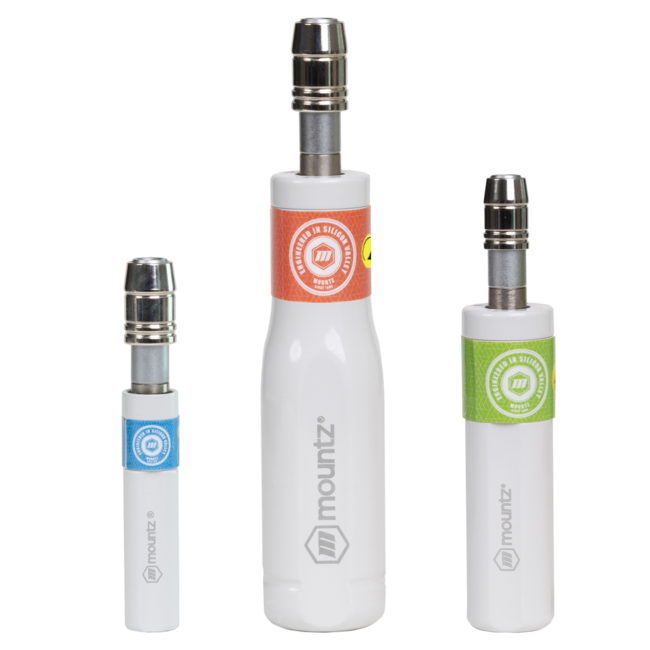
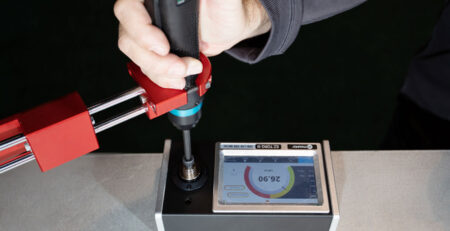
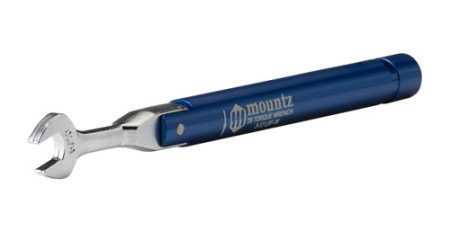
Build a calibration schedule per tool, not per shelf. For example, Mountz precision torque tools ship with clear accuracy classes and pair with a torque tester so your team can verify tools in-house between lab calibrations. In addition, our guide to choosing the right torque tool covers wrench, screwdriver, and multiplier selection.
Frequently asked questions
Can I calibrate a torque wrench myself? You can verify it against a calibrated torque tester to catch drift early, but a defensible certificate must come from an accredited lab.
What happens if a torque tool is out of calibration? Any work done since its last valid calibration may be suspect, and that is why traceable records matter.
Does a brand-new torque tool need calibration? Yes; treat the first certificate as your baseline and log it.
Need help specifying torque tools for aerospace, medical, or electronics assembly? Contact Phil Industries at kenneth@phil-industries.com or WhatsApp +65 9853 9030.