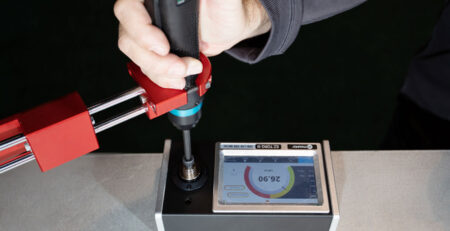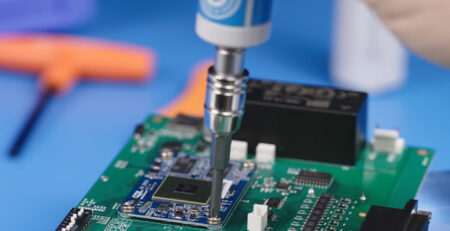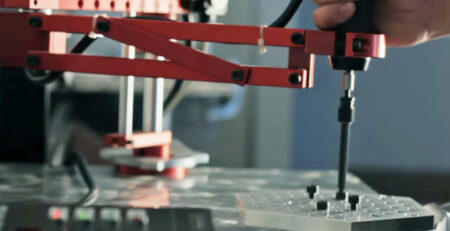
Choosing a torque wrench type is really a decision about one thing: what happens after the fastener reaches its target. A click wrench tells the operator to stop. A break-over wrench makes the operator stop. A cam-over wrench stops the torque by itself. This guide explains all three torque wrench types, compares them side by side, and shows which one suits each kind of line in Singapore.
Reviewed September 2026 by the Phil Industries engineering team, Singapore. Standards referenced: ANSI/ESD S20.20, ISO 6789. Products mentioned are stocked at 51 Ubi Ave 1 for same-day quotation.
The three torque wrench types in one table
| Type | How it signals | Over-torque after signal | Best for | Mountz example |
|---|---|---|---|---|
| Click | Audible click and slight give in the handle | Possible if the operator keeps pulling | Maintenance, MRO, many different joints | EPT adjustable and IPT preset |
| Break-over | Head pivots and the operator feels a stop | Very little | Low-torque production, connectors, electronics | TB, TBIH, TBX, MMTB |
| Cam-over | Mechanism slips and resets | None, it cannot transmit more torque | Error-proofed and safety-critical joints | FGC |
Click torque wrenches: flexible, but they rely on the operator
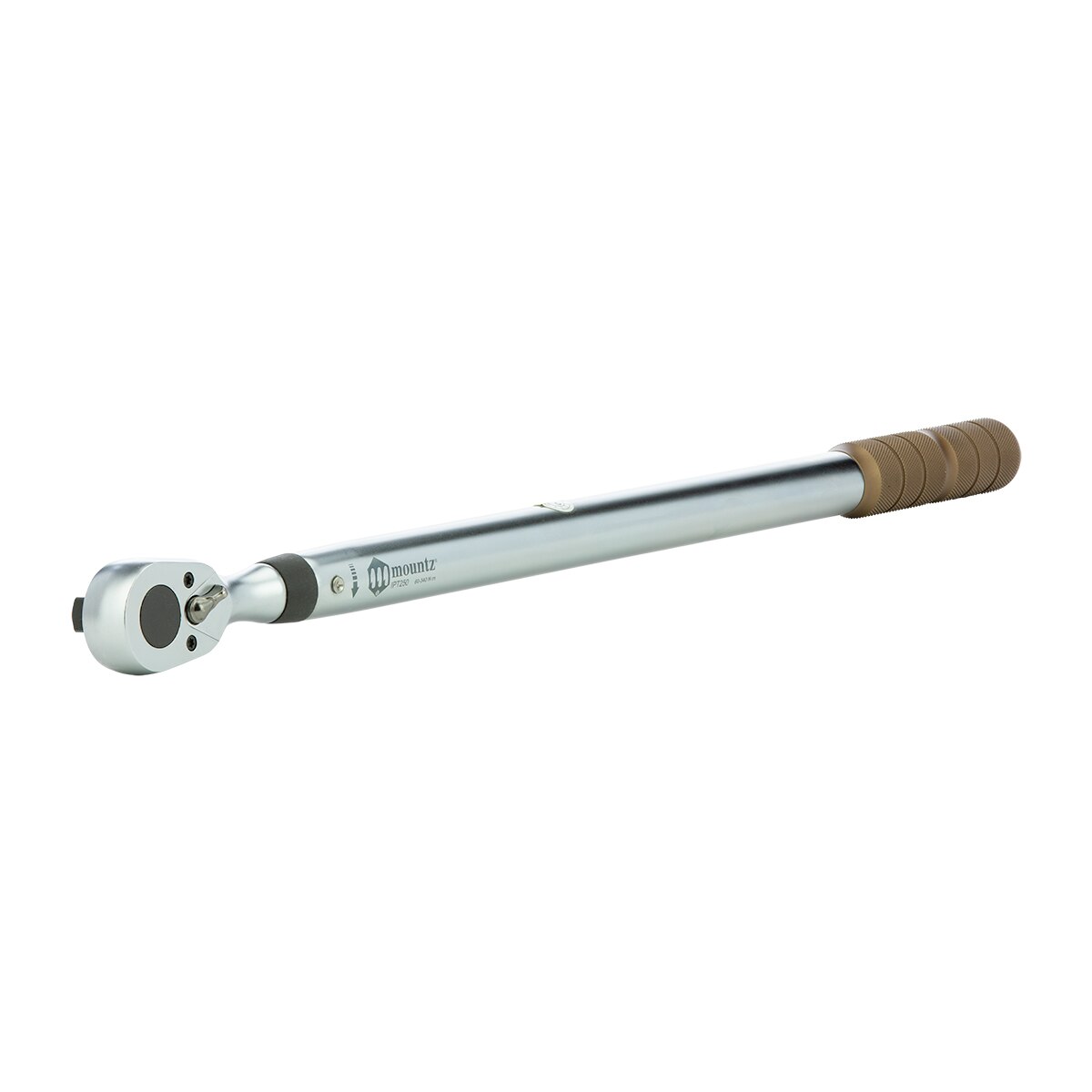
A click wrench is the type most people picture. Inside the handle, a spring loads a toggle; when the set torque is reached, the toggle trips with a click. The operator should stop there. However, nothing prevents another few degrees of pull, and on a small fastener that can add a lot of torque.
Click wrenches come in two forms. An adjustable wrench, such as the Mountz EPT, has a scale, so one tool covers many values from 2.8 to 1,051 N·m. A preset wrench, such as the IPT, hides the setting inside the handle, so operators cannot change it. For that reason, preset click wrenches are common on repeat production stations, while adjustable ones suit maintenance teams and aircraft MRO.
Break-over torque wrenches: a firm stop at the set value
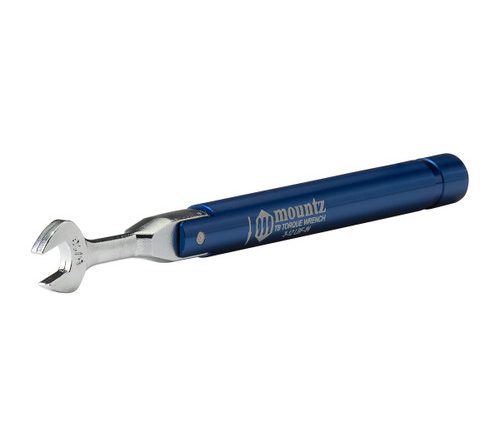
A break-over wrench, also called a breaking or breakaway torque wrench, uses a pivoting head. When the fastener reaches the set torque, the head deflects and the operator feels the wrench give way. Because the signal and the stop happen together, very little extra torque passes through.
That makes break-over wrenches the default choice for low-torque, high-consequence joints: RF and fibre connectors, PCB hardware, optics and medical devices. In addition, interchangeable-head models such as the TBIH and TBX let one calibrated handle serve several fastener sizes. The TBX also comes in ESD versions for use inside an ANSI/ESD S20.20 protected area. See the full break-over wrench range for every model.
Cam-over torque wrenches: over-torque is impossible
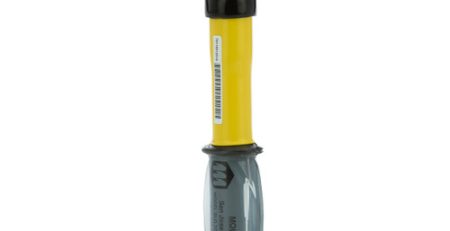
A cam-over wrench goes one step further. When the set torque is reached, the internal cam slips, and the handle turns freely until it resets for the next fastener. As a result, even a heavy-handed operator cannot over-tighten the joint.
The Mountz FGC covers 1 to 75 N·m on 1/4-inch to 1/2-inch drives. It is the most operator-proof option, so it suits high-volume lines, rotating staff and any joint where a single over-torqued fastener would be a quality escape. See the cam-over wrench range.
How to choose the right torque wrench type for your line
Start with three questions. First, does one station always use the same value? If so, choose a preset click, break-over or cam-over wrench rather than an adjustable one. Second, how bad is a single over-torqued fastener? The worse the consequence, the further you should move from click towards break-over and cam-over. Third, how low is the torque? Below about 5 N·m, break-over wrenches such as the TB, TBIH and MMTB give the cleanest control.
Finally, check the range. Every type is most repeatable in the middle of its scale, so pick the model that puts your target torque there rather than at either end. All Mountz wrenches are built to ISO 6789, which sets the permissible deviation for each type.
Frequently asked questions about torque wrench types
What is the difference between a click and a break-over torque wrench
A click wrench signals the set torque with a click, but the operator can keep pulling past it. By contrast, a break-over wrench pivots at the set value, so the operator feels a firm stop and very little extra torque passes through.
Which torque wrench type is the most accurate
All three types can meet ISO 6789 when they are used within range. In practice, however, break-over and cam-over wrenches deliver more consistent results on a production line because they limit operator influence after the signal.
Is a breaking torque wrench the same as a break-over wrench
Yes. Breaking, break-over and breakaway wrench are all names for the same mechanism, in which the head pivots when the set torque is reached.
When should I choose a cam-over torque wrench
Choose cam-over when over-torque is never acceptable, for example on safety-critical joints or lines with new operators. The mechanism slips at the set value, so it cannot transmit more torque.
Is a torque spanner different from a torque wrench
No. Torque spanner is the common British and Singapore name for the same tool.
Not sure which type fits your joint? Phil Industries, an authorised Mountz distributor in Singapore, can bring sample wrenches to your line. Message our engineers on WhatsApp at +65 9853 9030 or email sales@phil-industries.com.sg, and compare every model on our Mountz torque wrenches page.