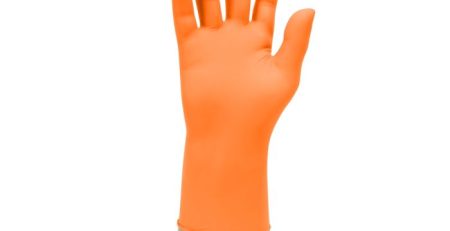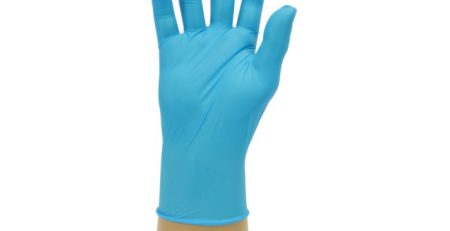
Chemical resistant gloves cleanroom use face a triple challenge: protect the operator from solvents, protect the wafer or board from contamination, and survive a full shift without breaking through. First, the framing. Most general-purpose chemical gloves shed too many particles for ISO Class 5 work, and most cleanroom gloves cannot handle aggressive solvents like NMP or acetone. Therefore, electronics cleanrooms in Singapore need a narrow band of products engineered for both jobs at once.
Reviewed September 2026 by the Phil Industries engineering team, Singapore. Standards referenced: EN 374. Products mentioned are stocked at 51 Ubi Ave 1 for same-day quotation.
What “chemical resistant” actually means under EN 374
EN 374-1:2016 defines three protection types based on permeation breakthrough time. Type A gloves resist at least 30 minutes against six listed chemicals; Type B against three; Type C against one. As a result, your spec must list the actual chemicals on your line — “chemical resistant” alone is meaningless. In addition, EN 374-5 covers viral and bacterial protection if your cleanroom doubles as a biosafety zone.
Common cleanroom solvents and their glove pairings
- IPA (isopropyl alcohol) — nitrile or neoprene; nearly any quality glove works for short exposure.
- Acetone — butyl rubber is the gold standard. Nitrile breaks through in 5–10 minutes.
- NMP and DMF — laminated film gloves (Silver Shield, Polyco specialised laminate). Nitrile fails fast.
- HF (hydrofluoric acid) — double-glove with neoprene over nitrile; emergency-eye-wash on standby.
- MEK — PVA (polyvinyl alcohol) glove. PVA dissolves in water, so it never leaves the lab.
Chemical resistant gloves cleanroom particle limits
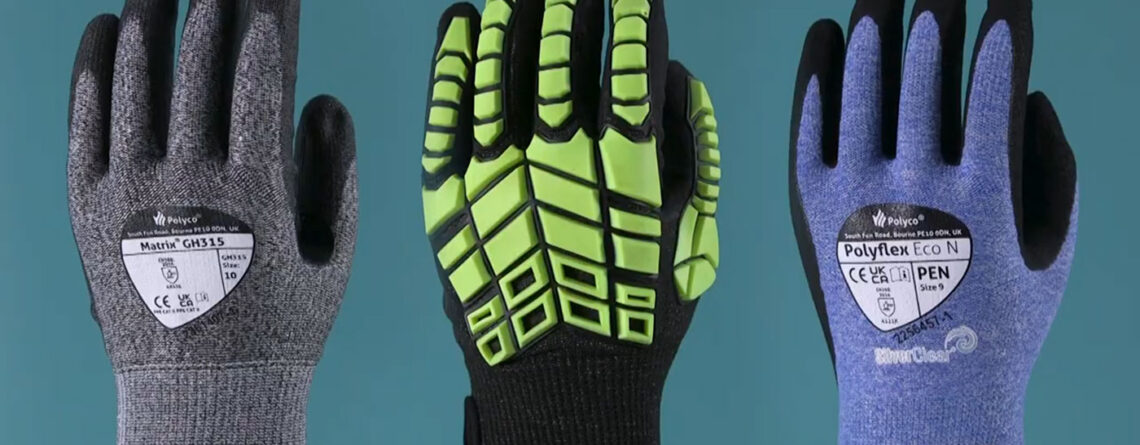
Chemical-resistant gloves are typically thicker, less elastic, and shed more powder than thin disposable nitriles. However, the Polyco range includes powder-free, low-particulate cleanroom variants tested per IEST-RP-CC005. Therefore, the operator gets EN 374 protection without crashing the wafer fab particle budget. Above all, demand a particle-shedding certificate from your supplier; it is not optional in a Class 5 environment.
Double-glove protocol for the worst chemicals
For HF, MEK, or any solvent rated “Permeation 1” against your glove material, double-glove. First, pull on a thin nitrile inner glove. Next, layer a chemical-resistant outer glove. As a result, when the outer glove is compromised, you have 30–60 seconds to remove both safely. Furthermore, the inner glove keeps your hand clean for re-gowning.
Specifying the right Polyco for your cleanroom
Phil Industries usually recommends a tiered approach: thin nitrile inner gloves for routine wafer handling, plus a chemical-rated outer glove kept at each chemical station. The full Polyco Healthline glove catalogue includes both classes. In addition, our ESD products line covers wrist straps and grounding mats for the same workstations.
For the underlying test methods, see the ISO 374 series referenced by EN 374.
Chemical resistant gloves cleanroom: talk to an expert
For a free chemical-glove pairing review against your actual MSDS list, message our engineer on WhatsApp at +65 98539030 or use our contact page. In short, chemical resistant gloves for Singapore cleanrooms protect operators and product at the same time — pick them by chemical, not by feel.
| Material | Acids | Solvents | Oils & Fuels | Cleanroom Safe |
|---|---|---|---|---|
| Nitrile | Good | Good | Excellent | Yes (ESD options available) |
| Neoprene | Excellent | Good | Good | Limited |
| Butyl Rubber | Excellent | Excellent | Fair | No |
| Natural Latex | Good | Poor | Poor | Limited (allergen risk) |
| Viton | Excellent | Excellent | Excellent | Yes (high cost) |
| PVC | Good | Poor | Good | No |
Phil Industries’ Singapore Perspective
Chemical-resistant glove selection for Singapore electronics cleanrooms is more specific than general resistance charts suggest. The two most common exposures in local fab and electronics environments are IPA for cleaning and flux for soldering — which require different glove materials. For IPA, nitrile gloves (minimum 4 mil thickness) provide adequate protection. For flux and soldering, the primary concern is heat and dexterity rather than chemical permeation — thin neoprene or heat-resistant nitrile is preferred. In environments below ISO Class 6, both must also be low-particulate and low-outgassing.
For stronger chemistries (HF, H₂SO₄, NaOH), we can source laminated gloves with specific breakthrough time data for your exact chemical and concentration. Contact Phil Industries at +65 6555 1745 or kenneth@phil-industries.com.sg.