


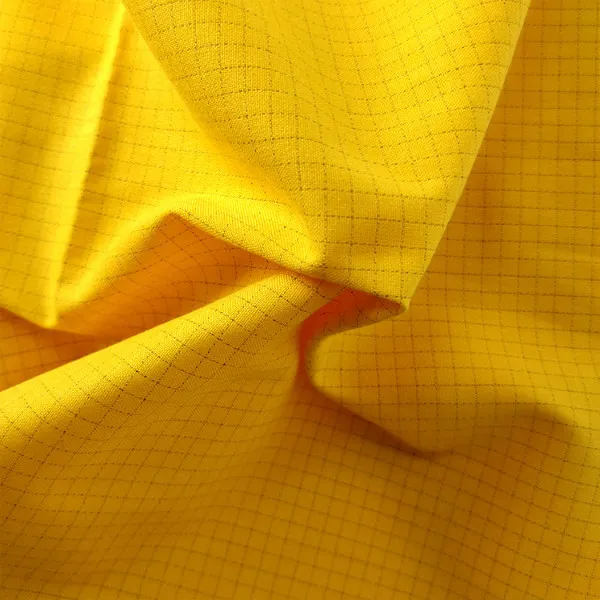
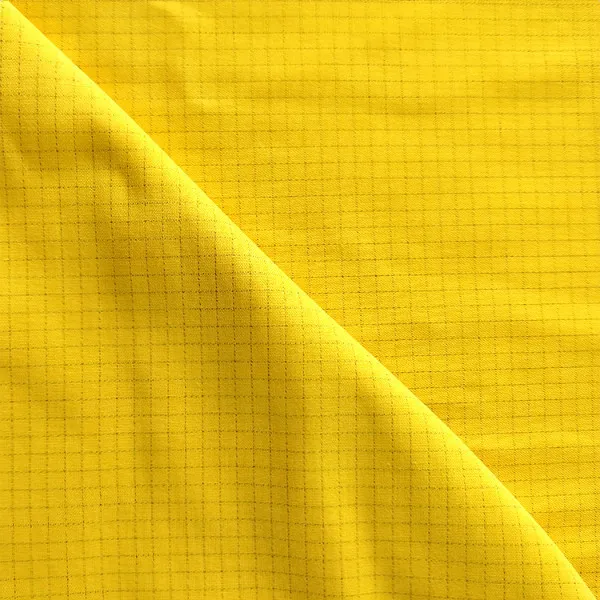
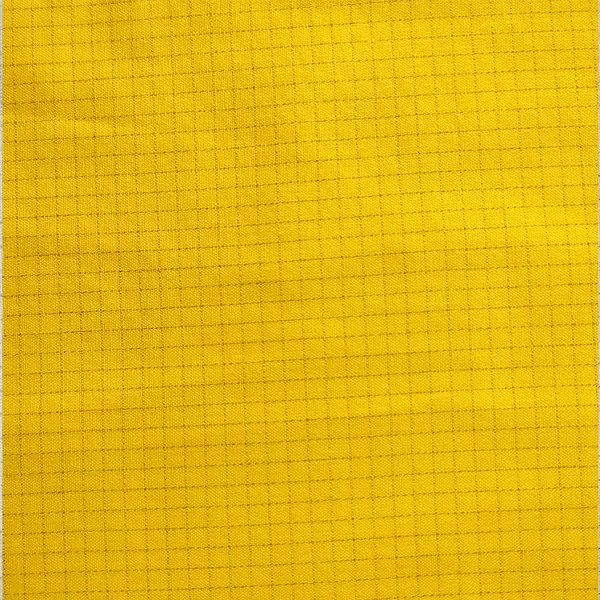
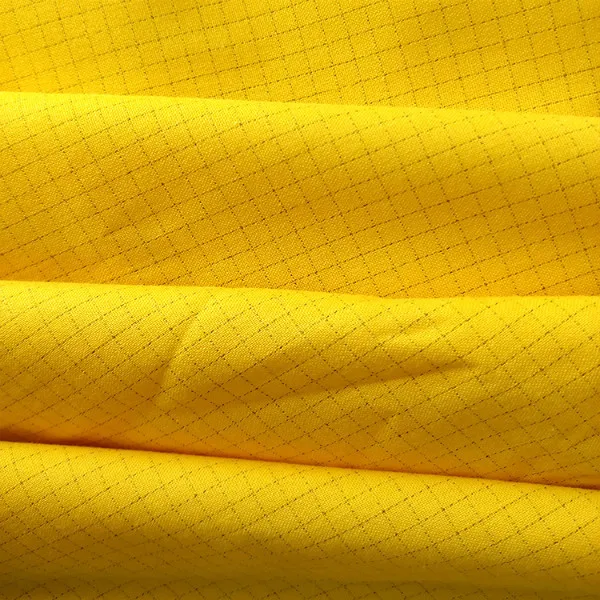




White 4 mm Grid ESD Cotton-Polyester Fabric, 65/32/3, 125–130 gsm Plain Weave – ESDpro AF0607
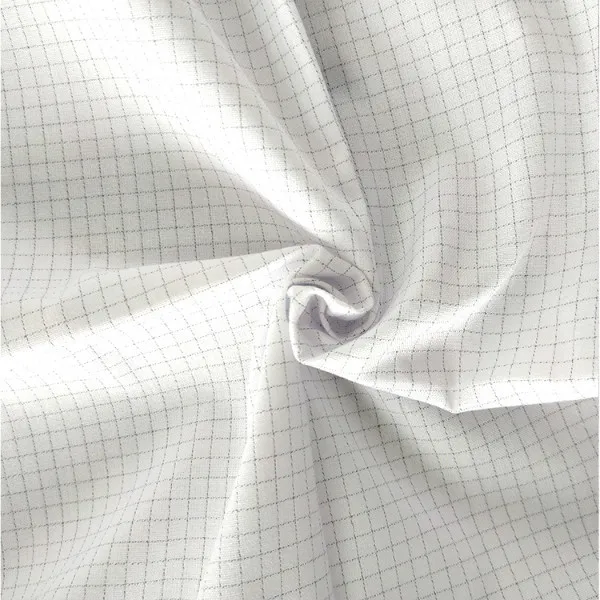
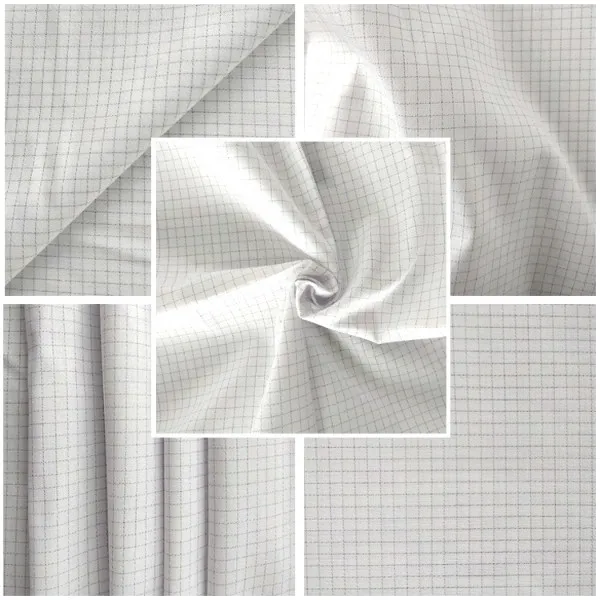
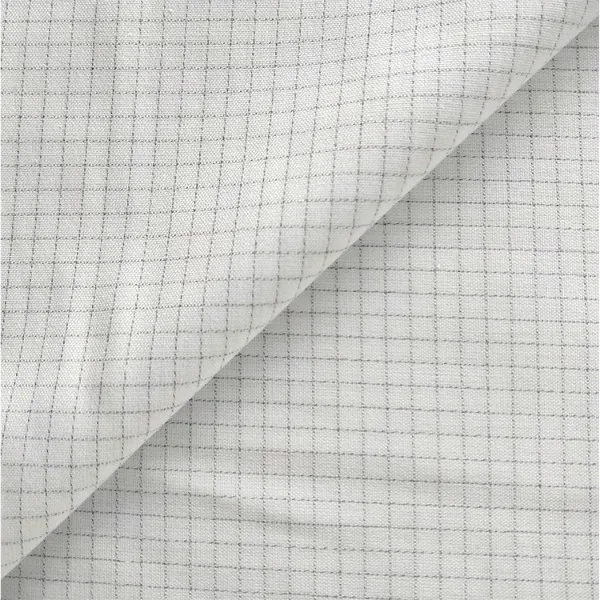
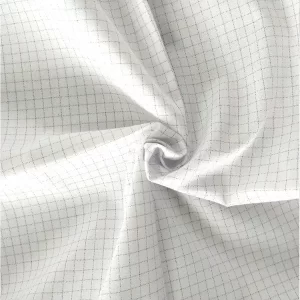
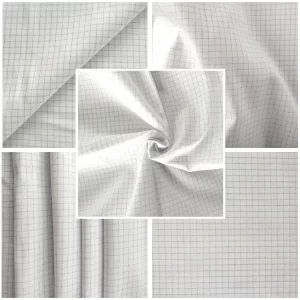
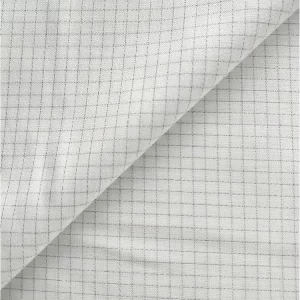
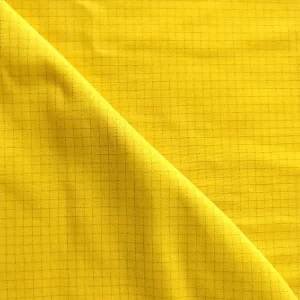
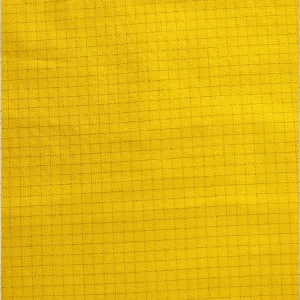
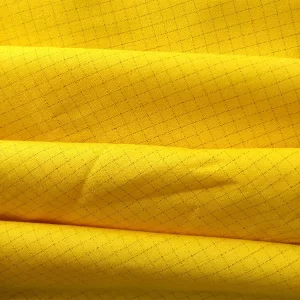
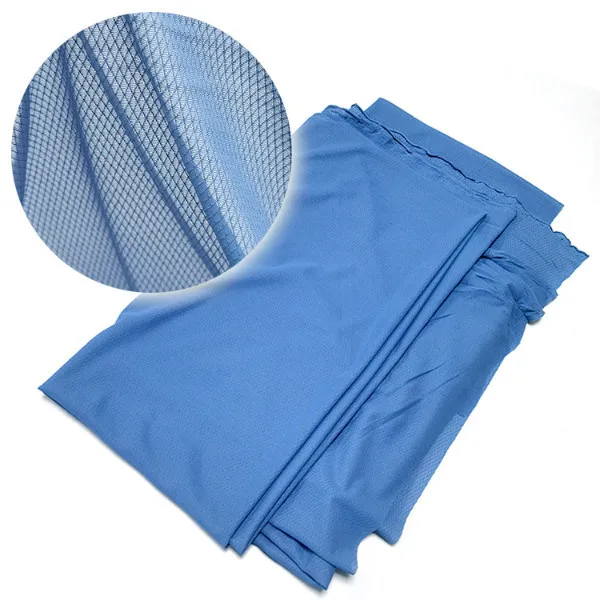
White 4 mm grid ESD cotton polyester fabric: 65% cotton, 32% polyester, 3% carbon, 125–130 gsm plain weave, 150 cm wide, surface resistivity 10⁶–10⁹ Ω, friction charge under 200 V. A cotton-rich cloth for ESD lab coats and workwear. ESDpro model AF0607, supplied by the roll from Ubi, Singapore.
- Description
- Additional information
- Reviews (0)
Description
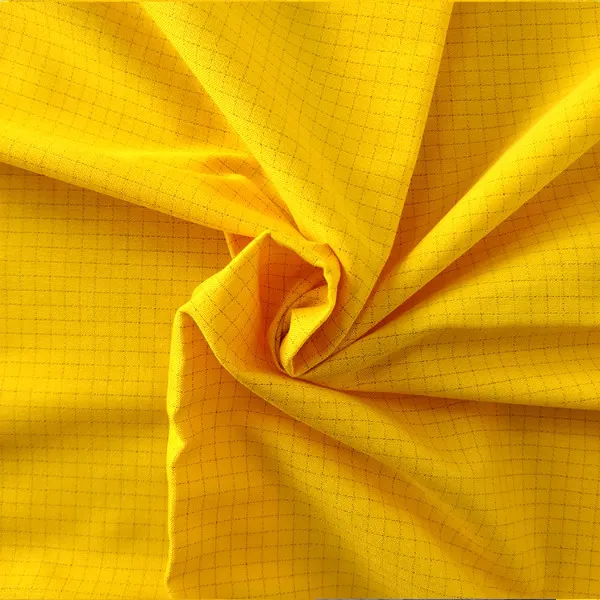
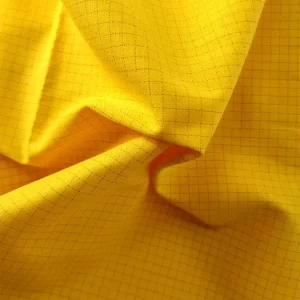
ESDpro AF0607 is a cotton-rich ESD cotton polyester fabric: 65% cotton and 32% polyester in a plain weave with 3% carbon yarn in a 4 mm grid, 125–130 gsm, 150 cm wide. It is the cloth to specify when operators complain that polyester ESD garments are hot, because it wears like a cotton lab coat while still dissipating static. Phil Industries supplies it by the roll in white from Ubi, Singapore, with blue, yellow, red and green to order.
Why cotton-rich, and why 3% carbon
Most ESD fabrics are polyester-led because polyester lints less. AF0607 turns that around for EPAs and laboratories where comfort and breathability matter more than particle control: two-thirds cotton gives a soft, absorbent garment. To make up for cotton’s poor conductivity, the carbon content is raised to 3%, and the result still measures 10⁶ to 10⁹ Ω with a friction charge under 200 V.
The plain weave with a 40S/2 × 32S/1 yarn count is stable and easy to sew, and the 150 cm width cuts efficiently for lab coats and jackets. In addition, 5 mm and 6 mm grid pitches are available on the same base cloth.
Technical specifications
| Parameter | Value |
|---|---|
| Model | ESDpro AF0607 |
| Composition | 65% cotton, 32% polyester, 3% carbon |
| Carbon configuration | 4 mm grid (5 mm / 6 mm to order) |
| Weave | Plain, 40S/2 × 32S/1 |
| Width | 150 cm |
| Weight | 125 – 130 g/m² |
| Surface resistivity | 10⁶ – 10⁹ Ω |
| Friction charge | < 200 V |
| Colour | White (blue, yellow, red, green to order) |
Applications
AF0607 is chosen for ESD lab coats in electronics test labs, calibration rooms and R&D areas, and for workwear in EPAs where staff wear the garment all day. It is not a cleanroom fabric: cotton sheds fibres, so for ISO 14644-1 rooms use our polyester stripe and grid cloths.
Frequently asked questions
Why is the carbon content higher than on polyester fabrics?
Cotton holds moisture and conducts differently from polyester, so 3% carbon in a 4 mm grid is needed to keep the blend inside the dissipative range. It also gives some margin as the cotton ages with laundering.
Is it suitable for a cleanroom?
No. Keep it for EPAs, laboratories and Class 10000 areas at most. For Class 100 to 1000 rooms choose one of our 100% polyester fabrics.
How should lab coats made from it be washed?
Industrial laundering as for cotton-poly workwear. Avoid fabric softeners and chlorine bleach; the carbon yarn is woven in, so the dissipative property itself does not wash out.
How do I order ESD cotton polyester fabric in Singapore?
Send the length, width and quantity you need to our engineers on WhatsApp at +65 9853 9030 or use the enquiry form. We also make up finished garments from this cloth. See the rest of the range in our ESD fabric category.
Related pages in Singapore
- Browse all ESD Fabric.
- Learn about ESDpro, our own ESD and cleanroom brand.
- Read our guides on ESD standards IEC 61340 and ANSI/ESD S20.20 and setting up an ESD grounded workstation.
Phil Industries, the Singapore company behind the ESDpro brand, supplies this product with selection advice and after-sales support. Call +65 6555 1745, WhatsApp +65 9853 9030 or email sales@phil-industries.com.sg.
Additional information
| ESD Classification | |
|---|---|
| Surface Resistance | 10⁶–10⁹ Ω |
Reviews
There are no reviews yet.