
5 mm Grid Conductive-Filament ESD Fabric, 98% Polyester, 115 gsm Twill – ESDpro AF0060-G
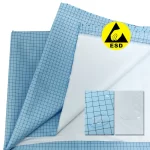
5 mm grid conductive filament ESD fabric: 98% polyester, 2% conductive filament, 115 gsm 1/2 twill, surface resistivity 10⁶–10⁹ Ω, friction charge under 300 V. A dust-proof cleanroom cloth for coveralls, jackets and accessories. ESDpro AF0060-G, supplied by the roll from Ubi, Singapore.
- Description
- Additional information
- Reviews (0)
Description
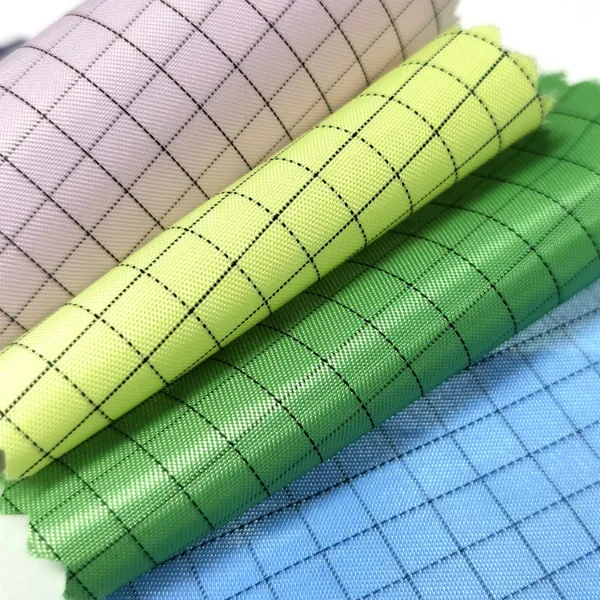
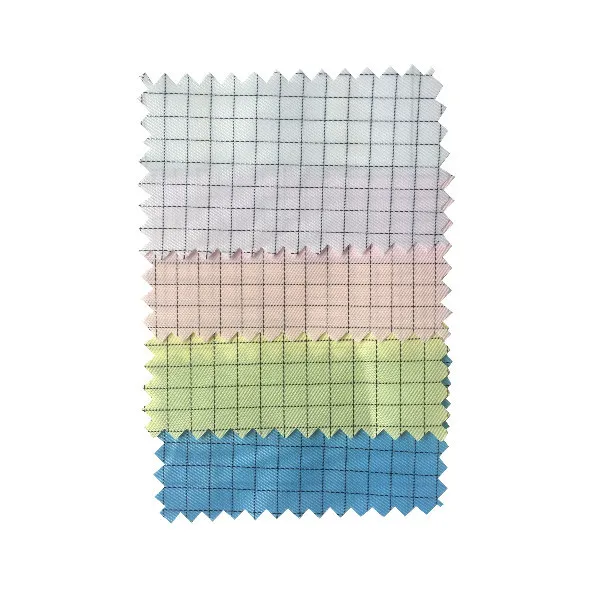
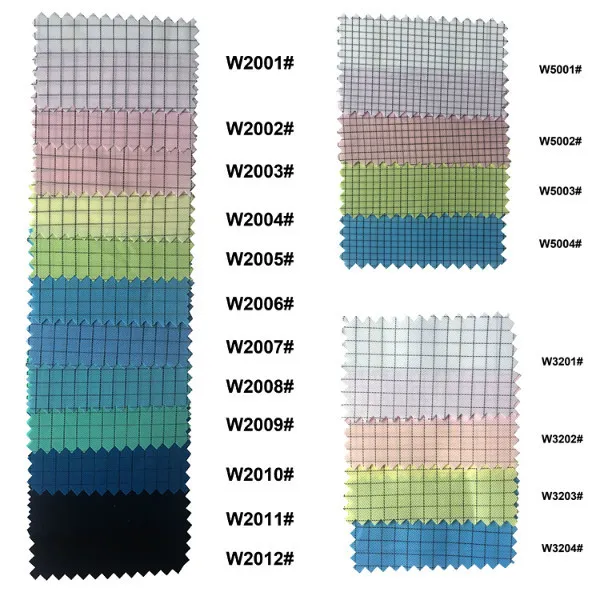
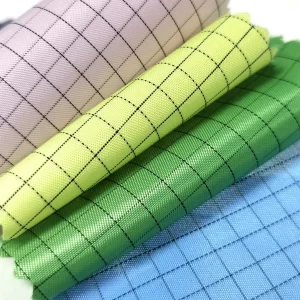
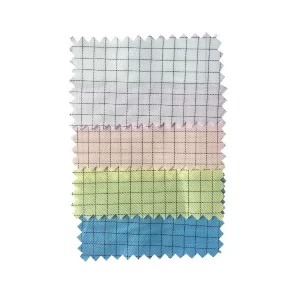
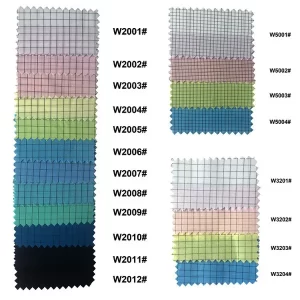
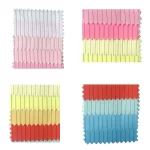
ESDpro AF0060-G is a conductive filament ESD fabric for cleanroom clothing: a 115 gsm 1/2 twill woven from 98% polyester with 2% conductive filament laid in a 5 mm grid. Garment makers in Singapore cut it into coveralls, jackets and accessories for Class 1000 to 10000 rooms. Phil Industries supplies it by the roll from Ubi in white, blue, pink, yellow and green.
Why a conductive filament rather than a carbon stripe
Most ESD cloths use a carbon-loaded yarn. AF0060-G uses a continuous conductive filament instead, woven into the polyester in both directions as a 5 mm grid. As a result, every point on a garment panel connects to every other point, and the fabric measures 10⁶ to 10⁹ Ω with a friction charge below 300 V. Because the filament is part of the yarn, laundering does not wash the property out.
The 100 denier 1/2 twill is tight enough to hold particles inside the garment, yet it still passes air at about 30 cc/cm²/s. Therefore operators stay cool, and the room stays clean. In addition, the polyester base resists shrinking, so coveralls keep their size through the cleanroom laundry cycle.
Technical specifications
| Parameter | Value |
|---|---|
| Model | ESDpro AF0060-G |
| Composition | 98% polyester, 2% conductive filament |
| Carbon configuration | 5 mm grid |
| Weave | 1/2 twill, 100D × 100D |
| Weight | ≈ 115 g/m² |
| Surface resistivity | 10⁶ – 10⁹ Ω |
| Friction charge | < 300 V |
| Air permeability | ≈ 30 cc/cm²/s |
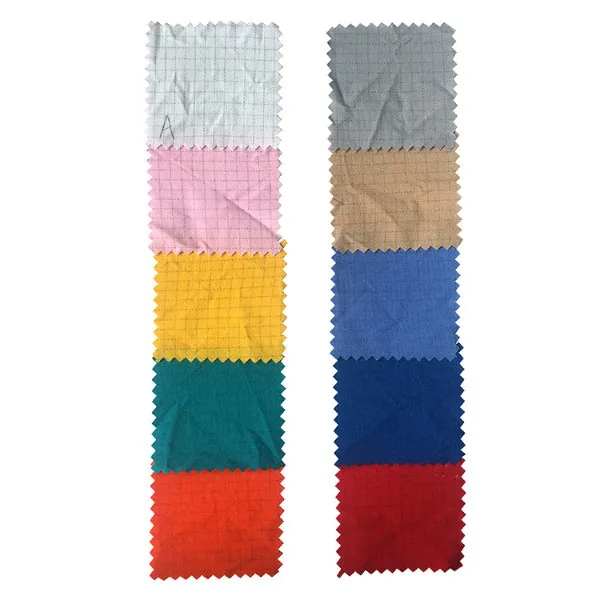
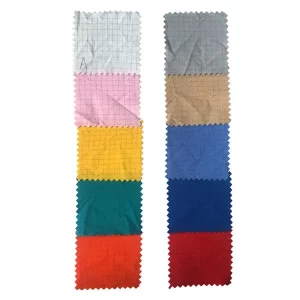
| Colours | White, blue, pink, yellow, green; others to order |
| Recommended cleanroom class | Class 1000 – 10000 (ISO 6 – 7) |
Applications
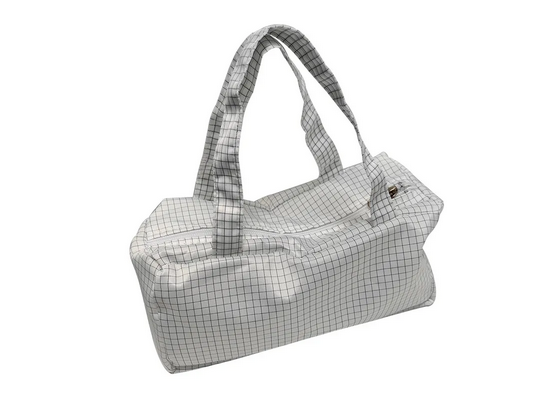
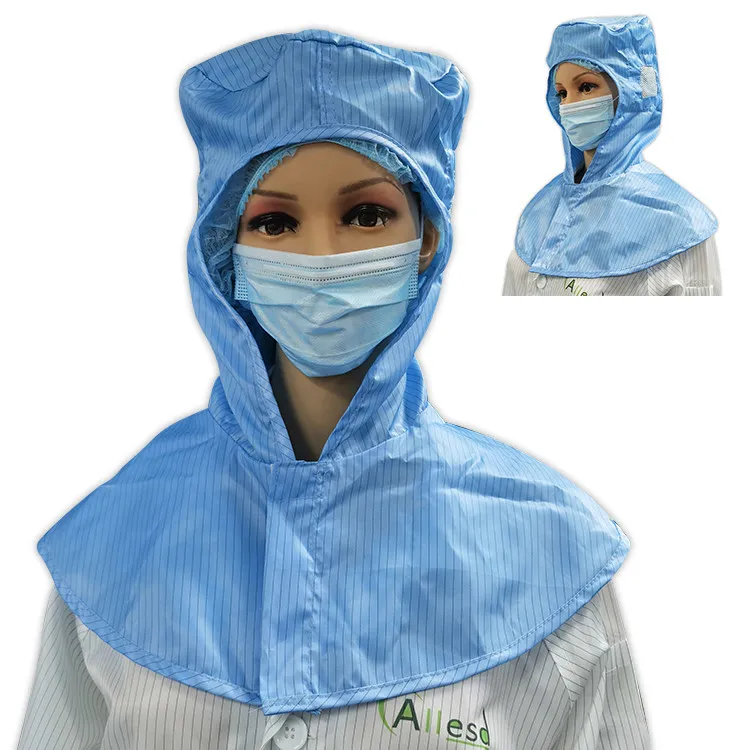
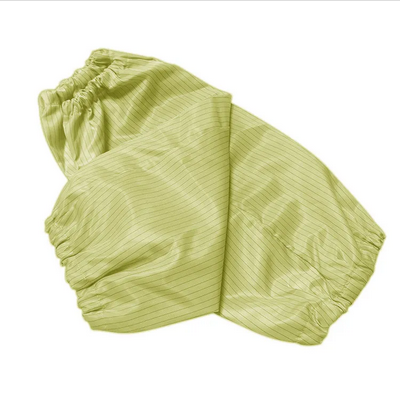
Semiconductor, disk-drive, optics and electronics plants use AF0060-G for launderable cleanroom coveralls, jackets, hoods and accessories, and EPAs use it for light ESD workwear. For a stripe version of the same base cloth, see AF0060; for a carbon-fibre grid, see AF0080.
Frequently asked questions
Is a conductive filament better than carbon fibre?
Both work. A filament gives a slightly wider resistivity window, 10⁶ to 10⁹ Ω here, and a smoother handle. However, the choice usually comes down to the garment specification and the colour you need, so tell us both and we will match the cloth.
Can garments in this fabric pass an ANSI/ESD S20.20 audit?
Yes. The cloth sits in the dissipative range, so garments made from it qualify when you test them to ANSI/ESD STM2.1 or IEC 61340-4-9. Always test the finished garment, because seams and closures affect the result.
How should it be laundered?
Use a cleanroom laundry procedure without fabric softener. Because the filament is woven in, the anti-static property is permanent.
How do I order conductive filament ESD fabric in Singapore?
Send the length, width and quantity you need to our engineers on WhatsApp at +65 9853 9030, or use the enquiry form. We also make up finished garments from this cloth. In addition, you can browse the rest of the range in our ESD fabric category.
Related pages in Singapore
- Browse all ESD Fabric.
- Learn about ESDpro, our own ESD and cleanroom brand.
- Read our guides on ESD standards IEC 61340 and ANSI/ESD S20.20 and setting up an ESD grounded workstation.
Phil Industries, the Singapore company behind the ESDpro brand, supplies this product with selection advice and after-sales support. Call +65 6555 1745, WhatsApp +65 9853 9030 or email sales@phil-industries.com.sg.
Additional information
| ESD Classification | |
|---|---|
| Surface Resistance | 10⁶–10⁹ Ω |
Reviews
There are no reviews yet.