


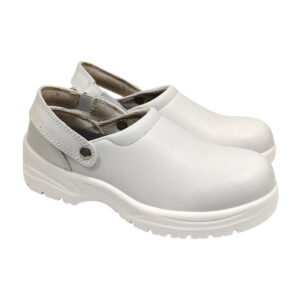
ESD Safety Boots – White, 5mm Grid Fabric
White ESD shoes for cleanroom and electronics production in Singapore — full-height anti-static boots, 5mm grid fabric upper, SPU sole, 10⁶–10⁹ Ω. Sizes 220–300mm.
- Description
- Additional information
- Reviews (0)
Description
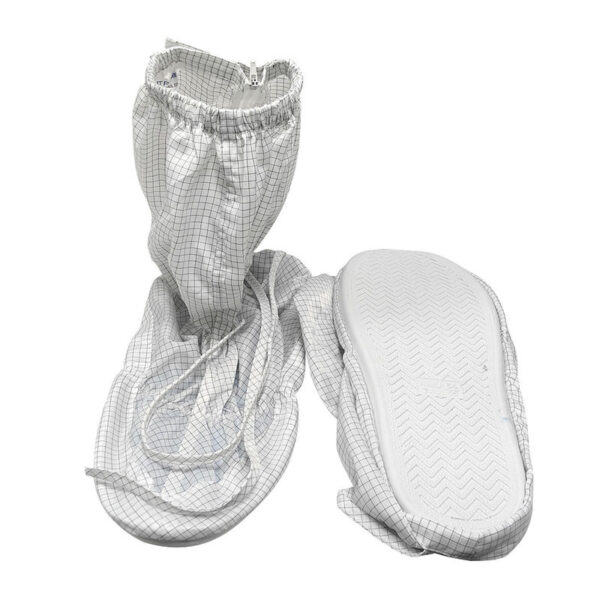
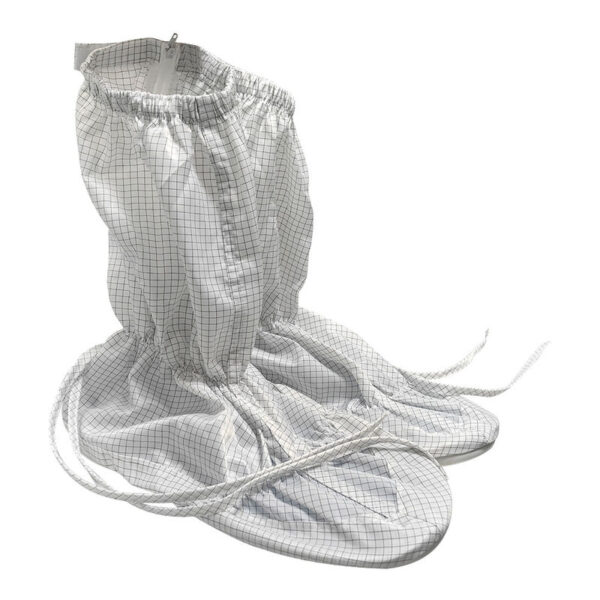
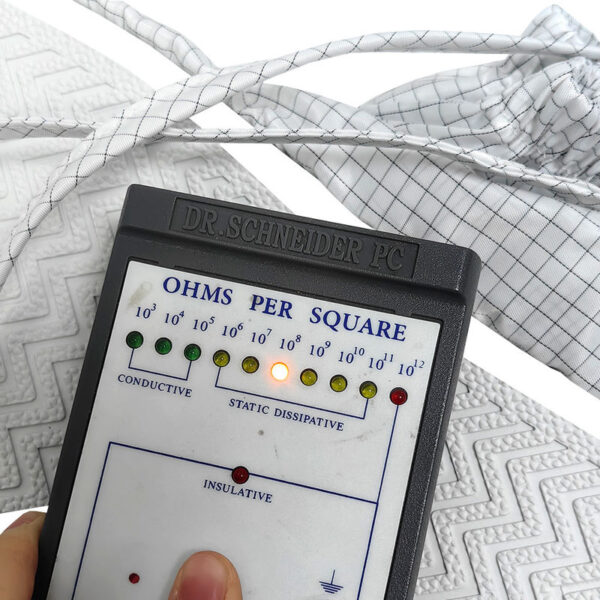
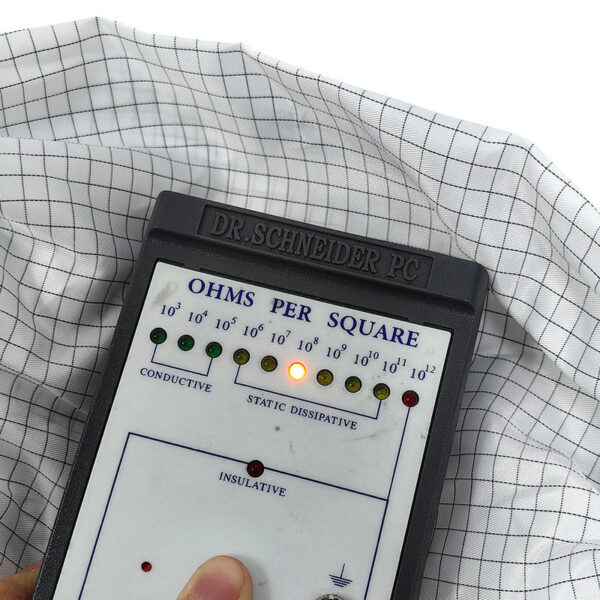
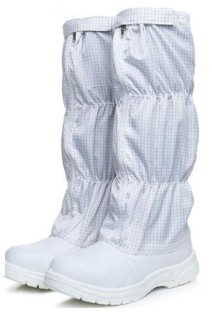
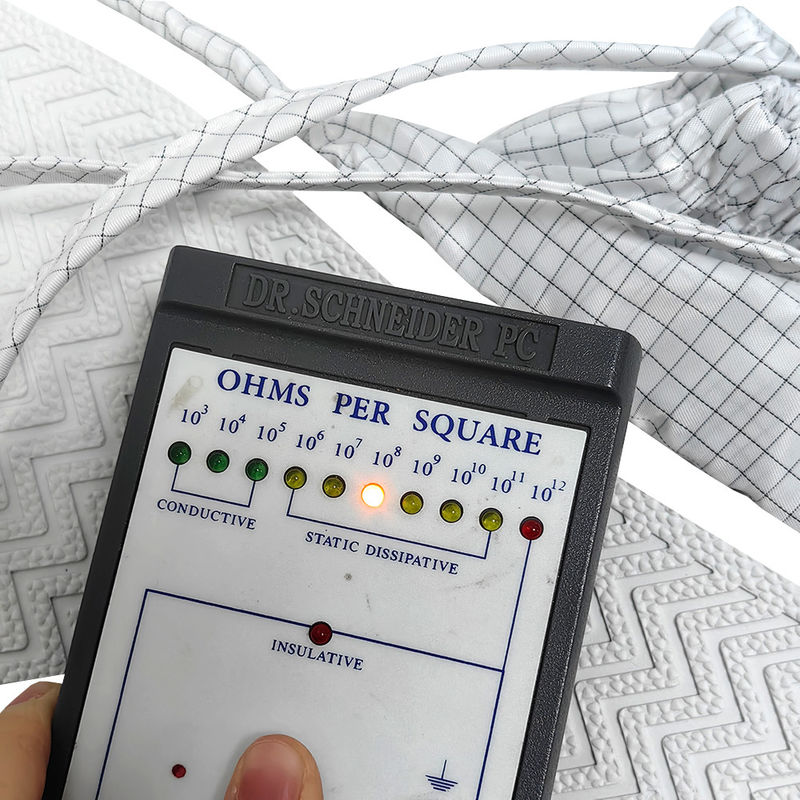
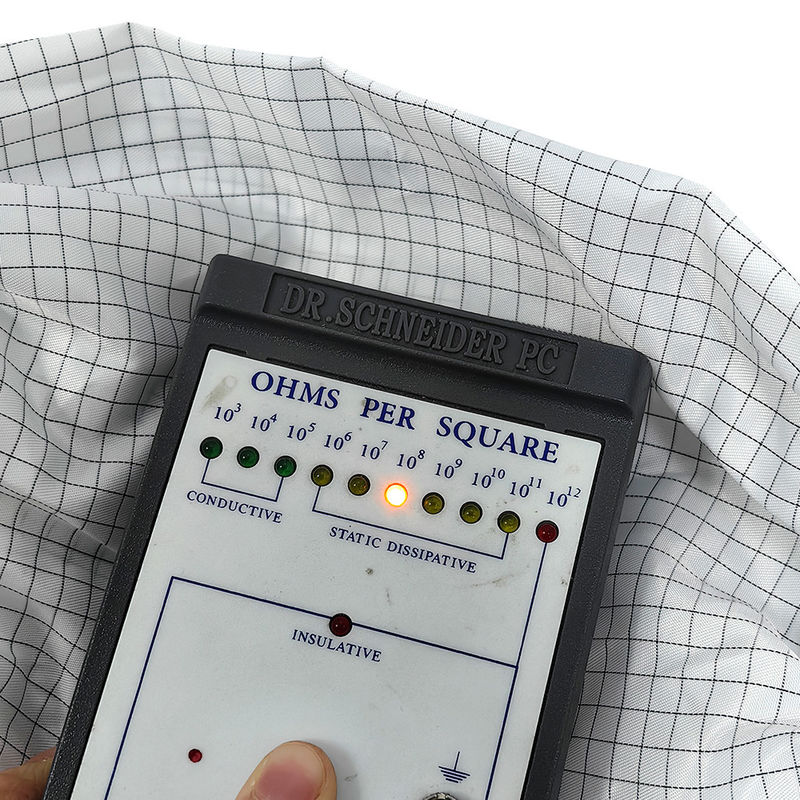
These white ESD shoes are full-height anti-static boots built for cleanroom and electronics production floors, supplied in Singapore by Phil Industries. The upper is 5mm grid fabric, the sole is SPU, and the assembly measures 10⁶–10⁹ Ω — the resistance window that lets a charged operator bleed to ground slowly enough to be safe and fast enough to protect the devices being handled.
Why footwear is the grounding path on a production floor
A seated operator at a bench is grounded through a wrist strap. A person who walks — a line technician, a fab operator moving between tools, a QA inspector on a gowning round — is not. For everyone standing and moving, footwear working against a conductive or dissipative floor is the ground connection. Take the footwear out of the system and every step across a floor generates charge that has nowhere to go but into the next component touched.
This matters more in an air-conditioned Singapore cleanroom than most people expect. Outdoor humidity here sits around 80% and naturally suppresses static build-up, which is why static problems feel rare in a warehouse or a loading bay. Inside a conditioned cleanroom or a dry room, relative humidity is pulled down to 45% or lower for process reasons — and charge generation climbs sharply as it falls. The static risk on your production floor is created by the same air handling that makes the room clean.
What the 10⁶–10⁹ Ω rating actually means
Both of the standards that govern ESD control programmes — IEC 61340-5-1 and ANSI/ESD S20.20 — set an upper limit of 1.0 × 10⁹ Ω for the resistance to ground of the person-footwear-flooring system, measured together rather than in isolation. Above that ceiling, charge drains too slowly to be useful.
There is a floor as well as a ceiling, and it exists for operator safety rather than for the product. Footwear that conducts too freely offers no resistance between a person and earth if they contact a live conductor. Keeping the lower bound at 10⁶ Ω puts a million ohms in that path. This model sits inside both limits across its whole range.
Two points worth being precise about. First, the standards test the system: your footwear, your flooring and the person wearing them. Dissipative boots on an untreated epoxy or vinyl floor will not pass, no matter what the boot is rated at. If the floor is the missing piece, the grounding guide covers how the earthing path is meant to be built. Second, a rating is a starting condition, not a permanent property — see the verification section below.
Where this boot fits
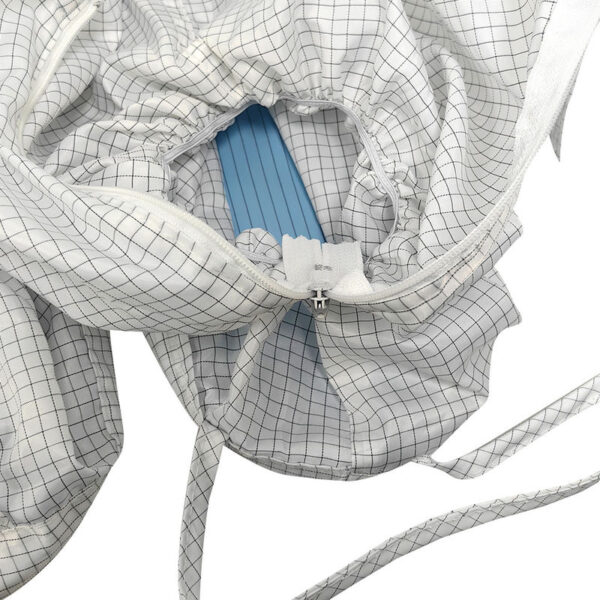
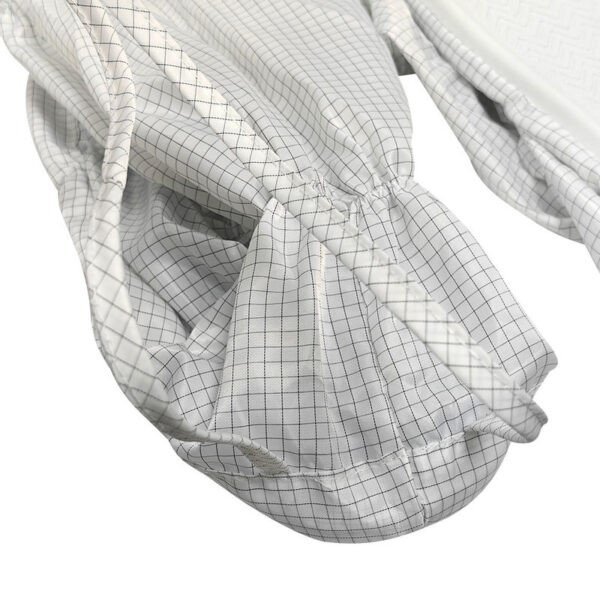
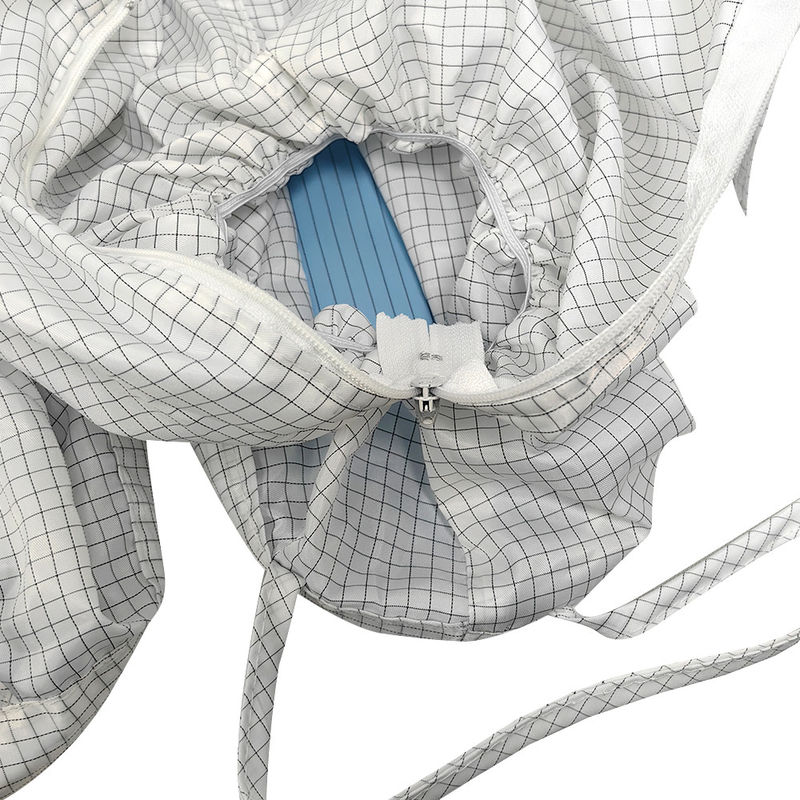
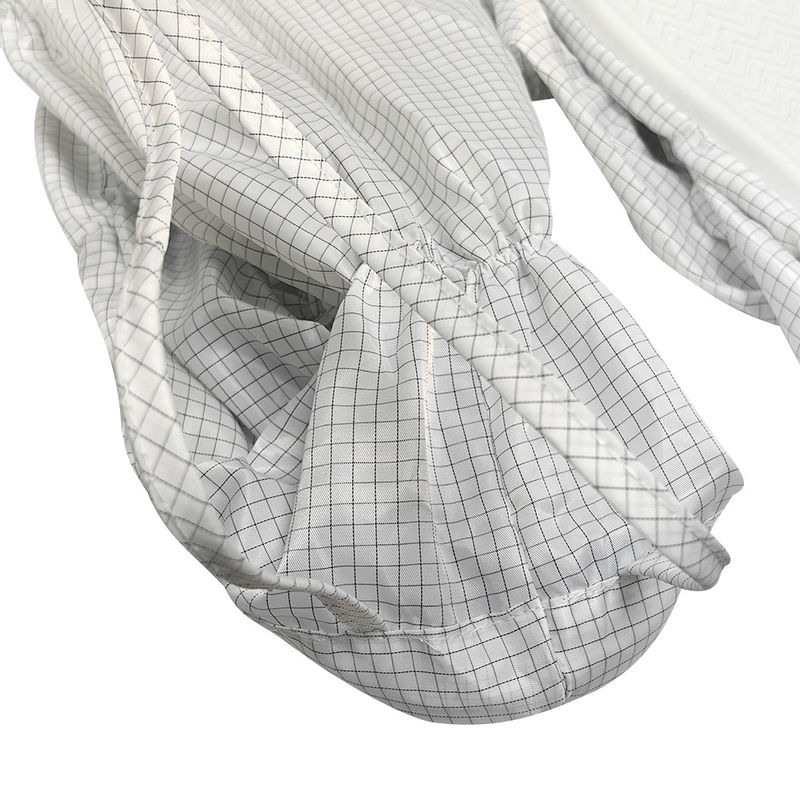
The high-boot form is chosen over a low ESD shoe for two reasons. It seals the trouser leg or coverall cuff inside the boot rather than leaving a gap at the ankle, which matters for particle control in ISO Class 5 to 7 rooms — the ISO 14644 classes guide explains what each class permits. And it gives a continuous fabric path up the leg, so the grid conductive thread stays in contact with the garment system rather than relying on a single strip at the ankle.
Typical Singapore applications we supply into:
- Semiconductor and wafer fab — gowning-room footwear for operators moving between tools
- PCB and electronics assembly — SMT lines, rework and test areas inside a designated EPA
- Medical device manufacturing — controlled-environment assembly and packing
- Aerospace and avionics — board-level work and MRO clean areas
- Data centre and precision optics — low-particle, low-static handling zones
Specifications
| Material | SPU sole with ESD grid fabric upper, high-boot construction |
| Surface resistance | 10⁶–10⁹ Ω |
| Colour | White; other colours available on request |
| Size range | 34–50 (Asian sizing) / 220mm–300mm foot length |
| Type | Flat soft sole, high boot with ESD strip, unisex |
| Function | Anti-static, anti-slip, lightweight |
| Application | Cleanroom, industrial, anti-static areas |
| Brand | ESDpro |
| Model number | AS0223 |
| Place of origin | China |
Construction detail
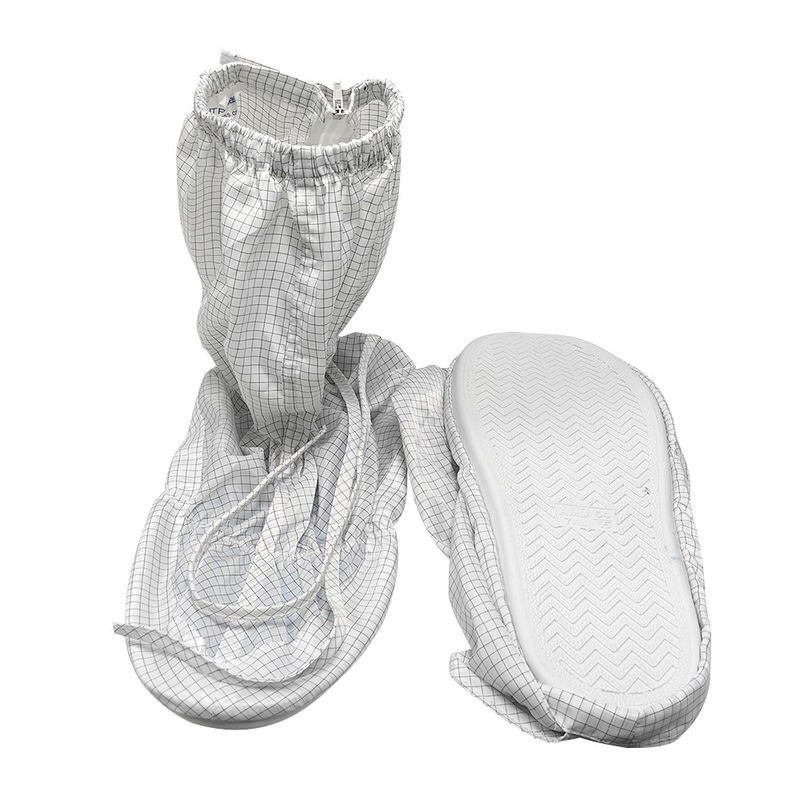
- Anti-static SPU sole in a lightweight, pollution-free material with stable performance and low dust emission
- Integrated moulding for a light, comfortable and durable fit
- Six ventilation holes for airflow while keeping the foot enclosed
- Internal anti-skid texture
- Thickened sole with enhanced slip resistance
- Soft hemispheric massage insole for anti-fatigue on long standing shifts
- Effective static discharge across the 10⁶–10⁹ Ω range
Getting the size right
Order by the millimetre measurement, not by your usual EU or UK size. These are built on Asian lasts, and the 220mm–300mm figures refer to actual foot length — the most reliable way to specify them.
To measure: stand on a sheet of paper with the heel against a wall, mark the tip of the longest toe, and measure heel to mark in millimetres. Measure both feet late in the day when they are at their largest, and order to the longer one. If operators will wear ESD socks or a liner inside the boot, add 5mm. Send us a headcount by size and we will quote the full run.
Boots, shoe covers or heel straps — which does your floor need?
ESD boots and shoes are permanent-issue footwear for staff who work in the controlled area every day. Best resistance stability, best comfort over a full shift, lowest cost per wear over a year.
Disposable booties and shoe covers are for visitors, contractors and short entries. They protect the room from the outside shoe, but their static performance is inconsistent and they are not a substitute for rated footwear on a permanent operator.
Heel and toe grounders retrofit an existing shoe. They are inexpensive and useful for mixed areas, but they depend on the strap staying under the heel and in contact with the sock, and they fall out of contact more often than a purpose-built boot.
Most Singapore sites we supply run permanent footwear for line staff and keep disposables at the gowning entrance for everyone else.
Verifying and replacing ESD footwear
An ESD boot degrades. The conductive path picks up floor polish, oils and ground-in particulate, the fabric compresses, and resistance drifts upward — usually without any visible sign. This is why both standards treat footwear as a compliance-verification item rather than a fit-and-forget purchase.
Practical routine: test at the point of entry with a footwear tester every shift, log the result, and pull any pair that reads outside specification. Wash to the manufacturer’s instructions rather than with household detergent, which can leave an insulating residue on the fabric. Replace on measured failure, not on appearance — a boot that looks new can already be out of spec, and one that looks worn may still test fine.
Frequently asked questions
What resistance should ESD shoes have?
Under IEC 61340-5-1 and ANSI/ESD S20.20 the person-footwear-flooring system must measure below 1.0 × 10⁹ Ω to ground. A practical lower bound of around 10⁶ Ω is kept for operator electrical safety. This model’s 10⁶–10⁹ Ω range sits inside both.
Do ESD boots replace a wrist strap?
Not at a seated workstation. A wrist strap is the required grounding method for anyone seated, because a seated operator’s feet are unreliably loaded on the floor. Footwear plus flooring is the grounding method for standing and walking work. Many EPAs need both, applied to different tasks.
Will these work on my existing floor?
Only if the floor is conductive or dissipative and properly earthed. The standard measures footwear and flooring as one system. On a standard epoxy, vinyl or tiled floor with no ESD treatment, the system will fail regardless of the boot. Tell us what your floor is and we will tell you honestly whether the footwear alone gets you there.
What is the difference between these and disposable ESD booties?
Disposable booties are thin covers pulled over an ordinary shoe, intended for particle control on short visits. These are permanent footwear with an SPU sole, a full boot upper and a specified resistance range, intended to be worn every shift and tested as part of your ESD programme.
Is there a protective toe cap?
The manufacturer does not publish a toe-cap or EN ISO 20345 safety rating for this model. If your site requires certified toe protection alongside static control, tell us and we will quote a rated ESD safety shoe instead of assuming this one qualifies.
Are they suitable for cleanroom use?
Yes — the SPU sole is specified as low dust emission and the high-boot form seals the coverall cuff, which is why this style is used in gowning protocols. As with any cleanroom item, confirm it against your own room’s qualification and change protocol.
What is the lead time in Singapore?
Standard lead time is 10–15 working days, packed 1 pair per box and 12 boxes per carton.
Can we get them in another colour?
White is standard. Other colours are available on request — useful if you colour-code by zone, shift or contractor status. Ask us for the minimum on a custom colour run.
Buying ESD footwear in Singapore
Phil Industries supplies ESD and cleanroom consumables to electronics, semiconductor, medical device and aerospace manufacturers across Singapore. If you are outfitting a new line or replacing a worn set, send us your size breakdown and floor type and we will come back with a quote and an honest read on whether footwear alone closes your grounding gap.
Browse the rest of the range: ESD Safety Shoes and ESD Products Singapore. Call +65 6555 1745 or use the enquiry form for a quotation.
Related pages in Singapore
- Browse all ESD Safety Shoes.
- Learn about ESDpro, our own ESD and cleanroom brand.
- Read our guides on ESD standards IEC 61340 and ANSI/ESD S20.20 and setting up an ESD grounded workstation.
Phil Industries, the Singapore company behind the ESDpro brand, supplies this product with selection advice and after-sales support. Call +65 6555 1745, WhatsApp +65 9853 9030 or email sales@phil-industries.com.sg.
Additional information
| ESD Classification | |
|---|---|
| Surface Resistance | 10⁶–10⁹ Ω |

Reviews
There are no reviews yet.