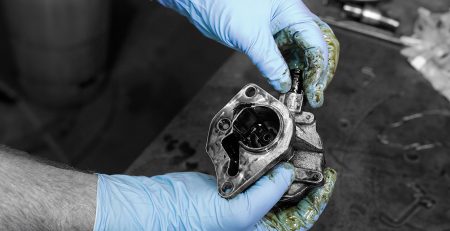
A practical guide for engineers, safety officers, project managers and procurement teams in Singapore — how to choose safety gloves by their EN 388 marking, when nitrile beats latex, and how to match the glove to the actual hazard instead of buying by price.
⚡ In short: choose gloves by the hazard, not the catalogue. Read the full EN 388 marking (the A–F cut letter matters more than the old digit), match the material to the job, and for cytotoxic work use gloves tested to ASTM D6978.
🎯 Choosing safety gloves starts with the hazard, not the catalogue
Under Singapore’s WSH framework, your workplace risk assessment identifies what hands are actually exposed to — and that assessment, not the catalogue page, decides the glove. The main hazard families each point to a different glove type:
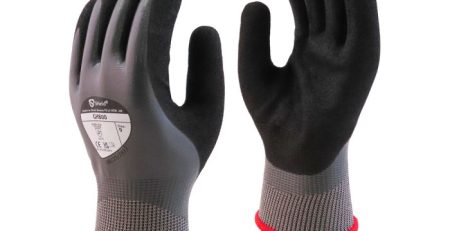
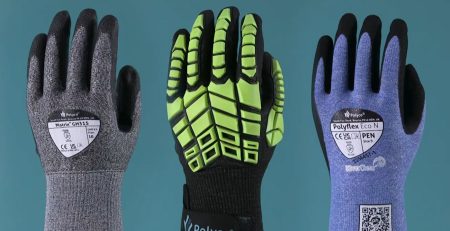
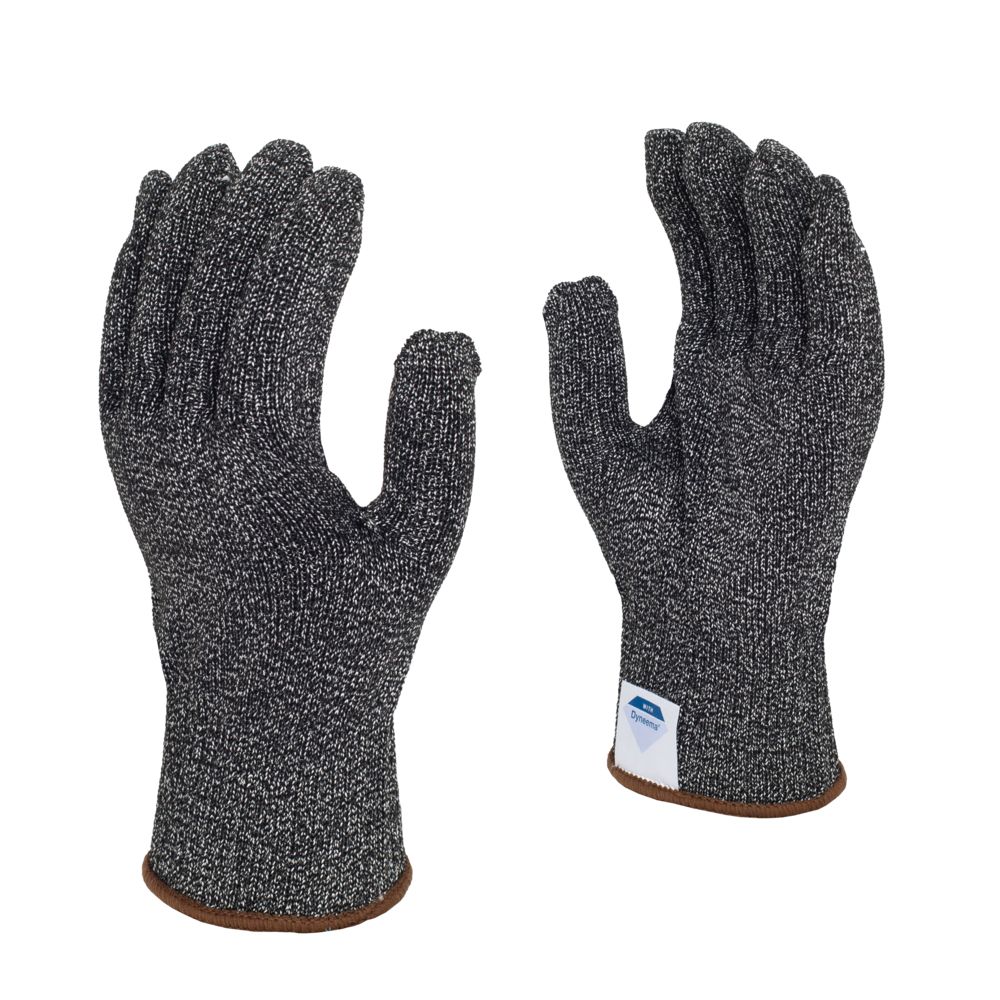
- Mechanical hazards — cuts, abrasion, punctures from sheet metal, glass, blades and handling work → cut-resistant gloves.
- Chemical exposure — solvents, oils, cleaning agents → chemical-resistant gloves, matched to the specific chemical.
- Hygiene and contamination — labs, food, healthcare, light assembly → disposable gloves, usually nitrile.
- Temperature — hot or cold handling gloves for ovens, freezers and cold rooms.
🔤 How to read the EN 388 marking
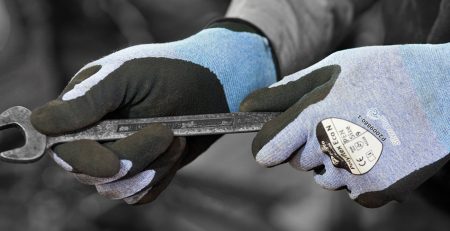
EN 388 is the European standard for gloves against mechanical risks, and its shield marking is printed on most industrial gloves. Under EN 388:2016 the digits and letters read like this:
| Position | What it rates | Scale |
|---|---|---|
| 1st digit | Abrasion resistance | 0–4 (higher is better) |
| 2nd digit | Cut resistance (coup test) | 0–5 |
| 3rd digit | Tear resistance | 0–4 |
| 4th digit | Puncture resistance | 0–4 |
| Letter A–F | Cut resistance (ISO 13997 straight-blade test) | A lowest — F highest |
| Letter P | Impact protection | P = passed, blank = not tested |
Because modern cut-resistant yarns can blunt the older coup test, the A–F letter is the number to trust for cut protection — for example, a glove marked 4X42F offers the highest ISO 13997 cut grade. Match the letter to your risk assessment: the sharper and heavier the materials handled, the higher the letter should be.
🧤 Nitrile, latex or vinyl — choosing a disposable
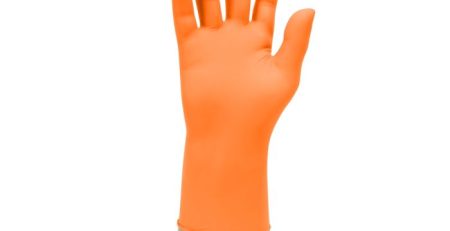
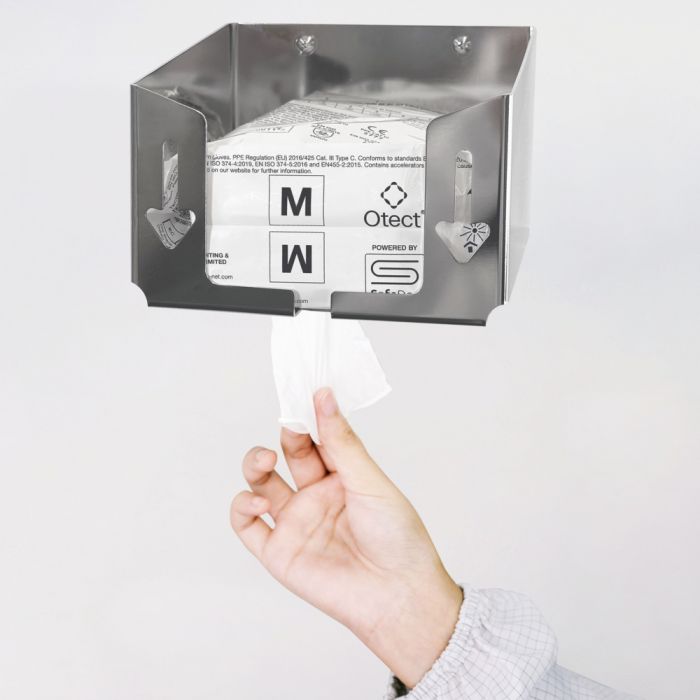
- Nitrile — the default for industry, because it resists punctures and many chemicals better than latex and carries no natural-latex protein, so it avoids latex allergy issues among staff. Powder-free grades also keep particles off the product.
- Latex — excellent fit and touch sensitivity; however, latex allergy risk means many Singapore facilities have moved away from it for shared use.
- Vinyl — an economy option for short, light-duty tasks without mechanical or chemical stress.
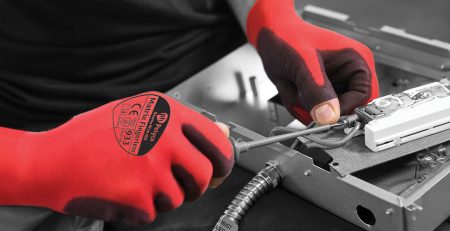
For electronics and cleanroom-adjacent work, powder-free nitrile is the usual specification, and glove change-out discipline matters as much as the glove itself.
⚠️ Five mistakes buyers make
- Buying one pair of safety gloves for every task — a cut glove is not a chemical glove; while one SKU simplifies purchasing, it usually under-protects somewhere.
- Ignoring sizing — an oversized glove reduces grip and gets pulled into machinery; a tight one causes fatigue, so workers take it off.
- Trusting the old coup digit — for cut protection, specify by the A–F letter instead.
- Skipping chemical-specific data — chemical gloves are rated per substance and breakthrough time, so check the glove against your actual chemicals.
- Choosing on unit price alone — a longer-lasting coated glove often costs less per week than a cheaper glove replaced daily.
🧫 Gloves for chemotherapy and cytotoxic drug handling
Handling cytotoxic and chemotherapy drugs is a specialised case, and hospital pharmacies, oncology wards and compounding units in Singapore need gloves proven against drug permeation — not just general chemical resistance. Two points decide the choice:
- Material is nitrile, not latex — every chemo-suitable glove in the Polyco range is nitrile and latex-free. Latex is not the material of choice for cytotoxic handling.
- Look for ASTM D6978 — this is the US standard that specifically tests a glove against chemotherapy-drug permeation. A glove tested to ASTM D6978 carries far stronger evidence than one that simply lists general chemical resistance.
In the Polyco range we stock in Singapore, the SafeDon SD91E and the long-cuff Bodyguards GL891 are tested to ASTM D6978, and the INtouch V is a sterile nitrile glove for aseptic compounding of cytotoxic preparations. A wider set of nitrile examination gloves — the Nitrex, HandSafe and Finite P families — also state suitability for cytotoxic and chemotherapy drugs based on their EN ISO 374 chemical-resistance rating.
Browse them together on the chemotherapy gloves range page.
Important: glove selection for cytotoxic work must follow your institution’s own protocol and the specific drugs handled — including double-gloving and change-out frequency where required. Use this as a shortlist, then confirm against your pharmacy or oncology guidelines.
🔑 The one thing to remember: “cut level 5” on its own is outdated — trust the A–F letter from the ISO 13997 test. And for chemotherapy handling, general “chemical resistant” is not enough; the standard is ASTM D6978.
Frequently Asked Questions
What cut level do we need for sheet-metal handling?
Let the risk assessment decide, and as a starting point, sharp sheet-metal and glass handling generally calls for the mid-to-upper ISO 13997 grades — then confirm fit and grip with a trial pack before standardising.
Are powder-free gloves worth it?
Yes for most industrial and electronics use — the powder that makes donning easier also carries particles and allergens onto product and skin, which is why powder-free nitrile has become the standard specification.
Can we standardise on one brand and size?
One brand, yes — one size, no. Stock a size range, because fit drives both safety and whether workers actually keep gloves on.
Phil Industries is an authorised Polyco Healthline distributor in Singapore, supplying the full safety gloves range — disposable, cut-resistant, chemical and thermal — to electronics, semiconductor, aerospace and facilities teams. Need help matching gloves to a risk assessment? Call +65 6555 1745 or WhatsApp +65 9853 9030.