The reusable vs disposable industrial gloves debate often gets framed as “single-use is convenient, reusable is cheaper.” First, the truer answer. The right choice depends on the contamination model, the cost of a glove failure, and the disposal stream your plant must comply with. Therefore, this Singapore-focused breakdown gives you a numerical lens, not a slogan.
The hidden cost of disposable gloves
- Unit cost — S$0.06 to S$0.40 per pair depending on grade.
- Waste cost — Singapore landfill disposal at S$77/tonne plus internal waste-handling labour.
- Carbon cost — nitrile is petroleum-based; one box of 100 gloves produces ~1.6 kg CO2e.
- Reach-back loss — an operator switching gloves 6–10 times per shift loses 4–7 minutes of productive time.
The hidden cost of reusable gloves
Reusable gloves cost S$3 to S$25 per pair upfront. However, you must add laundering, inspection, retirement, and replacement-cycle management. In a typical Singapore plant, a reusable glove pair lasts 25–120 shifts depending on hazard exposure. Therefore, the per-shift cost can drop below S$0.30 — cheaper than even budget disposables — but only when the rotation discipline is real.
Where each format clearly wins
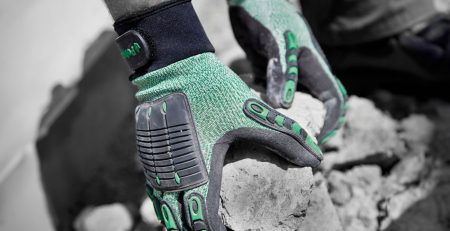
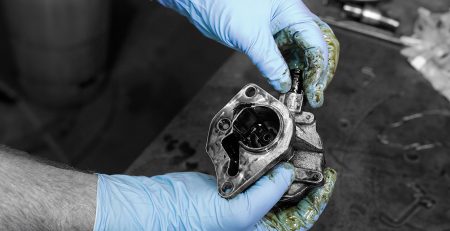
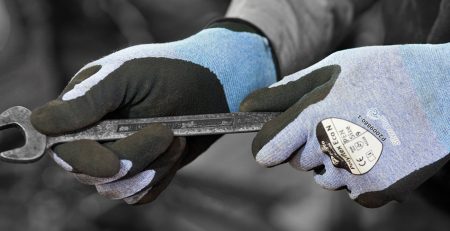
Disposable gloves win when the operator's hand contacts a contamination-sensitive surface (food, pharma, electronic wafer) or a biohazard. As a result, the disposable format is mandatory for cleanroom gowning, surgical work, and food handling. By contrast, reusable gloves win for chemical resistance, cut protection, and heat work. Above all, reusable Polyco gloves dominate jobs where each glove costs more than S$2 and the hazard is mechanical rather than biological.
The “double-glove” hybrid model
Many Singapore plants now run a hybrid: a thin disposable nitrile inner glove for hygiene and skin protection, plus a heavy reusable Polyco outer glove for the actual hazard. Therefore, the operator gets fresh hand-contact every shift while the expensive outer glove lasts weeks. Furthermore, when the outer glove is contaminated, the disposable inner gives a clean surface to remove the outer safely.
A worked Singapore example
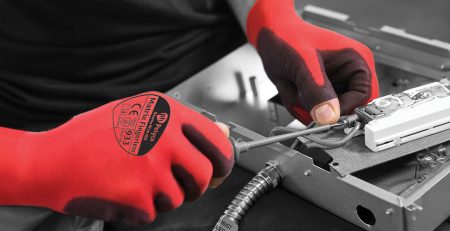
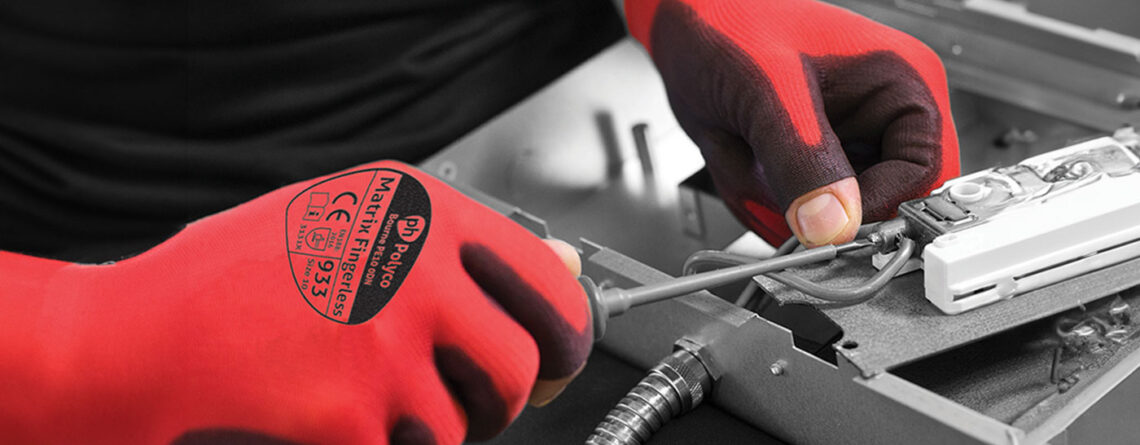
Consider an electronics assembly station running two shifts. Daily disposable cost: 8 pair changes × S$0.18 × 2 shifts = S$2.88. Annualised: ~S$700 per station for gloves alone, plus S$120 disposal and S$300 in changeover time. Total: S$1,120/year. By comparison, a reusable Polyco grip glove at S$4.50 lasting 30 shifts: S$330 in gloves + S$60 wash + S$80 changeover = S$470/year. As a result, the reusable model saves S$650 per station per year and 3 kg of nitrile waste.
How to switch without disrupting the line
First, pilot the reusable glove on one cell for 30 days while keeping the disposable supply intact. Next, track defect rate, complaints, and cycle time. In addition, train operators on the inspection-and-retire protocol — a reusable glove must be retired the moment liner wires show, the surface glazes, or coatings flake. The full Polyco Healthline glove range covers both ends of the cost curve.
For sustainability reporting, the ISO 14021 environmental claims standard helps frame your waste-reduction story.
Phil Industries: trial pairs for your line
For a free reusable-vs-disposable comparison kit calibrated to your hazards, message our engineer on WhatsApp at +65 8127 1274 or use our contact page. In short, the reusable vs disposable industrial gloves question is a math problem — and the math usually favours hybrids.