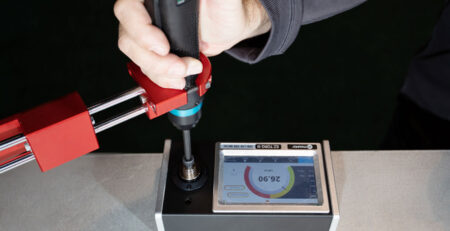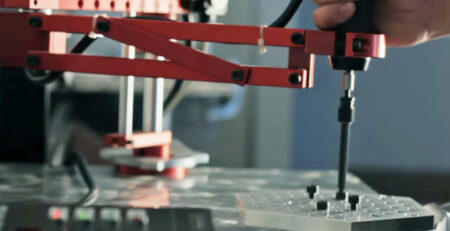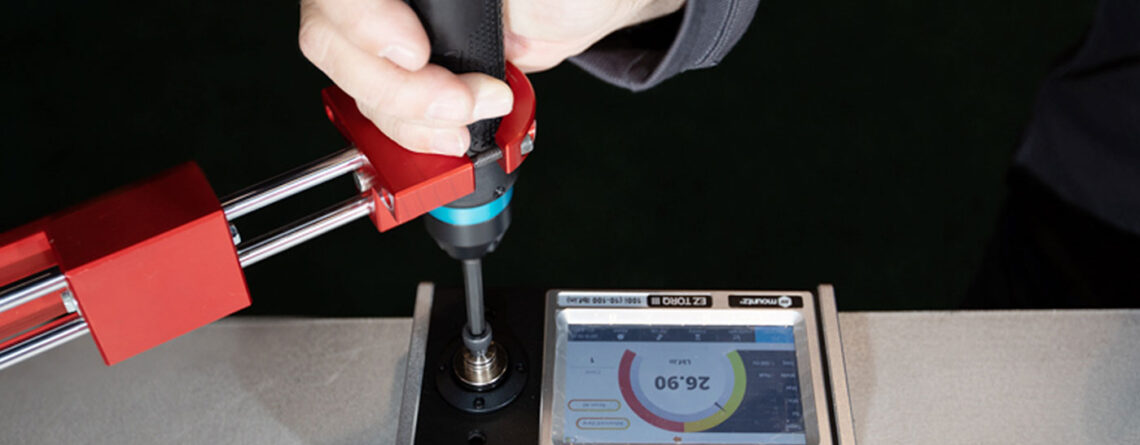
Torque multipliers in Singapore show up wherever a fastener exceeds the comfortable range of a hand wrench — typically above 200 Nm. First, the basics. A torque multiplier is a planetary gear-box that takes a small input torque from a hand wrench and delivers a much larger output torque on the bolt. As a result, a 25 Nm input from a calibrated wrench can deliver 1,000 Nm at the socket through a 40:1 ratio.
When does a torque multiplier beat a powered tool?
- Calibrated accuracy. A multiplier paired with a calibrated input wrench delivers ±4% torque. Hydraulic torque guns drift to ±10% under load.
- No power required. Therefore, multipliers shine in field MRO, ship repair, and outdoor sites where compressed air or 110 V is unavailable.
- Operator safety. The reaction arm absorbs the back-torque. As a result, the operator never feels 3,000 Nm of bolt resistance.
- Low cost per cycle. A mechanical multiplier has no batteries, no hoses, and no electronics. In addition, it is repairable for decades.
How to pick the right ratio
First, find your target torque on the bolt. Next, divide by your input wrench's usable range — typically 25–250 Nm for production-class wrenches. The result is the minimum ratio you need. For example, if you need 1,500 Nm at the bolt and your wrench tops out at 100 Nm, you need at least a 15:1 multiplier; a 25:1 unit gives you headroom and stays inside the wrench's 20–80% sweet spot. Above all, never run a multiplier near 100% of its rated output. Heat builds up, gears wear, and accuracy drops.
Reaction-arm safety in Singapore practice
The reaction arm is the part that absorbs the kick-back. However, it is also the part most often misused. Always brace the reaction arm against a fixed structure that is stronger than the bolt itself. Furthermore, never extend the arm with a pipe — that voids accuracy and risks the operator. Phil Industries supplies Mountz torque multipliers with proper reaction supports for shipyard, wind-turbine, and heavy-duty MRO work in Singapore and the region.
Calibration and traceability for high-torque jobs
Critical bolting jobs (wind turbines, pressure vessels, ship engines) need multipliers calibrated as a system: input wrench plus multiplier together. Therefore, certificates should show the combined accuracy at three torque points across the working range. The ISO 6789-1:2017 protocol covers the input wrench; ASME B107.300 covers the multiplier itself.
Talk to a Singapore high-torque specialist
If your team is wrestling with 1,000 Nm or more on hand-fastened joints, message our engineer on WhatsApp at +65 8127 1274 or use our contact page. In short, the right torque multiplier in Singapore turns a back-breaking job into a single calibrated cycle — without compressed air, without a hydraulic pump, and without sacrificing accuracy.