Torque calibration frequency in Singapore is the single most-asked question during ISO 9001 and AS9100 audits. Too often, QA managers calibrate by gut feel rather than by standard. As a result, audit findings, product recalls, and warranty disputes follow. This checklist gives you the actual intervals, the evidence auditors look for, and the simple workflow Phil Industries uses with our customers.
What does ISO 6789 actually require?
ISO 6789-1:2017 is the international standard for hand torque tools. It does not name a fixed calendar interval. Instead, it requires calibration “after a number of operations or a defined period, whichever comes first.” For most Singapore manufacturers, that translates to once every 12 months or every 5,000 cycles, whichever happens first. However, aerospace, medical, and safety-critical assembly often shorten this to 6 months. In addition, any tool that is dropped, overloaded, or repaired must be recalibrated immediately, regardless of the calendar.
The 5-point Singapore audit checklist
- Calibration certificate traceable to SAC-Singac or another ILAC-MRA member lab. Therefore, foreign certificates are usually accepted, but local labs cut turnaround.
- Asset register showing tool ID, last cal date, next cal date, and cycle count. Auditors love to spot-check three random tools.
- Cycle counter on high-volume tools. As a result, you can prove the 5,000-cycle limit is respected.
- Out-of-service tagging for any tool past its due date. Above all, the tag must be physical, not digital.
- Operator competency record showing who is trained on each tool. ISO 9001:2015 clause 7.2 requires this evidence.
How to set the right interval for your shop floor
First, classify each tool by criticality. A wrench used on a single safety-critical bolt on aerospace landing gear needs tighter calibration than a wrench used on cosmetic trim. Next, look at the manufacturer's tolerance band. Mountz torque wrenches typically hold ±4% accuracy when calibrated annually under normal use. However, in 24/7 production, that drift can hit 6% within 8 months. Therefore, busy lines should drop to a 6-month interval and verify monthly with a torque tester.
Building a defensible calibration record
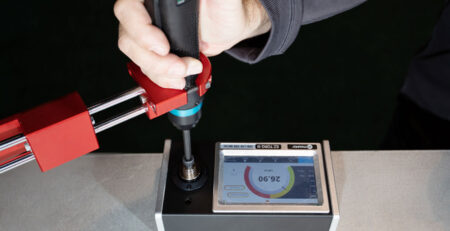
Auditors want three pieces of evidence on every tool: a current certificate, a usage log, and a verification record. Phil Industries supplies Mountz torque analyzers and sensors that automate the verification step. In addition, we coordinate calibration through SAC-Singac labs and return tools within 5 working days. For a deeper dive into the standard itself, the ISO 6789-1:2017 page lists every clause your auditor may quote.
Talk to a Singapore torque calibration expert
For a free review of your current torque calibration frequency, message our engineer on WhatsApp at +65 8127 1274 or use our contact page. In short, the right interval is the one that matches your risk profile, satisfies your auditor, and keeps production moving.