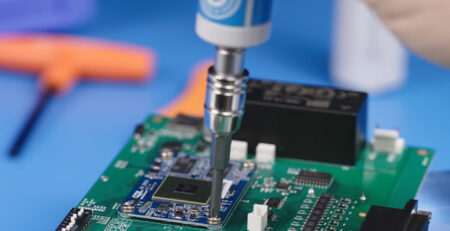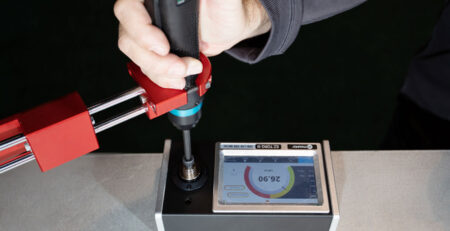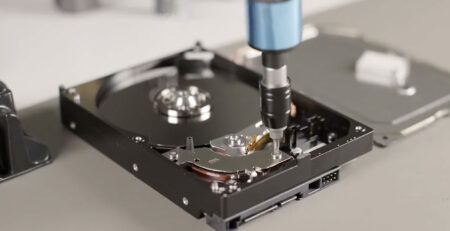
Error-proofing tools for PCB assembly turn a noisy production line into a quiet one. First, let us put a number on the problem. A typical Singapore EMS line that builds 5,000 boards a day at 0.5% torque-related defects loses around S$180,000 a year in scrap and rework labour. As a result, even a modest error-proofing investment usually pays back inside six months.
What “error-proofing” actually means on a torque line
Error-proofing is the discipline of making it physically impossible to ship a wrong board. On a torque-driven line, three faults dominate: missed screws, under-torqued screws, and crossed screws. Mountz error-proofing tools tackle each one with sensor-driven logic.
- Screw counters count every cycle. Therefore, an operator cannot move the board to the next station unless the right number of fastenings is logged.
- Position sensors verify the order. As a result, screws fastened in the wrong sequence trigger an alarm before the panel reaches QA.
- Real-time torque feedback rejects any cycle that lands outside the ±3% window. In addition, the data flows straight into your MES.
The cost of not error-proofing your PCB line
Imagine 200 boards a day going to a customer with a single missing M2 screw. Field-failure cost averages S$45 per board after RMA, freight, and engineer time. That is S$9,000 a day, or roughly S$2.3 million a year. However, the loss is often invisible because it lands in customer-service budgets, not production. Above all, error-proofing makes the cost visible before the board ships.
Choosing the right Mountz stack for your line
First, audit your current defect Pareto. Is the dominant fault a missed fastener, a wrong torque, or wrong sequence? Next, match the tool to the fault. Mountz error proofing aids and tools integrate with EZ-TorQ III testers, BMX wrenches, and the Mountz STC controller. Therefore, you can phase the investment instead of replacing every tool at once.
Implementation tips from Singapore EMS shops
Phil Industries has helped Singapore EMS plants roll out error-proofing in stages. First, pilot one cell for 30 days to baseline the defect rate. Then expand to the full line once the operators are comfortable. In addition, train the line leads on the dashboard, not just the operators. As a result, the data drives daily standups instead of sitting in a server.
For independent guidance on industry standards, the IEC publishes electronics-assembly process standards that complement IPC-A-610.
Talk to a Singapore error-proofing engineer
For a free walk-through of your line, message our engineer on WhatsApp at +65 8127 1274 or use our contact page. In short, error-proofing tools turn invisible field-failure costs into visible factory-floor data — and Mountz hardware makes the numbers move fast.