Electrostatic discharge (ESD) is one of the most common — and most expensive — causes of field failures in modern electronics. A single undetected discharge can latently damage a printed circuit board (PCB), and by the time the failure shows up in the customer’s hands, the cost runs into thousands. For electronics manufacturers, contract assemblers and repair houses in Singapore, ESD conductive foam is one of the simplest and most cost-effective lines of defence.
This guide explains what ESD conductive foam is, how it differs from regular (pink) anti-static foam, and the specifications Singapore buyers should check before ordering — whether you are storing bare ICs, transporting populated PCBs between cleanrooms, or kitting components for an SMT line in Tuas, Ang Mo Kio or Woodlands.
What is ESD conductive foam?
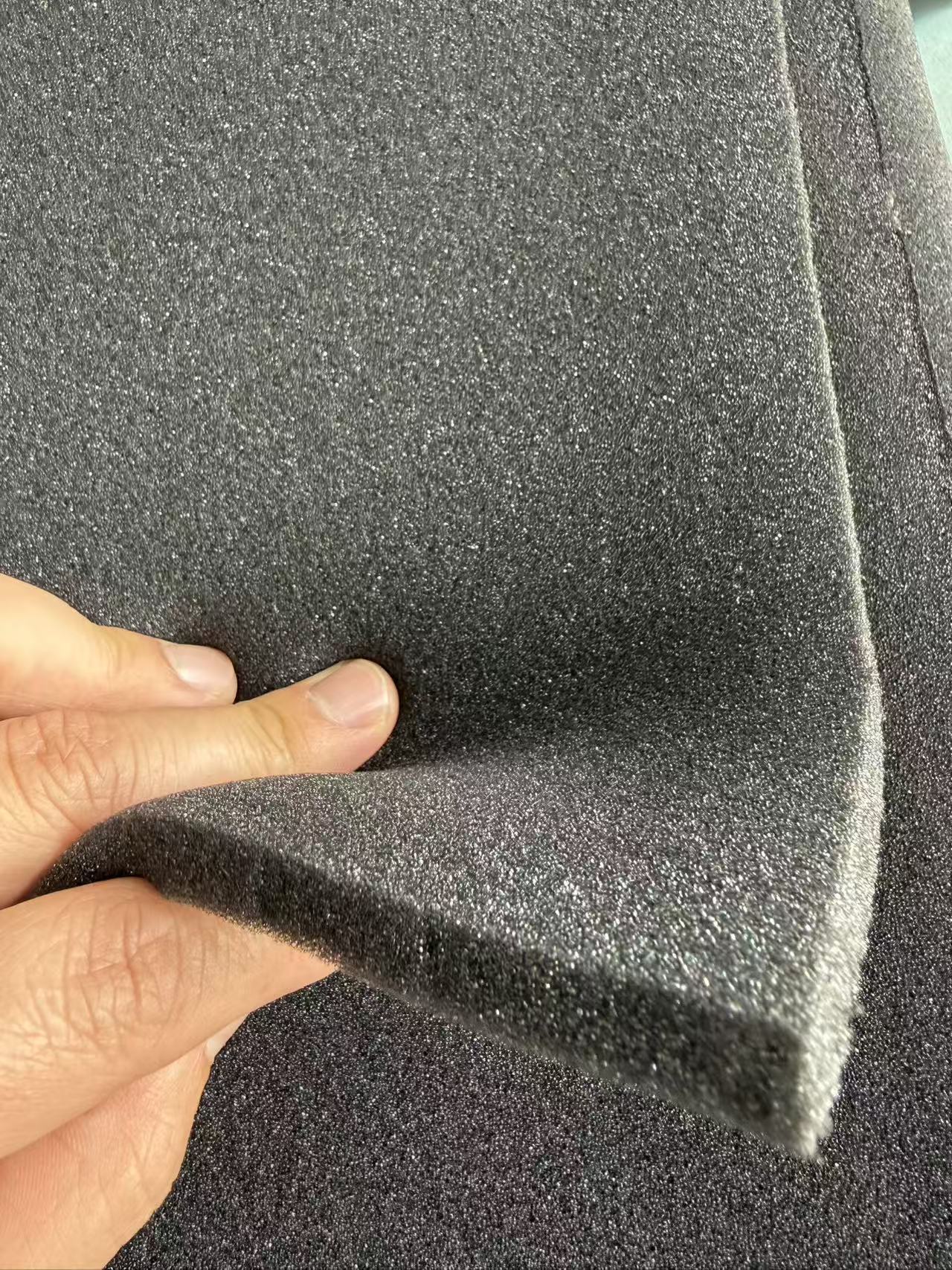
ESD conductive foam is a cellular polyurethane or polyethylene foam that has been impregnated with carbon so that the entire sheet is electrically conductive. Because the carbon runs through the bulk of the material (not just a surface coating), the foam keeps its conductive properties for its entire service life and is not affected by humidity. This makes it suitable for Singapore’s tropical climate, where relative humidity routinely sits between 70% and 90% and coastal salt-laden air can degrade cheaper surface-treated materials.
When a PCB, IC lead frame or component is pressed into conductive foam, every pin is shorted to every other pin through the foam. Any charge that builds up on one lead is safely bled across all the others at the same potential, so no damaging voltage difference ever develops across a sensitive junction.
Conductive (black) vs. dissipative (pink) foam — don’t mix them up
Buyers in Singapore often order “anti-static foam” without specifying the grade. The two common types are very different:
- Conductive foam (black): Surface resistivity typically less than 104 ohms/square (often in the 102–104 range). Used for shorting leads of ICs, MOSFETs, and sensitive PCBs.
- Static-dissipative foam (pink): Surface resistivity in the 109–1011 ohms/square range. Used for cushioning non-ESD-sensitive parts or as secondary packaging; it will not adequately protect Class 0 or Class 1 devices.
For PCB handling, IC storage and any component classified under ANSI/ESD S20.20 as ESD-sensitive, conductive (black) foam is the correct choice.
Key specifications to check
1. Surface resistivity / volume resistivity
Look for a data sheet that states surface resistivity in ohms/square and volume resistivity in ohm-cm. A reliable industrial conductive foam for PCB use should measure < 104 ohms/square on the surface and < 104 ohm-cm through volume, tested per ANSI/ESD STM11.11 and STM11.12.
2. Density
Typical industrial conductive foam density is 20–35 kg/m³ for soft grades (used to grip IC leads and cushion PCBs) and 45–80 kg/m³ for firm grades (used in custom-cut IC trays, tote-box inserts and die-cut inserts for shipping cartons). Softer grades are more forgiving on delicate through-hole leads; firmer grades hold their shape better under repeated use.
3. Thickness
Common off-the-shelf thicknesses in Singapore are 3 mm, 5 mm, 6 mm, 10 mm, 12 mm, 20 mm and 25 mm. For kitting trays and IC storage, 6–12 mm is the most popular. For shock protection inside cartons shipped from Singapore to overseas customers, 20–25 mm provides the cushion needed to survive airfreight handling.
4. Sheet size
Standard sheet sizes available locally are 1000 × 1000 mm and 1000 × 2000 mm. Custom die-cutting to PCB outline, pocket cavities for ICs, or tote-box inserts is widely available — ideal if you are running repeat builds on a fixed panel size.
5. Temperature range & outgassing
Quality conductive PU foam operates from -40 °C to +70 °C, which comfortably covers any Singapore warehouse, cleanroom or truck environment. If the foam will enter a reflow-adjacent area or a cleanroom, ask for a low-outgassing grade with a Material Safety Data Sheet on file.
6. Compliance
Ask your supplier to confirm compliance with ANSI/ESD S541 (packaging), ANSI/ESD S20.20 (ESD control programme) and, where relevant, RoHS and REACH. Singapore-based semiconductor, medical and aerospace customers will almost always audit for these.
Typical industrial applications in Singapore
- PCB transport and storage between SMT, test and final assembly stations.
- IC lead shorting for loose DIP, QFP and BGA components during rework.
- Custom die-cut inserts for tote boxes, shipping cartons and ESD trays.
- Cleanroom kitting of sensitive sub-assemblies for semiconductor backend, medical device and precision electronics customers.
- Field service kits for engineers carrying spare boards between client sites.
How to choose the right grade
A practical rule of thumb for buyers:
- Storing bare ICs or small PCBs → soft conductive foam, 6–10 mm, 20–30 kg/m³.
- Tote-box inserts and reusable trays → firm conductive foam, 10–20 mm, 45–65 kg/m³.
- Export cartons and airfreight cushioning → firm conductive foam, 20–25 mm, with corner blocks.
- Die-cut custom inserts → send us your PCB DXF or panel dimensions for a quote.
Buying ESD conductive foam in Singapore
Phil Industries supplies ESD conductive foam in sheets, rolls and custom die-cut formats from our Singapore warehouse, with same-week delivery island-wide. We stock multiple densities and thicknesses off the shelf and can cut to your PCB or tote-box dimensions on request. If you are setting up a new ESD-protected area (EPA) or auditing an existing one, our team can help match the right foam grade to each workstation, storage rack and shipping lane.
For a quote on conductive foam — or to discuss other ESD products such as wrist straps, mats, garments, gloves and ionisers — contact our Singapore team with your PCB size, annual volume and preferred thickness.