Bad production chairs in Singapore rarely fail dramatically. Instead, they fail quietly — one fidgeting operator at a time, one missed cycle at a time, one MC day at a time. First, the cost. WSH Council data shows that musculoskeletal disorders account for nearly 30% of work-injury claims in Singapore manufacturing. As a result, a single bad chair fleet can wipe out a year of productivity gains. Here are the five red flags Phil Industries sees most often during shop-floor audits.
Sign 1: operators standing up to “stretch” every 20 minutes
If your operators leave their stations every 20 minutes, the chair is forcing them to. A correctly specified Bimos production chair lets a fit operator work for 50–90 minutes between micro-breaks. Therefore, frequent stretches signal compressed foam, wrong seat angle, or backrest in the wrong height. As a result, you lose 6–9% of effective shift time before a single defect appears.
Sign 2: the chair is sitting lower than spec
Walk the line and check the height of every chair. A gas spring that has lost gas drops the seat by 30–60 mm under load. In addition, this changes the operator's shoulder angle and slows hand-eye work. Furthermore, the operator now reaches up to the bench, which fatigues the trapezius and triggers MC days. Above all, replace gas springs before they fail completely.
Sign 3: cracked, peeling, or shiny upholstery
- Cracks mean ESD coating is gone. Therefore, electronics work is unprotected.
- Peeling vinyl harbours bacteria and fails ISO 14644 wipe-down audits.
- Shiny seat indicates compressed foam — the operator is sitting on the seat pan, not the cushion.
- In all three cases, the chair has crossed into the replacement zone.
Sign 4: castors that lock, squeak, or shed
Worn castors do three bad things. First, they lock unpredictably and operators jerk to move. Next, they shed grease that contaminates cleanroom floors. Then they squeak, which sounds harmless but signals dry bearings about to seize. As a result, a S$30 castor failure often takes a S$700 chair out of service.
Sign 5: rising MC and “back pain” complaints
Track musculoskeletal complaints by station, not by department. If one station shows three or more back-pain MCs in a quarter, the chair is the most likely cause. In addition, run a simple operator survey: “Which is more comfortable, the morning or the afternoon?” If the answer is “morning by far,” the chair fails the long-shift test.
What good production chairs deliver instead
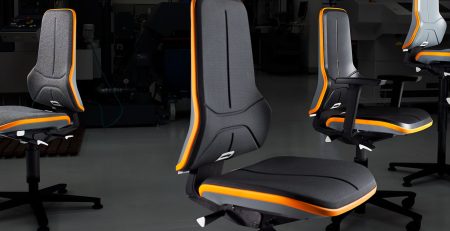
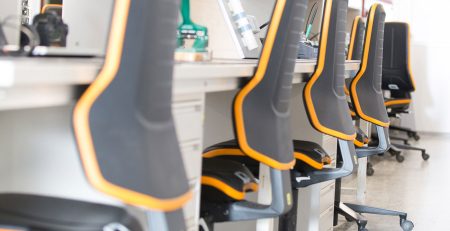
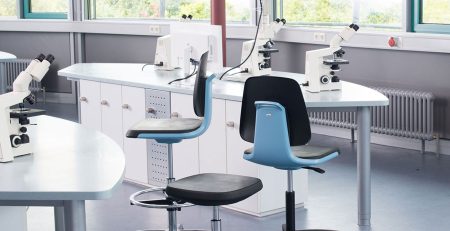
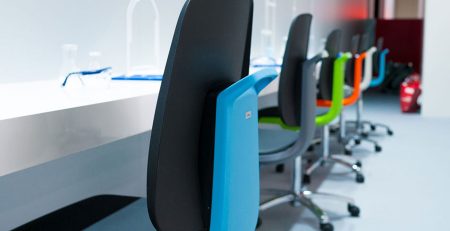
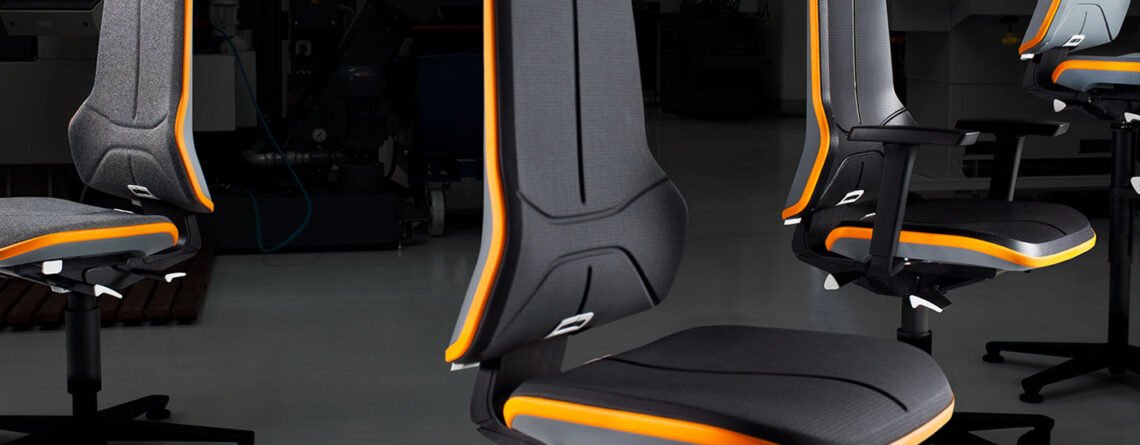
A correctly specified Bimos production chair typically pays back inside 9 months through reduced MC days and lower defect rates. Bimos lines such as the All-In-One, Neon, and Labsit cover assembly, microscopy, and sit-stand benches. For ergonomic standards, see ISO 9241-5 for workstation principles.
Phil Industries: shop-floor audit and replacement plan
Phil Industries can walk your line, photograph each chair, and quote a phased replacement plan. For a free production-chair audit, message our engineer on WhatsApp at +65 98539030 or use our contact page. In short, production chairs in Singapore quietly drive productivity, MC days, and quality numbers — ignore them at your line's peril.