Top 10 Ways to Improve Torque Accuracy in High-Tech Manufacturing
In industries like semiconductors, electronics, aerospace, biomedical, and medical devices, precision is non-negotiable. One wrong torque setting during assembly could result in product failure, non-compliance, or worse—safety hazards. That’s why torque accuracy isn’t just a preference—it’s a mission-critical requirement. In this article, we’ll explore the top 10 ways engineers, technicians, and managers can improve torque accuracy in high-tech manufacturing environments.
1. Employ the Appropriate Type of Torque Tool for the Application
The most critical element of accuracy is the selection of the correct torque tool. A torque screwdriver might be perfect for electronics, while an adjustable torque wrench would be perfect for aerospace assembly. Some of the most common torque tools are:
- Click-type torque wrenches – suitable for repetitive applications, with sound indications.
- Dial torque wrenches – perfect for calibration and verification.
- Electronic torque tools – provide real-time readings of torque and angle values.
- Pneumatic or electric screwdrivers – ideal for assembly-line use.
Tip: Always choose a tool whose torque range is as close to your desired torque setting as possible.
2. Calibrate Torque Tools Regularly
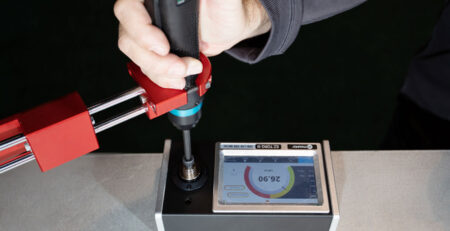
- Calibration guarantees tools deliver the stated torque value consistently. In high-spec industries, this isn’t only best practice—it’s regulatory requirement and traceability necessity.
- Recommended calibration interval: Every 5,000 cycles or every 6–12 months, whichever comes first.
- Obtain ISO 6789 certification for hand torque tools.
Pro Tip: Use on-site torque testers to check calibration prior to beginning a production run.
3. Consider Joint Conditions and Fastener Types
- Not all fasteners and materials are created equal. Joint condition (soft or hard) affects the final clamp load, even if the applied torque is the same.
- Soft joints dissipate more energy, with potential under-tightening.
- Hard joints apply more torque to the fastener.
- Learn how your fastener type (machine screw, self-tapping screw, bolt) and joint material (plastic, aluminum, stainless steel) influence torque behavior.
4. Prevent Over-Torquing and Under-Torquing
Misuse of torque can result in:
- Stripping of threads
- Component cracking
- Operational loosening
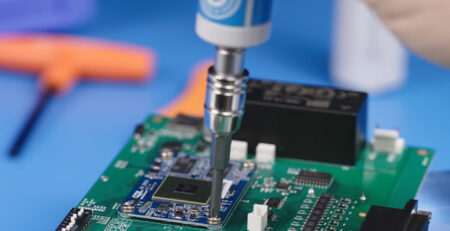
- Electrical failures (particularly in semiconductor and electronics)
- Employ torque limiters or pre-set tools to offer repeatable tightening.
- Employ a programmable threshold digital torque driver to notify the user when the proper torque is reached.
5. Invest in Lightweight, Ergonomic Tools
- Technicians in line assembly or cleanroom typically handle torque tools for hours at a time. Fatigue can directly affect torque control.
- Employ tools with ergonomic grips
- Select light, ESD-safe tools.
- Employ pistol grip electric tools for high-volume usage
- Minimizing fatigue enhances consistency, particularly in precision assembly of medical devices or electronics.
6. Keep the Workplace Clean and Controlled
- Environmental conditions affect torque consistency. Dust, humidity, and temperature changes can affect component behavior and torque measurement.
- Semiconductor & cleanroom environments must employ cleanroom-compatible tools
- Store tools in stable-temperature areas
- Employ anti-static mats and grounding to prevent ESD hazards
Tip: Clean and inspect tools regularly for oil, dust, and wear.
7. Use Torque Data Logging for Traceability
- Smart torque tools with digital feedback and data logging enable engineers to:
- Monitor tightening history
- Verify each step of the process
- Minimize manual errors
- This is particularly critical in regulated industries such as aerospace and medical devices, where each screw and bolt has to be traced.
Examples of data logging tools:
- Mountz FG Digital Torque Wrench
- Mountz EPT-Series Electric Screwdrivers
8. Train and Certify Technicians
Even the greatest tool can’t make up for inadequate technique. Technicians need to be trained in:
- Appropriate tool handling
- Pre-torque inspection
- Identifying thread or joint problems
- Mandate regular refresher training and in-plant audits to ensure uniformity.
9. Uniform Torque Specs Across Teams
- Standardization reduces variations across shifts, technicians, and production lines.
- Enforce color-coded tool sets
- Provide visual torque tables
- Include torque specs in digital work instructions
- This comes in handy when dealing with miniature screws or small parts in electronics or biomedical applications.
10. Partner with a Trustworthy Torque Tool Supplier
A trustworthy supplier does more than sell tools—they offer technical assistance, calibration services, and customized solutions. Partner with a supplier who can:
- Recommend the best tools for your industry
- Provide demo and test support
- Locally calibrate tools in Singapore
Final Thoughts
Accuracy of torque is not just making the right choice of tool. It’s assembling an entire system: qualified individuals, reproducible tools, controlled conditions, and traceable procedures. Whether it’s building a pacemaker, installing a bolt of critical importance to an aircraft, or producing a wafer handler semiconductor, accurate torque control guarantees safety, compliance, and performance.