How to Choose the Right ESD Chair for Electronics Static Environment in Singapore.
In electronics manufacturing, one of the most neglected threats to workplace safety and product quality is static electricity. In Singapore, where PCB assembly, chip packaging, and consumer electronics manufacturing are booming, the risk of Electrostatic Discharge (ESD) cannot be underestimated. Although ESD-safe workstations, wrist straps, and floors are often correctly installed, ESD chairs are sometimes overlooked.
An ESD-safe chair is not merely a place to sit. It is an active component of your Electrostatic Protected Area (EPA) and must meet some standards to prevent damage to costly components.
This article covers the selection of the right ESD chair for your electronics workshop, focusing on function, compliance, and the specific needs of Singapore-based manufacturers.
Understanding the ESD Risk
Static electricity can build up when walking, particularly when sitting and moving position. When the static is not discharged safely, it can arc to a component and make integrated circuits become damaged or latent failures happen.
To place this in perspective:
- It requires only 100 volts to make a component become damaged, but humans can’t feel static until it reaches approximately 3,000 volts.
- 60–70% of workplace ESD is created by personnel movement, e.g., friction between chairs and clothing.
In some areas like PCB soldering, testing, and packaging, the use of a non-ESD chair can risk damaging thousands of dollars’ worth of electronics.
What Is an ESD Chair?
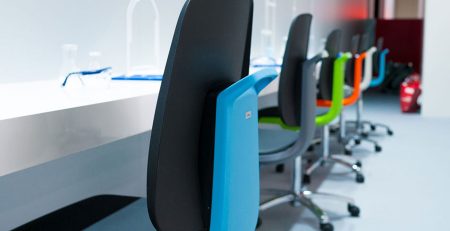
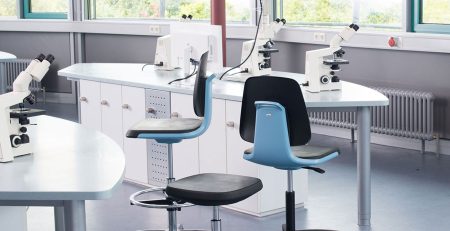
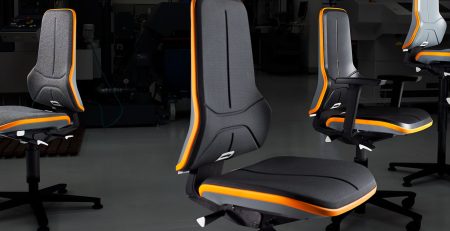
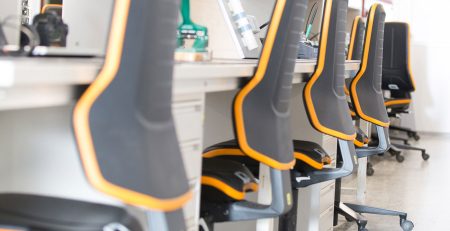
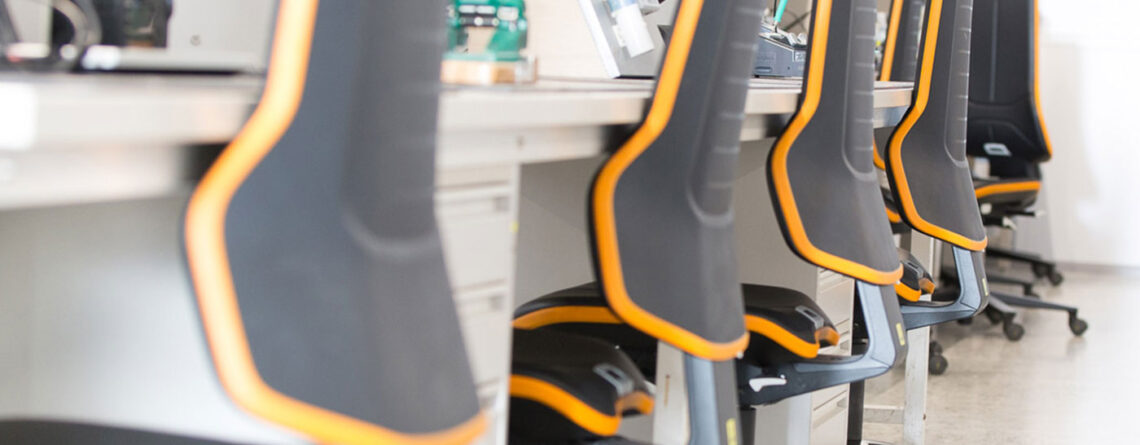
An ESD chair is a chair that is specially constructed to prevent static build-up and discharge charges safely to ground. It is made of conductive or static-dissipative materials, including seat, backrest, castors, and frame. When grounded, these chairs prevent static accumulation on the operator and become an effective part of the static control system.
Key Features of an ESD Chair
In choosing an ESD chair for your electronics facility, look for the following technical features:
1. Conductive or Dissipative Upholstery
- Made from materials that do not insulate static (e.g., ESD-safe PU, vinyl, or fabric)
- Surface resistance of 10⁴ to 10⁹ ohms
- Seamless or low-linting to prevent contamination
2. Groundable Frame
- Base and internal structures must be able to provide grounding through the castors or glides
- Grounding chains or drag chains often provided for assurance
3. ESD Castors or Glides
- These wheels or fixed feet allow the chair to discharge electricity through contact with the floor
- Anti-marking and non-marking to protect clean or coated floors
4. Adjustability
- ESD chairs do not have to compromise ergonomics—offer height adjustability, lumbar support, and tilt functions
- Optional foot ring or ESD-safe armrests for extra comfort
5. Certification
- Select chairs tested to standards such as IEC 61340-5-1, ANSI/ESD STM12.1, or equivalent
Environmental Considerations in Singapore
Singapore’s electronics factories often involve cleanroom or semi-clean conditions, where both particle control and ESD protection are necessary. When purchasing locally, consider the following:
- Climate: High humidity will reduce static, but air-conditioning in indoor environments will reduce humidity to below 40%, which increases static risks.
- Floor Compatibility: Make sure that the chair ESD castors are suitable for vinyl, epoxy, or anti-static mats.
- Local Regulations: Singapore’s EHS structures often require formal evidence of ESD control structures—choose seats from suppliers who provide information sheets or test reports.
Basic Blunders to Avoid
Choosing an ESD seat isn’t necessarily looking for a seat labeled “anti-static.” Here are some typical mistakes:
| Mistake | How to Avoid It |
| Buying untested seats | Always ask for ESD certification or resistance testing |
| Ignoring chair-floor compatibility | Make sure castors suit your floor type |
| Prioritizing cost over durability | Inexpensive chairs can lose conductivity over time |
| Ignoring ergonomic needs | An improperly adjusted chair increases injury risk |
| Leaving out grounding verification | Use ESD wrist strap testers or floor monitoring systems |
Training and Maintenance
Even a top-quality ESD chair will not work if not used or maintained correctly. Train on chairs as part of your EPA program and regularly check for:
- Conductive surface wear and tear
- Castor or grounding chain damage
- Resistance value changes (test every year or as specified)
Develop a checklist for maintenance and retain ESD records for audit.
Selecting Based on Use
Various electronics settings call for varying ESD chair requirements:
- Soldering Workstations: Stable, height-adjustable chairs with anti-fatigue support are recommended
- Inspection Labs: Chairs with ESD glides, backrests, and soft seating for extended sessions are preferred
- Production Lines: Rugged designs with simple cleaning surfaces and static-safe coatings are ideal
- Cleanrooms: Merge ESD with low particle emission designs; seek ISO class compatibility
Where to Find ESD Chairs in Singapore
While this article is helpful, it is good to learn that Singapore now has a growing ecosystem of suppliers offering ESD-compliant seating. Modular chairs that can be configured to specific environments, with local maintenance and testing capability, are the first choice for most facilities.
Look for suppliers with:
- Local stockholding and short lead times
- Certification and technical support
- Familiarity with Singapore’s electronics industry needs
Conclusion
In Singapore’s fast-paced electronics industry, every small decision affects quality, compliance, and productivity. Procuring the correct ESD chair is not a box-checking exercise—it is a matter of building a safer, more stable, and more productive workshop.
By understanding the key features, standards, and environmental factors involved, electronics technicians can make smarter seating choices and solidify their facility’s overall ESD protection strategy.